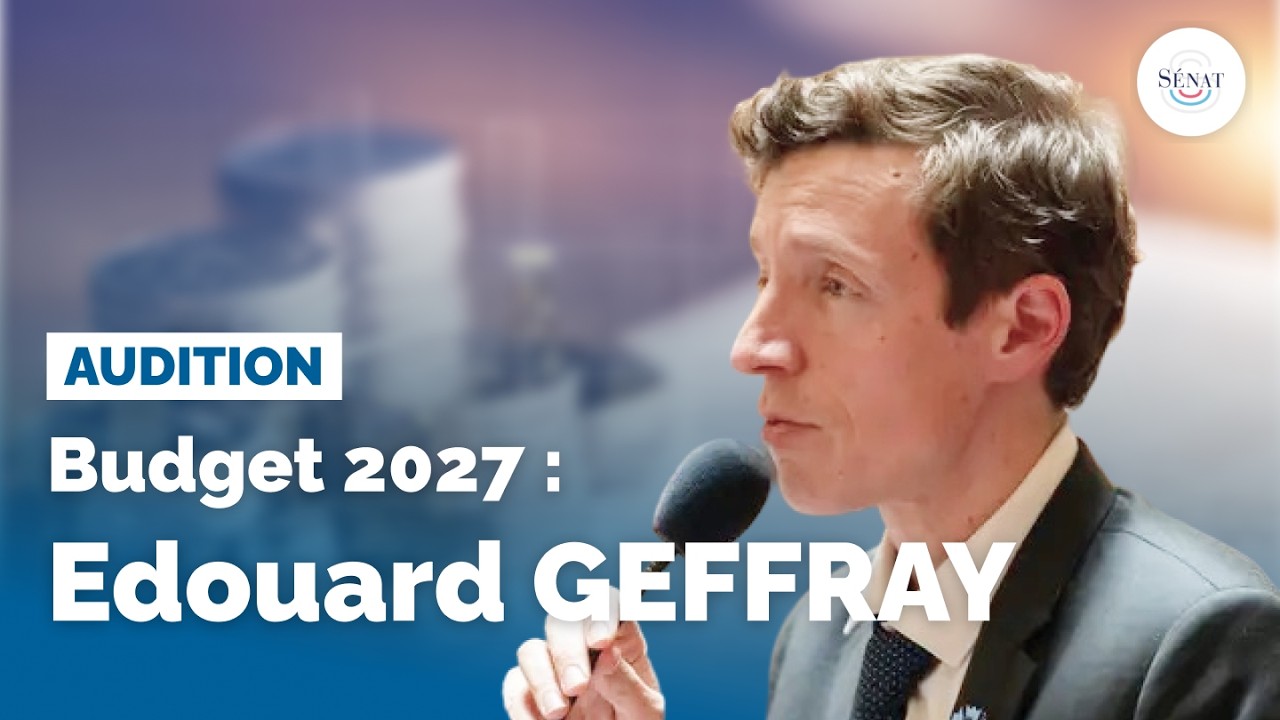
Budget 2027 : audition d'Édouard Geffray
2027 Budget: Hearing with Edouard Geffray
Keywords
Summary
219 words
Critical Evaluation
Value of the Information & Strength of the Argument
The informational value is high for a political-administrative source: the hearing compiles demographic projections, staffing arithmetic, class-size targets, support-staff numbers and crisis-management figures in one sequence. It exposes the government’s trade-offs more clearly than a press release would, especially the shift from across-the-board post reductions to a 38% demographic replacement rate and targeted creations in support functions. The argumentation is structured around a demographic determinism: because pupil numbers are falling, the state can both reduce teacher numbers and improve class sizes. This is presented as an opportunity, but the hearing does not supply detailed costing, sensitivity tests or evidence that the proposed staffing mix will produce the claimed learning gains. The minister also makes causal claims about the 800 priority colleges and about violence trends that are asserted rather than demonstrated in the transcript. The reasoning is coherent at the level of budgetary presentation, but it remains political argumentation rather than a documented policy evaluation.
Scientific Rigor, Source Quality, Title Accuracy
The source is an official Senate committee hearing, which gives it procedural value and direct access to ministerial statements. However, the material is political testimony: figures are announced without accompanying tables, methodological notes or independent verification, and references to PISA and a 2025 Senate report on school mapping are not cited with links in the supplied description. The transcript is also truncated mid-sentence, so the full questioning and any later corrections or qualifications are missing. No external source in the hearing is systematically compared with the minister’s claims. The title is adequate: it clearly identifies a budget hearing with Édouard Geffray, and the transcript is consistent with that framing, even though the available text covers only the opening phase.
289 words
Title / Content Match
The title accurately announces a Senate committee hearing with Édouard Geffray on the 2027 budget; the transcript matches that subject, although it is truncated before the full question-and-answer session.
Quality & Reliability
6/10
Official Senate recording giving direct access to ministerial statements and figures, but it is a political hearing rather than a scientific study; claims are not independently documented in the transcript, and the supplied text is truncated.
Key Moments
Markers derived by PSI from the transcript: the creator did not define chapters.
- The committee chair opens the hearing and frames the autumn lycée crisis.
- The chair details security incidents, injuries and disciplinary procedures.
- The chair turns to the 2027 budget, demographic decline and staffing questions.
- The minister begins his statement on the crisis, violence figures and lycée unrest.
- The minister presents demographic projections and the 38% replacement-rate proposal.
- The minister discusses class-size targets and the OECD comparison.
- The minister details AESH, CPE, medico-social and teacher-training posts.
- The minister turns to lycée amendments, the cap of 28 in seconde and 500 posts.
- The minister discusses replacement, long-term absence and the birth-leave reform.
Cited Sources
- PISA assessment results — Mentioned by the minister as background on French school performance.
- 2025 Senate report on school mapping — Cited by the committee chair as recommending planning of the 2035 school network with local actors.
- Projet de loi de finances pour 2027 — The budget text under examination, including the mission enseignement scolaire and proposed amendments.
- 13 November telegram to rectors and prefects — Cited by the chair in relation to intrusions and mortar fire in schools.
Concurring Sources
- OECD PISA — International assessment referenced for school-performance context.
- INSEE — Official French demographic statistics relevant to the birth and pupil-number trends discussed.
- OECD Education at a Glance — Comparative indicators relevant to class-size and education-spending benchmarks, cited in the hearing without a specific reference.
Contribution & Novelties
The hearing’s original value lies in exposing, in one place, the government’s 2027 school-budget arithmetic and its political trade-offs: how demographic decline is converted into staffing decisions, class-size targets, support-staff recruitment and lycée crisis measures. It also gives ministerial figures on violence and disciplinary action and shows the sequencing of amendments before the Senate. It is not a novel scientific result; it is a primary political-administrative source.
Pour aller plus loin:
- OECD PISA — International benchmark cited in the hearing for school performance.
- OECD Education at a Glance — Comparative education indicators relevant to class-size and spending comparisons, cited here without a URL because the exact page is uncertain.
- INSEE — French official statistics source for demographic and population projections.
- French Senate committee reports on school mapping — cited in the hearing as a 2025 planning reference, without a URL in the supplied description.
144 words
Radar Profile
The radar shows a high volume of information and moderate technical density, driven by many figures and policy measures presented in a long official hearing. Quality and reliability remain mid-range because the material is political testimony, with claims that are not independently evidenced in the transcript.