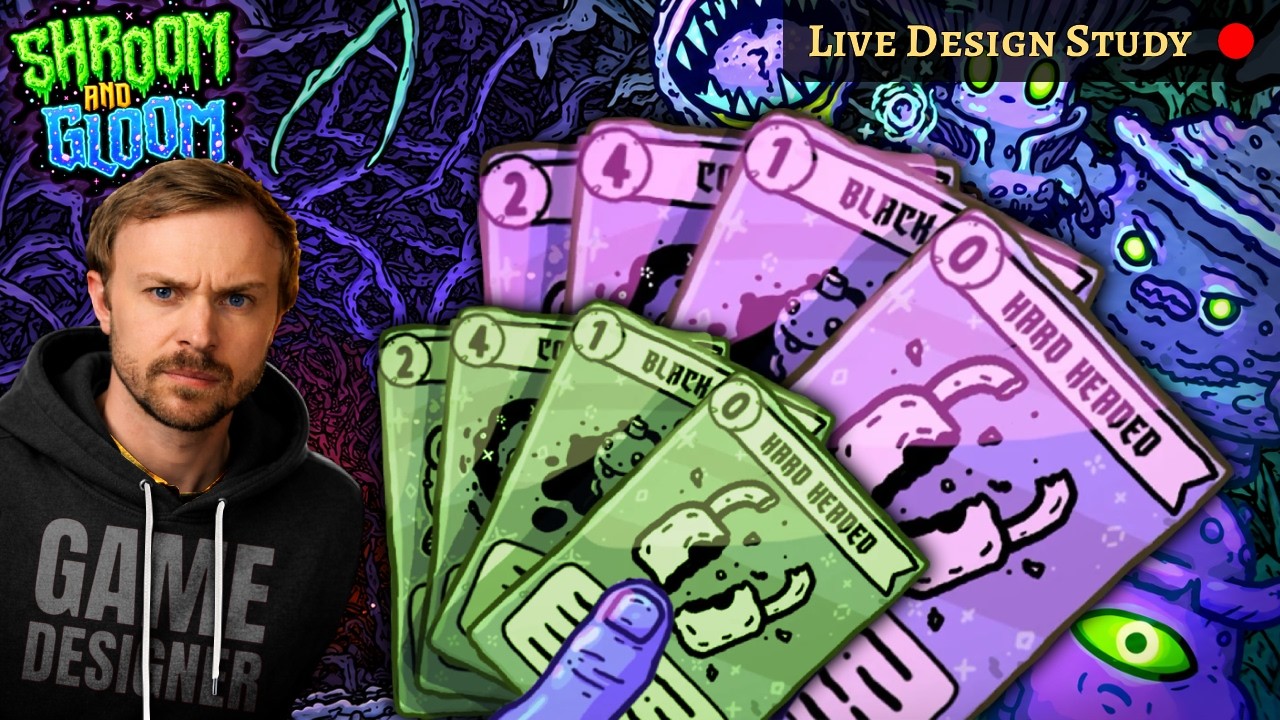
What the Mush Is a Double Deckbuilder? | Shroom and Gloom First Run
Keywords
Summary
142 words
Critical Evaluation
Value of the Information & Strength of the Argument
The video provides genuine value to game design enthusiasts by showcasing a real-time analysis of a new game’s systems from a designer’s perspective. The argumentation is experiential: the creator bases his observations on direct trial-and-error, which lends credibility to his critiques of information overload and unclear feedback. He articulates the trade-off between depth and accessibility, using concrete examples from card interactions. However, the analysis is exploratory rather than conclusive, and some conclusions are tentative due to the blind-play format. The commentary is candid, acknowledging moments of confusion, which adds authenticity but reduces the authority of his claims.
Scientific Rigor, Source Quality, Title Accuracy
No external sources are cited; the content relies solely on gameplay footage and the creator’s knowledge. The absence of references limits the ability to verify claims about game design principles, though the observations are internally consistent. The title accurately frames the session as an inquiry into the ‘double deckbuilder’ concept, and the content stays on that topic, even if a clear definition is never fully delivered. No comments were provided for analysis, so public reception cannot be assessed.
190 words
Title / Content Match
The title poses a question about the game's core mechanic (double deckbuilder) and the video directly addresses it through hands-on exploration, making the content match the title well, with only a minor gap as the answer is not fully resolved by the end.
Quality & Reliability
6/10
The creator is a game designer providing analytical commentary on game mechanics, but the content is based on a blind playthrough with admitted confusion about several systems. No external sources are cited, and conclusions are drawn from direct observation. The reliability is moderate, typical for exploratory gameplay analysis.
Key Moments
Markers derived by PSI from the transcript: the creator did not define chapters.
- Introduction and explanation of the stream, and starting the tutorial with shovel pickup.
- First combat encounter; learning card attacks and the 'toasty' mechanic.
- Confusion about energy and rest mechanics, discovering the need to rest for energy.
- Exploring the map, encountering the mole vendor, and buying a hammer.
- Deep dive into combat strategy with vulnerable status and multi-hit cards.
- Attempting to break through blocked paths and dealing with the 'gloom beckons' penalty.
- Final battle of the run, using inferno card and reflecting on the overwhelming card complexity.
Contribution & Novelties
The video contributes a rare first-impression analysis of ‘Shroom and Gloom’, a title still in development, offering insights into how a designer interprets and critiques emergent mechanics without prior context. The focus on the ‘double deckbuilder’ mechanic is particularly original, as it explores the interplay between two separate card pools (combat and exploration) and their integration. The creator’s candid reaction to the learning curve provides valuable feedback for game developers.
Pour aller plus loin :
- Deck-building game (Wikipedia) — Core concept of deck management, relevant to the video’s subject.
- Roguelike (Wikipedia) — Understanding the ‘roguelike’ genre elements seen in Shroom and Gloom.
- Game design (Wikipedia) — General principles discussed throughout the analysis.
112 words
Radar Profile
The profile shows moderate-to-high scores in quantity of information and technical level, reflecting the deep dive into mechanics, while lower reliability scores indicate the exploratory and unverified nature of the content. The overall balance suggests an informative but not authoritative source.