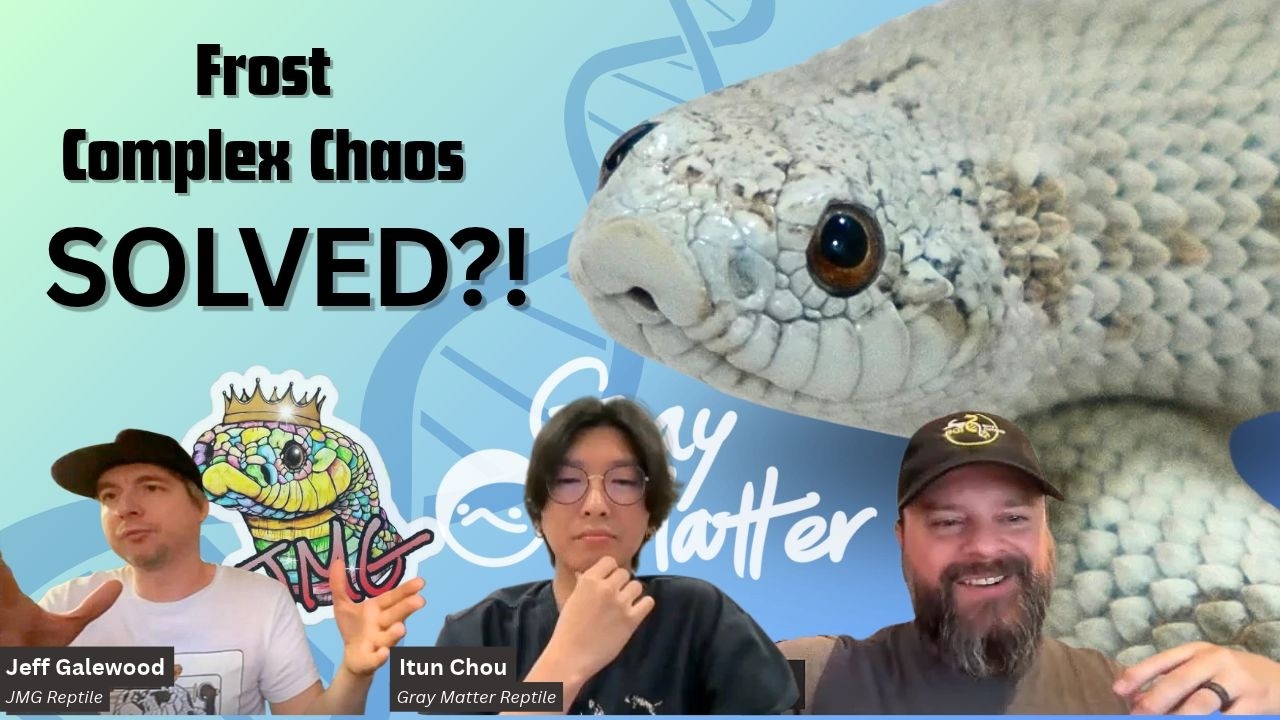
Evidence For LINKAGE In The Frost Complex! | Reptile Genetics Weekly Ep 170
Title history
- Evidence For LINKAGE In The Frost Complex! | Reptile Genetics Weekly Ep 170 — observed on 20261119-0941 UTC (YouTube)
Keywords
Summary
128 words
Critical Evaluation
Value of the Information & Strength of the Argument
The value of this video lies in its presentation of original research data on genetic linkage in hognose snakes, a topic rarely covered in accessible detail. The argumentation is built upon empirical breeding records and genetic analysis, with the hosts clearly explaining the rationale behind their conclusions. They acknowledge uncertainties and emphasize the need for further validation, which strengthens credibility. The discussion is thorough and provides actionable insights for breeders, such as expected phenotypic ratios when crossing linked genes. However, the commercial context of the channel and the involvement of a business selling genetic tests slightly detracts from objectivity, though the scientific reasoning itself is sound.
Scientific Rigor, Source Quality, Title Accuracy
The rigor is commendable: the hosts cite a blog post by Gray Matter Reptile which apparently details the research, and they reference a spreadsheet with clutch data. These are tangible sources, though not peer-reviewed. The title is accurate, aligning with the content. The video includes announcements about new commercial tests, but these are clearly separated from the scientific discussion. The adéquation between title and content is strong. No public comments were provided, so trends cannot be analyzed.
198 words
Title / Content Match
The title accurately reflects the main topic: evidence for genetic linkage within the Frost complex in hognose snakes, which is the core scientific discussion of the episode.
Quality & Reliability
7/10
The video presents expert discussion on reptile genetics with specific research findings, but it is from a commercial lab channel, which may introduce bias toward their own tests and services. The scientific content appears credible and references external sources, though peer-reviewed literature is not cited.
Key Moments
Markers derived by PSI from the transcript: the creator did not define chapters.
- Introduction and laboratory updates, including new sex determination tests for various python species.
- Discussion begins on the Frost complex and the observed unusual inheritance patterns in hognose snakes.
- Detailed explanation of genetic linkage and analysis of clutch data, including recombination rates.
- Implications for breeders, potential crossing strategies, and recap of the evidence.
- Closing remarks and future research directions.
Cited Sources
- Frost/Hypo/Caramel Explanation (Gray Matter Reptile) — Referenced as the primary blog post detailing the linkage analysis.
- Frost Calculator — Mentioned as a tool for predicting outcomes in Frost complex breeding.
- Jeff's Frost Clutch Spreadsheet — Provided as raw data supporting the inheritance patterns discussed.
- Submit Sheds For Future Research — Encourages viewers to contribute samples for ongoing studies.
- How To Order Your Own Genetic Test — Mentions the commercial testing services offered by the channel.
External References
Contribution & Novelties
This video contributes a clear, evidence-based explanation of genetic linkage in the Frost complex, a phenotype that puzzled breeders. It provides real breeding data and statistical expectations, moving beyond anecdotal observations. The episode also showcases how hobby breeders can collaborate with geneticists to solve complex inheritance puzzles.
Pour aller plus loin :
- Genetic linkage — Provides fundamental background on the concept of genes being inherited together due to physical proximity.
- Linkage disequilibrium — Explains the non-random association of alleles, relevant to understanding why Frost, Caramel, and Hypo co-occur.
- Genetic recombination — Discusses the process that can break up linked genes during meiosis, key to predicting recombination frequencies.
107 words
Radar Profile
The radar profile shows high scores in information quantity and technical level, reflecting the in-depth scientific discussion. Quality and reliability are slightly lower due to the commercial context and lack of peer-reviewed citations, but overall the content is well-structured and informative.