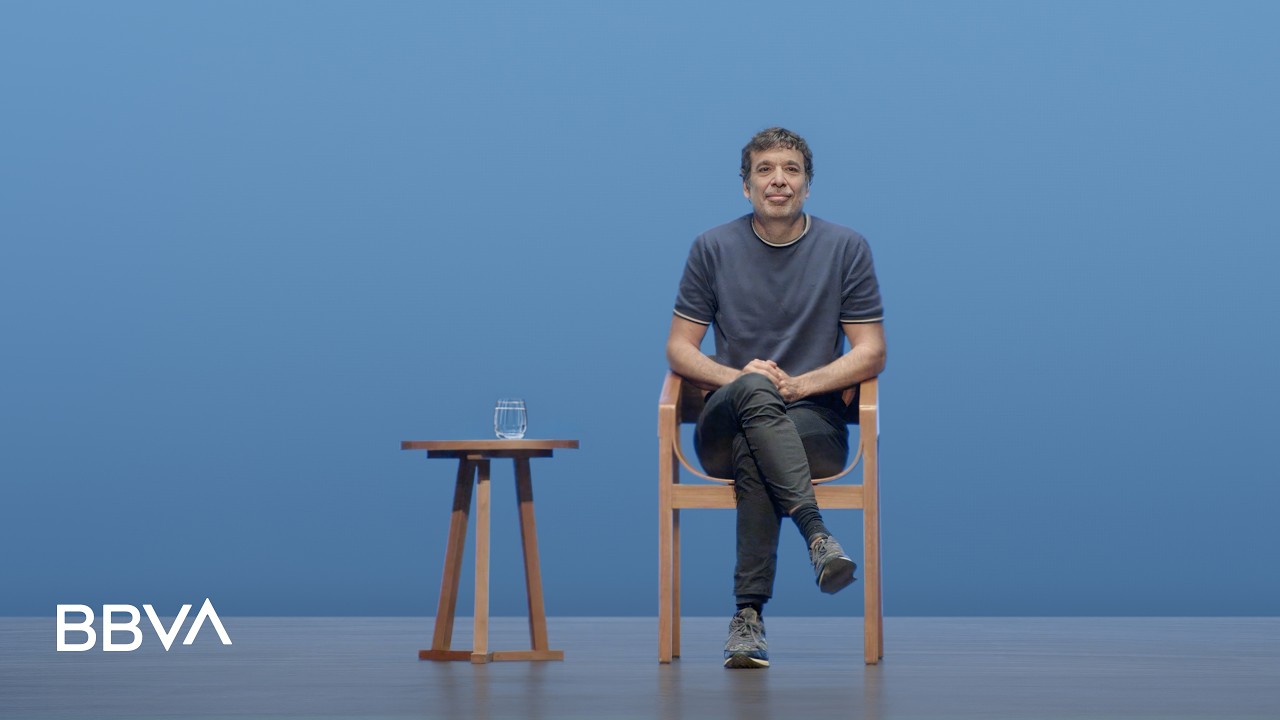
El amor no se siente. Se construye| Mariano Sigman, neurocientífico
Love isn't something you feel. It's something you build | Mariano Sigman, neuroscientist
Title history
- El amor no se siente. Se construye| Mariano Sigman, neurocientífico — observed on 20261109-1352 UTC (YouTube)
Keywords
Summary
196 words
Critical Evaluation
Value of the Information & Strength of the Argument
The value of this talk lies in its refreshing and accessible reframing of love as a skill that requires deliberate practice, moving beyond romanticized and passive notions. Sigman’s argumentation is structured around illustrative anecdotes and philosophical references, particularly to Erich Fromm, which makes the content relatable but also somewhat anecdotal. He effectively challenges common misconceptions and offers practical insights, such as the distinction between empathy and compassion and the importance of responsibility in love. However, the argumentation relies more on personal experience and philosophical reasoning than on robust scientific evidence. While Sigman mentions scientific studies on compassion, he does not provide specific references, which limits the depth of the evidence-based component. Overall, the talk offers valuable perspective shifts and practical wisdom, but its argumentation would benefit from more explicit citations to empirical research.
Scientific Rigor, Source Quality, Title Accuracy
The scientific rigor is moderate. Sigman is a credible neuroscientist, but he primarily shares opinions and reflections, with only occasional references to scientific concepts such as the study of compassion and humor. He is careful not to simplify love to neurochemicals, which is a scientifically sound stance. The sources he directly mentions include the work of Erich Fromm and a reference to Jacobo Bergareche, but no specific scientific publications are cited. The description provides links to the Aprendemos juntos platform and podcast, but these are institutional rather than primary scientific sources. The title accurately reflects the content, emphasizing the constructed nature of love. The talk is positioned as a personal and philosophical exploration rather than a peer-reviewed review, which is appropriate for the format. Adequation between title and content is strong, as it consistently addresses the theme of building love.
288 words
Title / Content Match
The title accurately captures the central thesis that love is an art to be built and practiced, rather than a passive feeling to be experienced.
Quality & Reliability
7/10
The talk is delivered by a recognized neuroscientist, but the content is largely based on personal reflections and philosophical references rather than empirical studies. The scientific claims are presented with appropriate caution, and the presentation maintains an exploratory, non-prescriptive tone. The reliability is moderate due to the predominantly opinion-based nature and the lack of specific citations to studies or data.
Chapters
- El amor es un arte que se aprende
- Cómo ayudar a alguien sin hundirnos con su sufrimiento
- Qué es el amor propio y cómo podemos practicarlo
- Cómo acercarnos a nuestros hijos en el mundo digital
- ¿Existe la media naranja? El mito y la ciencia de los besos
- Cómo aprender a disfrutar la vida y el paso del tiempo
Cited Sources
- Aprendemos juntos BBVA — Official platform hosting the video and additional educational content.
- Aprendemos juntos podcast on Spotify — Audio version of the talk available as a podcast.
Concurring Sources
- The Art of Loving - Wikipedia — Supports the idea from Erich Fromm that love is an art to be practiced, aligning with the video's argument.
Contribution & Novelties
The talk provides an original synthesis of philosophical and psychological perspectives on love, emphasizing the need to actively construct and practice love rather than passively experience it. It offers a nuanced discussion of empathy versus compassion, suggesting that compassion may be more effective than empathy when supporting someone in distress, which is a valuable and somewhat counterintuitive insight. The integration of personal anecdotes and audience questions makes the content engaging and relatable, while avoiding prescriptive ‘recipes’ for love. The contribution lies in prompting reflection and moving beyond common myths.
Pour aller plus loin :
- The Art of Loving by Erich Fromm — Foundational text that frames love as an art requiring knowledge and effort, directly supporting the talk’s central theme.
- Empathy — Overview of empathy including its mechanisms and limitations, relevant to the discussion of empathy vs. compassion.
- Compassion — Entry explaining compassion as a feeling of concern and action to help, contrasting with empathy as highlighted in the video.
- Golden Rule — Ethical principle ‘do unto others as you would have them do unto you’, which the video critiques as insufficient for love, illustrating a common misconception.
188 words
Radar Profile
The profile shows a balanced distribution across quantity, quality, and reliability, with technical level lower relative to other dimensions, reflecting the accessible and opinion-oriented nature of the talk. The high quantity and quality of information compensate for the moderate technical depth, making the content informative but not highly specialized.