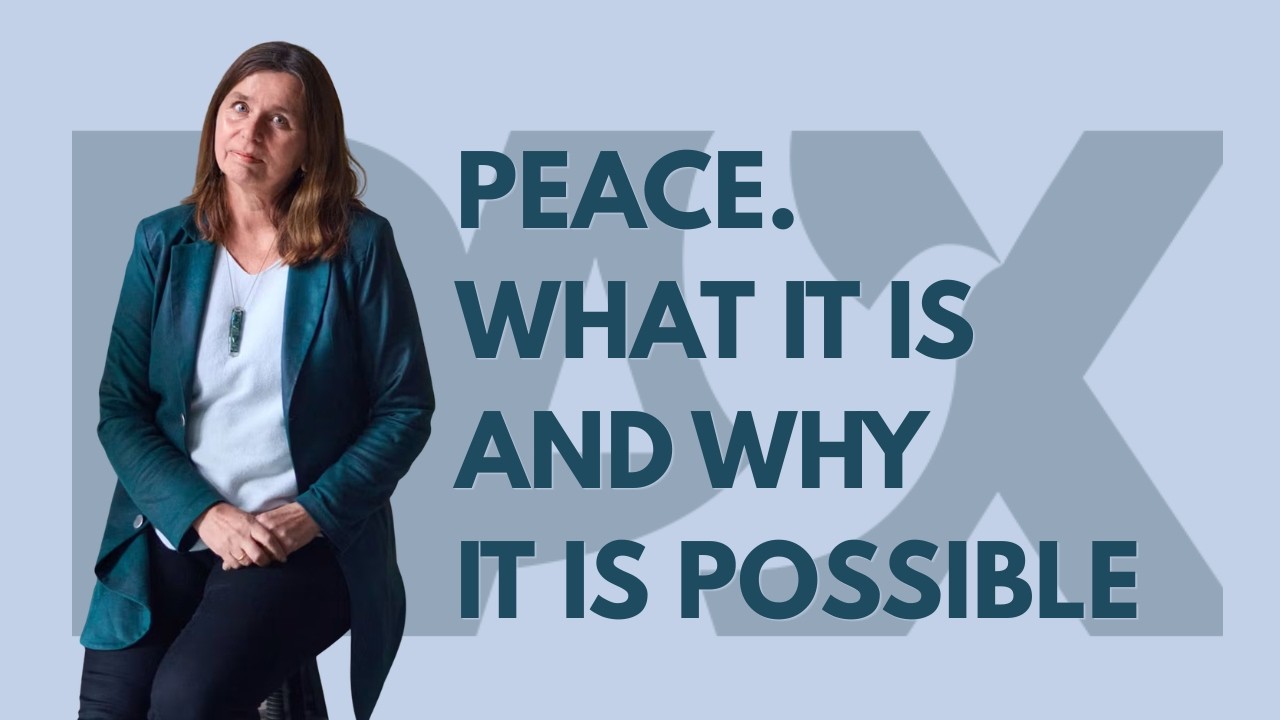
Lecture | Peace, What It Is and Why It Is Possible | Rolien Sasse
Keywords
Summary
169 words
Critical Evaluation
Value of the Information & Strength of the Argument
The lecture provides valuable insights from a practitioner’s perspective, blending personal anecdotes with references to policy debates. The speaker makes a persuasive case for a balanced approach to security, acknowledging the necessity of defense while warning against its over-prioritization. Arguments are logically structured and address counterpoints, such as the need for military support in Ukraine. However, the reliance on anecdotal evidence and lack of rigorous citation for some statistics weakens the academic robustness.
Scientific Rigor, Source Quality, Title Accuracy
The talk rests on the speaker’s professional experience and mentions specific sources like SIPRI and the UN’s SDG financing gap, but these are not cited with precise references. The title accurately matches the content, which is a broad exploration of peace and its feasibility. There is no significant discrepancy between title and content.
141 words
Title / Content Match
The title accurately reflects the content, which discusses the concept of peace and its attainability.
Quality & Reliability
7/10
The speaker draws on extensive field experience and cites specific reports (SIPRI, UN) but explicitly states the talk is practice-based, not scientific research. Claims are coherent and balanced, but some figures lack precise sourcing.
Key Moments
Markers derived by PSI from the transcript: the creator did not define chapters.
- Introduction: 65 armed conflicts worldwide, rising defense budgets, costs of war.
- Personal experiences in conflict zones; war and peace as human choices.
- PAX and the 4D approach (diplomacy, development, defense, democracy).
- Visit to Ukraine: testimonies, social cohesion work, need for military support.
- Critique of defense industry, inefficiency, corruption, deterrence risks.
- Alternative tools for peace: diplomacy, justice, dialogue, development.
- Conclusion: peace starts with individuals, but requires collective action.
Cited Sources
- Vrede: Wat het is en waarom het kan — Speaker's book published in 2025, on which the lecture is based.
- PAX (peace organization) — The organization the speaker leads; mentioned background on their work.
Concurring Sources
- Stockholm International Peace Research Institute (SIPRI) — Cited for the statistic on defense spending increase.
- United Nations — Mentioned regarding SDG financing gap and international order.
Contribution & Novelties
This lecture offers a practitioner’s perspective on peacebuilding, synthesizing field experiences with policy critique. It adds nuance to the debate on rearmament in Europe, arguing for a comprehensive approach that includes military defense but not exclusively. The 4D framework is a concise tool for integrating diverse strategies.
Pour aller plus loin :
- Peace and conflict studies — Academic field examining causes and resolution of conflicts.
- Nonviolent resistance — Historical and contemporary examples of nonviolent strategies.
- United Nations Sustainable Development Goals — Related to the financing gap mentioned in the lecture.
- Hybrid warfare — Context for the speaker’s reference to hybrid threats.
101 words
Radar Profile
The profile shows high scores on information quantity and quality, moderate technical level, and good reliability, reflecting a well-structured talk based on professional experience rather than academic rigor.