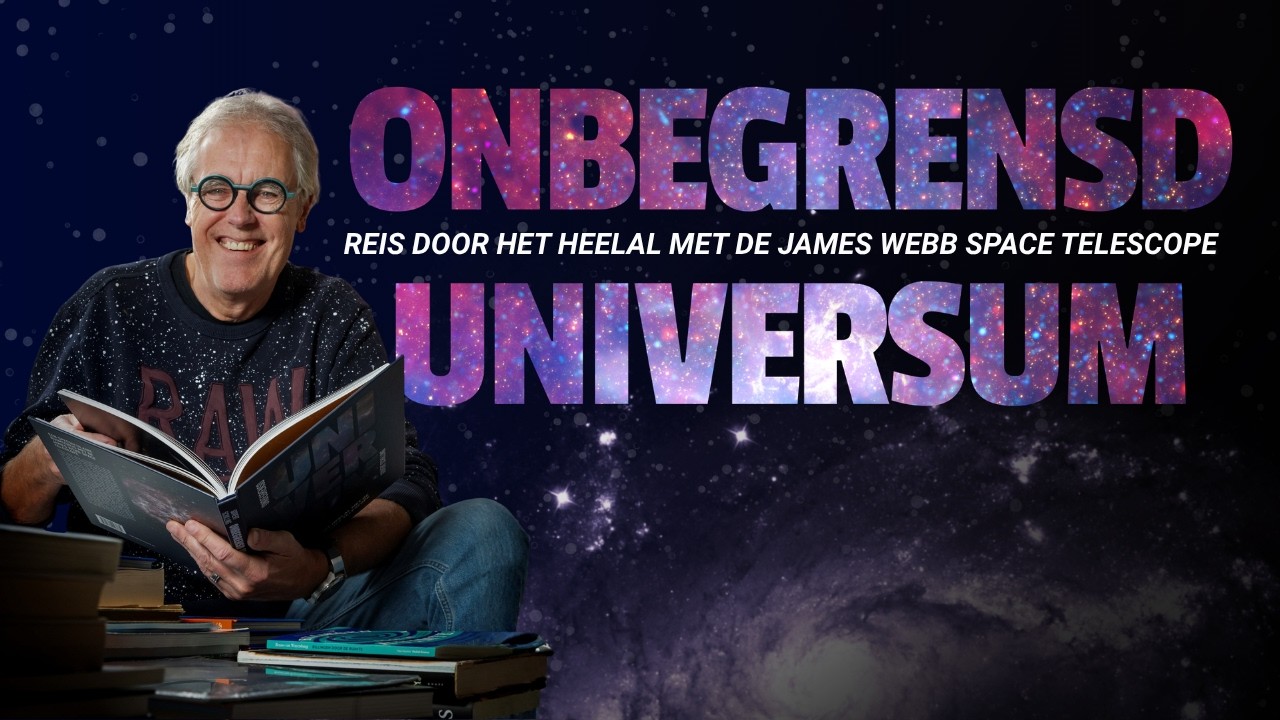
Lezing | Onbegrensd universum | Reis door het heelal met de James Webb Space Telescope | Schilling
Title history
- Lezing | Onbegrensd universum | Reis door het heelal met de James Webb Space Telescope | Schilling — observed on 20261119-1754 UTC (YouTube)
Keywords
Summary
179 words
Critical Evaluation
Value of the Information & Strength of the Argument
The value of the information is high: Schilling synthesizes a wide range of astronomical knowledge, from historical developments to current technology, and explains how the JWST addresses key research questions. The argumentation is solid, progressing logically from the basics of optical telescopes to the specific advantages of infrared astronomy. He uses effective analogies, such as comparing the spectrum of light to a symphony and dust clouds to walls, to clarify why infrared observation is necessary. Each point is supported by concrete examples, such as the Pillars of Creation and the redshift of distant galaxies. The reasoning is transparent, and the lecturer avoids speculation, sticking to well-established science.
Scientific Rigor, Source Quality, Title Accuracy
The scientific rigor is excellent; the lecture is based on widely accepted astronomical findings and historical facts, and the speaker’s expertise ensures accurate representation. The title accurately reflects the content, which is a lecture about the universe as seen through the JWST. Although no specific external sources are cited in the video, the information aligns with current scientific consensus. The description mentions only the speaker as a science journalist. The title and content match well, and the presentation is coherent and trustworthy.
204 words
Title / Content Match
The title accurately reflects the content: a lecture about the vast universe and the journey through it using the James Webb Space Telescope.
Quality & Reliability
9/10
The speaker is a renowned Dutch science journalist specialized in astronomy, and the lecture presents established scientific facts accurately, with no controversial or misleading claims. The content is up-to-date and well-structured, making it highly reliable.
Key Moments
Markers derived by PSI from the transcript: the creator did not define chapters.
- Introduction and welcome; setting the cosmic perspective.
- Showing and explaining the 'Cosmic Voyage' film to illustrate scales.
- History of telescopes: Lipperhey, Galileo, Herschel.
- Ground-based giants: Hale Telescope, Very Large Telescope, and future Extremely Large Telescope.
- Hubble Space Telescope and the need for space observatories.
- Introduction to the James Webb Space Telescope: its mirror and orbit.
- Three reasons for infrared astronomy: star birth, distant galaxies, molecules.
- Construction and launch of JWST; conclusion and final thoughts.
Cited Sources
- Cosmic Voyage (film) — Film shown at the beginning of the lecture to illustrate the scale of the universe.
Contribution & Novelties
This lecture provides a comprehensive, accessible overview of the James Webb Space Telescope, blending historical context with current scientific applications. It contributes by clearly explaining the three main advantages of infrared astronomy in a way that a general audience can grasp, while also offering behind-the-scenes details of the telescope’s construction.
Pour aller plus loin :
- NASA JWST official page — Official site with detailed information about the telescope and its discoveries.
- James Webb Space Telescope - Wikipedia — Comprehensive article covering the mission, design, and scientific results.
- Redshift - Wikipedia — Explanation of the phenomenon that makes infrared observation essential for studying distant objects.
- ESO Extremely Large Telescope — Information about the next generation ground-based telescope mentioned in the lecture.
120 words
Radar Profile
The radar profile shows a well-balanced lecture with high scores in information quantity, quality, technical level, and reliability, reflecting a thorough and scientifically sound presentation.