10 Interesting Scientific Discoveries for November of 2026
Keywords
Summary
364 words
Critical Evaluation
Value of the Information & Strength of the Argument
The informative value lies in breadth and compression rather than depth. Each item is reduced to a few load-bearing facts — 192 laser beams on a pencil-eraser-sized cylinder, 30 amphorae, a genome built from saliva swabs, an age of 4.565 billion years derived from dolomite, a spin limit of 2.2 rotations per hour, two bodies above 2 km turning once every five minutes, a 115-million-year age — and each is immediately placed in a wider frame: asteroid defence strategy, the ethics of sampling a very old animal, the terminology of archaeological periods, the difference between rubble-pile and monolithic impactors, the habitability implications of subsurface heat. That framing is the real content: the presenter consistently asks what a result changes rather than merely what was measured, and several items are connected to each other (DART crater and ejecta boulders feed directly into the fast-rotator discussion), which produces a coherent thread across otherwise unrelated fields.
The argumentation, however, is narrative and associative rather than demonstrative. Causal chains are sketched in a single step and left there: hydrogen chloride in the Martian atmosphere is attributed to fissures near Alba Mons, which is taken as evidence of shallow magma, which in turn is taken to strengthen the case for extant microbes; each link is plausible but only the first is presented as empirically constrained, and the presenter acknowledges that the mesospheric dynamics work was difficult and will attract criticism. Elsewhere, quantitative claims are given without the comparison that would make them meaningful — a crater ‘orders of magnitude’ larger than predicted, fusion yielding ’trillions of watts’ — and the record X-ray statement is asserted rather than situated against earlier laboratory sources. The reasoning is at its strongest when it is explicitly epistemic: the video flags item 4 as speculative, corrects the widely repeated ‘first dinosaur red blood cells’ framing by recalling earlier contested candidates, distinguishes impressions in travertine from preserved wood, and notes why carbon dating is unavailable without wood. Those passages show a genuine concern with what is established versus what is inferred. It is at its weakest when rhetorical momentum takes over — the closing riff on Saturn and Euclid, the repeated ’this seems to me to have the makings of a trend’ — where personal prediction is voiced in the same register as reported findings. No numbers are given error bars, no effect sizes are discussed, and no alternative explanation is weighed against the preferred one; the listener receives a set of well-chosen conclusions without the means to audit them.
Scientific Rigor, Source Quality, Title Accuracy
No scientific reference is supplied anywhere in the video or in the description, which contains only music licensing links (Chris Zabriskie, Creative Commons) and the author’s own Patreon and second channel. The viewer who wants to verify a claim must reconstruct it from the institutional names mentioned — Lawrence Livermore National Laboratory, the University of Colorado, a university in Perth, the Vera Rubin Observatory, ESA’s Hera mission, JAXA’s Hayabusa2, the ExoMars Trace Gas Orbiter — and from the object names: Dimorphos, Didymos, Ryugu, Bennu, Alba Mons, Aratasaurus, St. Helena, Jonathan. That is enough to find the underlying work, but it is not a citation apparatus, and several statements are unverifiable as formulated, notably the attribution of the Brazilian specimen to a specific Australian laboratory and the dating of the Turkish wreck, which the presenter himself concedes is uncertain because no wood survives for radiocarbon analysis. The strongest element of source discipline is internal: the video distinguishes what is confirmed from what is contested, recalls earlier inconclusive claims about fossil blood cells, notes that the Neanderthal sample was reduced from 600 objects to 13 securely attributed ones, and states plainly when a claim is speculative. The weakest is the treatment of numbers, which are quoted as headlines without the caveats attached to them in the original work.
On title and content, the match is good. Ten items are indeed presented, numbered, and dated to the stated month, in the format the channel has established; the opening Hera news segment is additional rather than a substitute. The only slippage is that a few entries are predictions or interpretations rather than discoveries proper — the tattoo dyes are a laboratory prospect, the asteroid-population argument is an inference from two objects — but the video does not hide this and in one case labels it explicitly.
736 words
Title / Content Match
The title is fully honoured: ten distinct items are presented and numbered in reverse order, all dated to the November 2026 news window, with an opening news segment on Hera. Only the framing is slightly looser than the title suggests, since two or three items are speculative or explicitly flagged as such.
Quality & Reliability
5/10
The video is a well-informed monthly news roundup by a science communicator who clearly follows the literature and occasionally corrects widespread media misreporting (notably on the dinosaur blood-cell claim). Institutions, missions and numbers are named with enough precision to be traceable, but no paper, journal, author or DOI is cited, no data is shown, and several strong statements (crater size 'orders of magnitude' above prediction, Martian volcanism, fusion X-ray record) are delivered without the qualifying detail that would let a viewer check them. Reliability is therefore that of a competent secondary summary, not of a documented review.
Key Moments
Markers derived by PSI from the transcript: the creator did not define chapters.
- Item 10: windowed target cylinder at Lawrence Livermore yields the brightest laboratory X-ray source ever measured during a fusion ignition shot.
- Item 9: a 4,500-year-old wreck off Turkey identified by 30 flat-bottomed amphorae, with a digression on why later amphorae were tapered.
- Item 8: genome of Jonathan the Aldabra tortoise assembled from saliva swabs, showing mitochondria functioning as in a five-year-old.
- Item 7: photochromic tattoo inks at the University of Colorado, 16 base colours expandable to over 300, switchable by wavelength.
- Item 6: Ryugu samples nearly free of chondrules, dated to 4.565 billion years, supporting staggered asteroid formation.
- Item 5: Spanish rock-shelter survey of wood and wood impressions argues Neanderthal woodworking matched that of Homo sapiens.
- Item 4: Vera Rubin fast rotators, two 2 km asteroids spinning every five minutes, and what they imply for DART-style deflection.
- Item 3: hydrogen chloride traced to fissures near Alba Mons as evidence of shallow magma and possible subsurface habitats on Mars.
- Item 2: red blood cells with haemoglobin residues recovered from a 115-million-year-old Aratasaurus bone, closing an older debate.
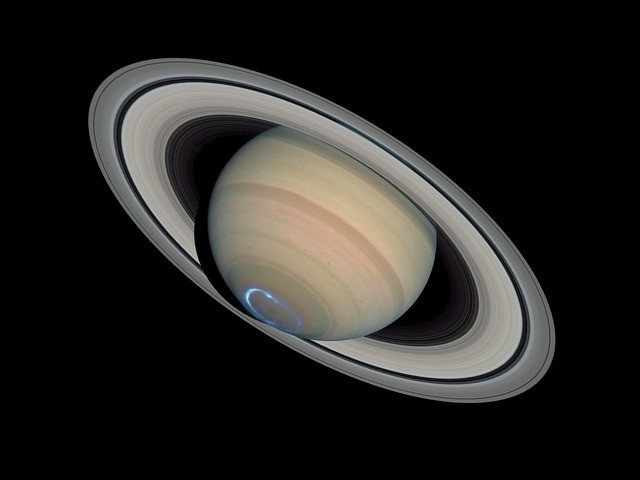
- Item 1: a ten-sided polar feature confirmed at Saturn's south pole, larger than the northern hexagon and apparently storm-linked.
Concurring Sources
- Double Asteroid Redirection Test — mission overview — Confirms the impact geometry, the orbital-period change of Dimorphos and the subsequent Hera reconnaissance phase described in the introduction and item 4.
- 162173 Ryugu — sample-return target of Hayabusa2 — Corroborates the origin, retrieval and primitive aqueously altered nature of the Ryugu samples discussed in item 6.
- Chondrule — Supports the framework the video uses: chondrules as early nebular solids and their variability across meteorite classes, which makes their scarcity in Ryugu material significant.
External References
Contribution & Novelties
The contribution is editorial rather than scientific: the video assembles ten contemporaneous results across planetary science, fusion physics, palaeontology, archaeology and biology, and supplies the connective reasoning that individual press releases rarely provide. Its most original move is the explicit bridge between the DART/Hera aftermath and the Vera Rubin fast-rotator sample, which turns two separate stories into a single open question — whether kinetic impactors will behave the same against monolithic asteroids as against rubble piles — and a concrete recommendation to repeat the experiment on a harder target before declaring the impact hazard solved. Secondary contributions include the terminological argument that ‘Stone Age’ may understate the role of wood, and the methodological point that ancient DNA work on a single charismatic animal can be designed around the animal’s welfare (saliva rather than blood) at the cost of noisier data.
Further reading:
- Double Asteroid Redirection Test — Background on the impactor whose crater and ejecta the Hera mission is now surveying, and on the momentum-transfer measurements discussed in items 4 and the introduction.
- National Ignition Facility — Context for the ignition experiments behind item 10; if this exact address does not resolve, search the facility by name.
- 162173 Ryugu — Overview of the Hayabusa2 target and its returned samples, relevant to the missing-chondrule puzzle in item 6.
- Chondrule — The millimetre-scale components whose near-absence in Ryugu material drives the revised accretion timeline.
- Saturn’s hexagon — The northern polar jet structure against which the newly reported southern decagon should be compared.
- Alba Mons and the ExoMars Trace Gas Orbiter — Cited by name only: the Martian volcanism argument in item 3 depends on these two, and both are easily located in the planetary-science literature.
283 words
Radar Profile
The profile is that of a broad, well-curated news digest: high information quantity and solid technical vocabulary, but a quality and reliability ceiling set by the absence of any citable reference or displayed data. Technical level sits mid-range — enough numbers and mechanism to be substantive, not enough derivation to be demanding. The gap between quantity and reliability is the signature of a single-voice roundup rather than a documented review.