Lecture 16 on Topic 11: Electrical and Transport Properties
Title history
- Lecture 16 on Topic 11: Electrical and Transport Properties — observed on 20261114-0306 UTC (YouTube)
Keywords
Summary
113 words
Critical Evaluation
Value of the Information & Strength of the Argument
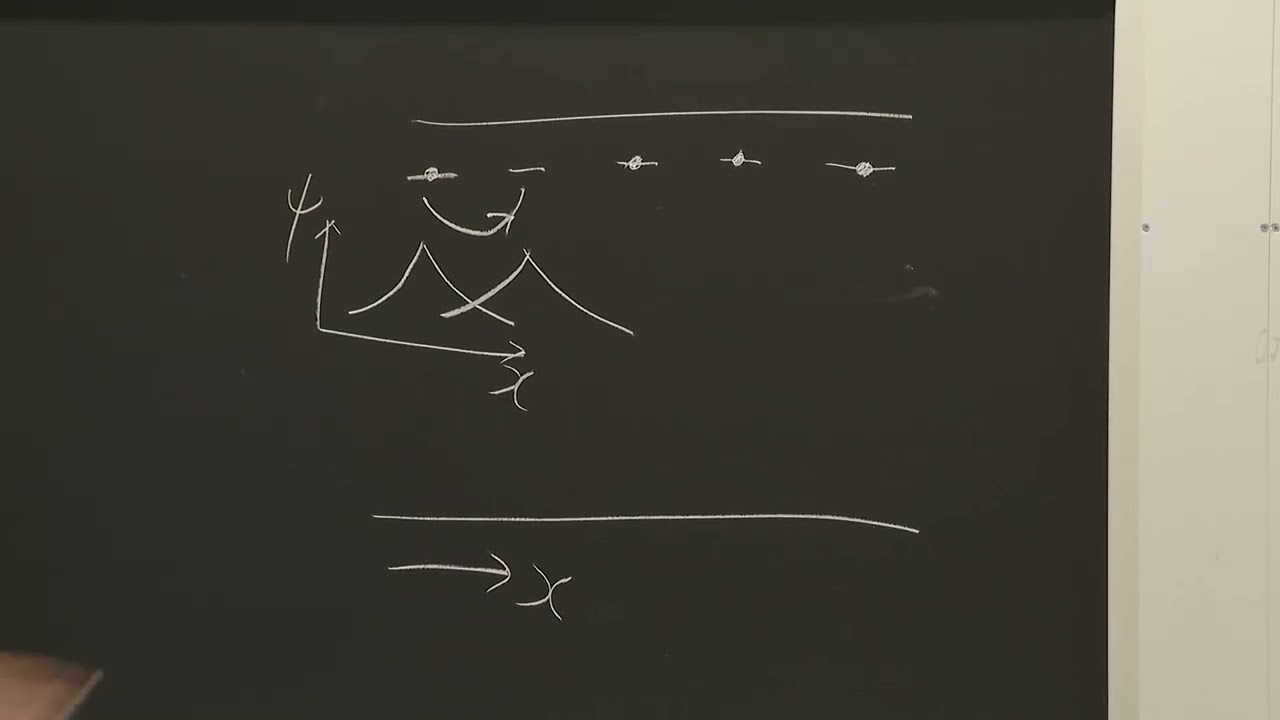
The value of this lecture lies in its clear, step-by-step derivation of transport theories in amorphous solids, connecting physical intuition with mathematical formalism. The argumentation is solid: it starts from basic concepts of density of states, introduces localization, and logically builds up to fixed-range and variable-range hopping. The use of an everyday analogy (gas stations) effectively illustrates the trade-off in variable-range hopping. The instructor supports the theoretical predictions with his own experimental data, achieving an exceptional fit (R=0.99997) to Mott’s law, which strengthens the credibility of the presented models. The lecture also contrasts amorphous and crystalline behavior, providing a comprehensive perspective.
Scientific Rigor, Source Quality, Title Accuracy
The lecture is delivered by an MIT professor, ensuring a high level of scientific rigor. The sources are primarily the fundamental physics of solid-state transport, with the instructor referencing established laws such as Arrhenius and Mott’s variable-range hopping. The experimental data shown is from the instructor’s own PhD thesis, adding authenticity. The title precisely reflects the content, covering both electrical and transport properties without overreaching. The structure follows a logical progression, and the material is presented in a rigorous yet accessible manner, fitting for a university course.
203 words
Title / Content Match
The title accurately describes the lecture's focus on electrical and transport properties in amorphous materials, matching the content precisely.
Quality & Reliability
9/10
MIT OpenCourseWare lecture by an expert instructor, with rigorous derivations and supporting experimental data. The content is educational but not peer-reviewed; the theoretical framework is well-established and clearly presented.
Key Moments
Markers derived by PSI from the transcript: the creator did not define chapters.
- Intro: recap of localized states and their impact on transport
- Extended states conduction: mobility reduction due to trapping and scattering
- Hopping conduction basics: tunneling between localized dopant states
- Variable range hopping derivation: optimizing hopping distance and energy
- Mott's T^(-1/4) law and its comparison with Arrhenius law
- Experimental data from instructor's PhD showing excellent fit to Mott's law
- Summary: ionic vs electronic conduction, dominance of hopping at cryogenic temperatures
Cited Sources
- MIT 3.071 Amorphous Materials, Spring 2025 — Course homepage with syllabus and additional materials
- YouTube Playlist for 3.071 — Full playlist of lectures for the course
External References
Contribution & Novelties
The lecture provides a cohesive and mathematically grounded explanation of transport mechanisms in amorphous materials, integrating theoretical derivations with real experimental evidence from the lecturer’s own research. It clearly distinguishes between extended-state conduction and hopping, and highlights the crossover behavior with temperature. The inclusion of personal data strengthens the pedagogical impact.
Pour aller plus loin :
- Variable-range hopping — Detailed explanation of the VRH mechanism and Mott’s law.
- Arrhenius equation — Fundamental equation for thermally activated processes, relevant to the extended-state conduction discussed.
- Amorphous solid — General overview of the structural characteristics of amorphous materials and their physical properties.
99 words
Radar Profile
The radar profile shows high scores in quality, technical level, and reliability, reflecting the rigorous academic nature of the content. The quantity of information is also strong, providing a comprehensive coverage of the topic without being overly verbose.