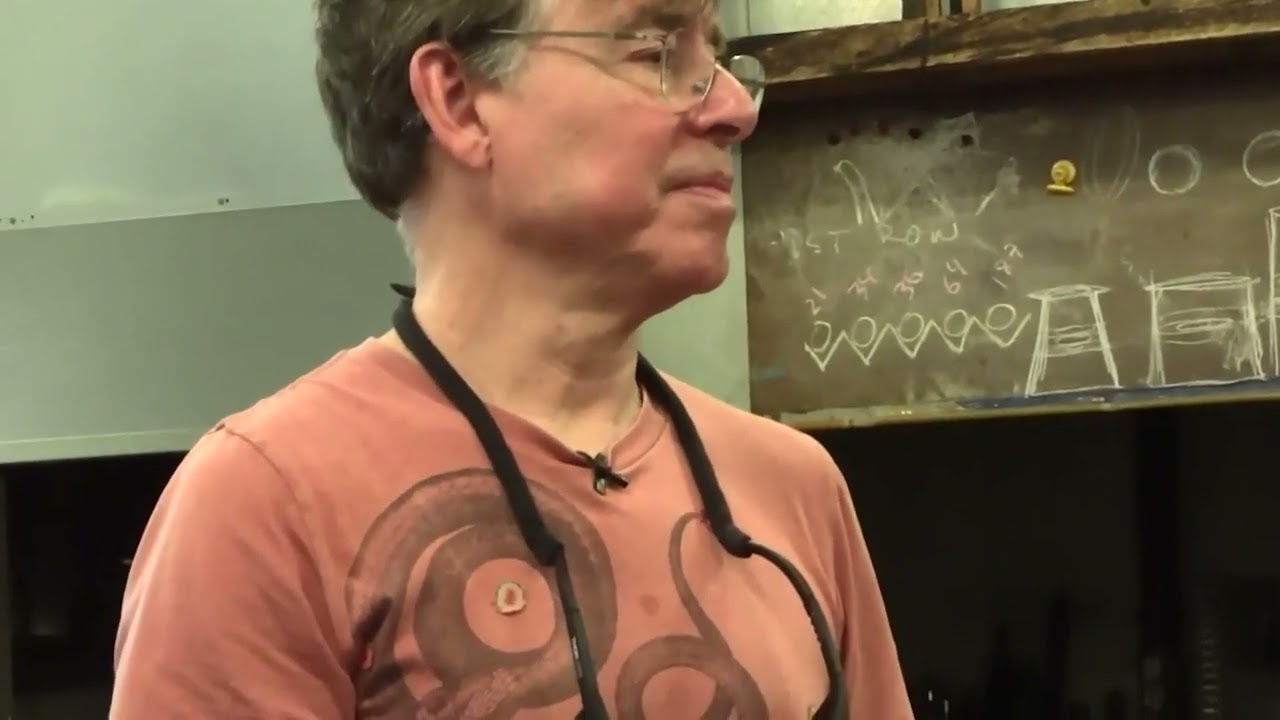
Lecture 9: MIT Glass Lab Tour
Title history
- Lecture 9: MIT Glass Lab Tour — observed on 20261114-0310 UTC (YouTube)
Keywords
Summary
189 words
Critical Evaluation
Value of the Information & Strength of the Argument
The video provides significant educational value by transforming abstract materials science concepts into tangible demonstrations. Each claim about thermal expansion, stress, and fracture is directly supported by a live experiment, making the reasoning both transparent and convincing. The instructors explain the underlying physics, such as how sudden chilling creates surface compression and internal tension, and they connect the observed behavior to real-world applications like car windshields and building safety. The argumentation is logically structured, moving from composition-based expansion mismatch to engineered stress, and finally to the thermal profile required for stress removal. While not intended as a formal scientific argument, the combination of demonstration and explanation constitutes a robust and accessible pedagogical approach.
Scientific Rigor, Source Quality, Title Accuracy
The video exhibits high scientific rigor: the instructors are experts with direct hands-on experience, and the demonstrations are repeatable and consistent with established materials science. No external sources are cited, but the information is drawn from the instructors’ professional knowledge and the practical behaviors observed. The title exactly matches the content—a lab tour—and the content covers exactly what one would expect: a guided visit highlighting key glass-related phenomena. The video is part of MIT OpenCourseWare, a reputable educational platform, and adheres to an open license. The adequacy between title and content is perfect, as no extraneous topics are introduced.
227 words
Title / Content Match
The title accurately reflects the content: a tour of the MIT Glass Lab conducted as part of a lecture series on amorphous materials.
Quality & Reliability
9/10
The video is from MIT OpenCourseWare, produced by experienced glass lab instructors who demonstrate and explain physical concepts with practical examples. The explanations align with established materials science principles, and the demonstrations directly illustrate the phenomena discussed.
Key Moments
Markers derived by PSI from the transcript: the creator did not define chapters.
- Introduction to the MIT Glass Lab and instructors Peter Houk and Mariel Bass.
- Demonstration of thermal expansion mismatch: combining borosilicate and other glasses to show bending.
- Prince Rupert drop demonstration: breaking the drop to show the violent fragmentation from internal stress.
- Glassblowing demonstration: fusing colored canes and blowing a pumpkin-shaped object.
- Explanation of the annealing process with a temperature-time profile drawn on the floor.
Cited Sources
- MIT OpenCourseWare Course 3.071 Amorphous Materials, Spring 2025 — The complete course page for this video, including lecture notes and other materials.
- YouTube Playlist for 3.071 Amorphous Materials — The full playlist of video lectures for the course.
- MIT OpenCourseWare Terms of Use — License information and usage terms for OCW content.
External References
Contribution & Novelties
The video contributes a unique, hands-on perspective to amorphous materials education by showing physical demonstrations in a working glass lab. It bridges theory and practice, making abstract concepts like thermal expansion, internal stress, and annealing tangible. The demonstrations, especially the Prince Rupert drop, effectively illustrate the extreme effects of engineered stress and the critical role of cooling rates.
Pour aller plus loin :
- Prince Rupert’s drop — A detailed explanation of the phenomenon demonstrated, including its fracture mechanics.
- Glass transition — The relevant concept for understanding annealing and the behavior of glass as it cools.
- Thermal expansion — The principle behind the bimetallic-like bending of dissimilar glasses.
- Borosilicate glass — A common glass type used in labware, relevant to the initial demonstration.
122 words
Radar Profile
The radar profile shows high scores for information quantity, quality, and reliability, with a slightly lower but still strong technical level. This indicates a well-balanced educational video that is both informative and scientifically reliable, with a moderate technical depth suitable for a motivated audience.