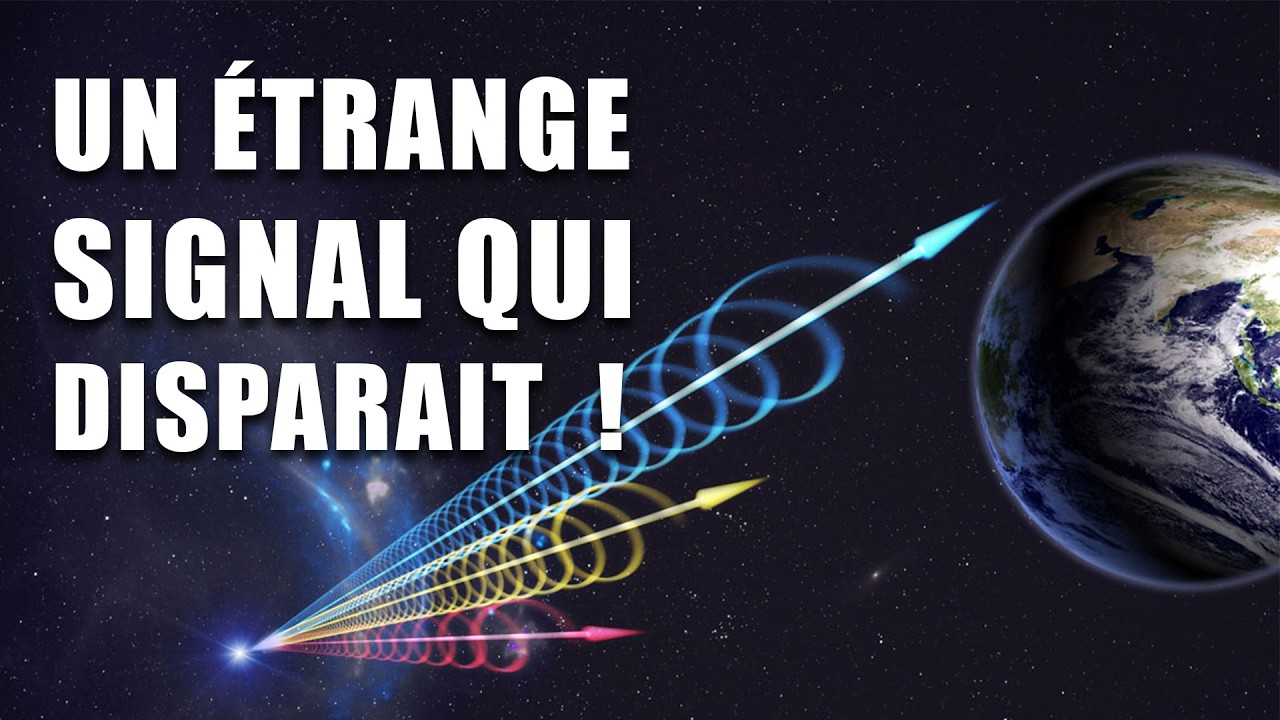
Le signal radio qui a réveillé une énigme vieille de 20 ans ! DNDE
The radio signal that reawakened a 20-year-old mystery! DNDE
Keywords
Summary
130 words
Critical Evaluation
Value of the Information & Strength of the Argument
The video provides a solid synthesis of recent astronomical and space industry events. The main value lies in its clear explanation of the radio signal mystery, linking it to historical data and presenting current scientific hypotheses without oversimplifying. The argumentation for the possible origins is balanced, discussing both neutron star and white dwarf scenarios. For BepiColombo and Vulcan, the presenter accurately reports facts, with appropriate context on technical challenges. The discussion on launcher shortage is speculative but well-grounded in industry projections. The use of visuals and analogies aids understanding.
Scientific Rigor, Source Quality, Title Accuracy
The video cites specific sources, including the scientific paper on the LPT, ULA’s official update, and ESA’s mission page. These are credible primary or official sources. The presentation is factual, but as a news review, it relies on secondary reporting. The title accurately highlights the radio signal as the lead story, and the DNDE acronym is explained. The ad break is clearly delineated. There are no obvious biases, though the sponsor segment is present.
178 words
Title / Content Match
The title highlights the radio signal story, which is the main focus, and the DNDE acronym is explained. It accurately represents the content, though it also covers two other news items.
Quality & Reliability
7/10
The video provides accurate summaries of recent astronomical and space industry events, referencing scientific papers and official mission updates. The presenter explains complex concepts clearly, but relies on secondary sources and includes a sponsor segment.
Key Moments
Markers derived by PSI from the transcript: the creator did not define chapters.
Cited Sources
- LPT J1555−5631 discovery paper — Scientific paper detailing the observations and analysis of the long-period transient LPT J1555-5631.
- ULA blog: Vulcan LEO-1 updates — Official ULA post describing the anomaly and preliminary findings of the Vulcan Centaur flight.
- ESA: BepiColombo arrival at Mercury — ESA mission update confirming the orbital insertion and providing context for the BepiColombo mission.
Concurring Sources
- ESA BepiColombo mission page — ESA's official mission page corroborates the mission's arrival and scientific goals.
Contribution & Novelties
The video synthesizes recent discoveries and events, particularly the connection between the 2022 LPT and the 2002 GCRT, which is often not highlighted. It also provides a balanced discussion of possible origins, making the research accessible. The inclusion of BepiColombo’s arrival and Vulcan Centaur’s failure gives a comprehensive view of current space activities.
Pour aller plus loin :
- Pulsar — Explains the standard model of neutron stars and their radio emission, relevant to the discussion of possible origins.
- Magnetar — A type of neutron star with an extreme magnetic field, one of the proposed mechanisms for LPTs.
- BepiColombo — Official mission page with detailed information about the scientific objectives and status.
111 words
Radar Profile
The profile shows balanced scores with a slightly higher focus on quality and reliability compared to quantity and technical depth. The video is informative but not excessively technical, making it accessible to a general audience.