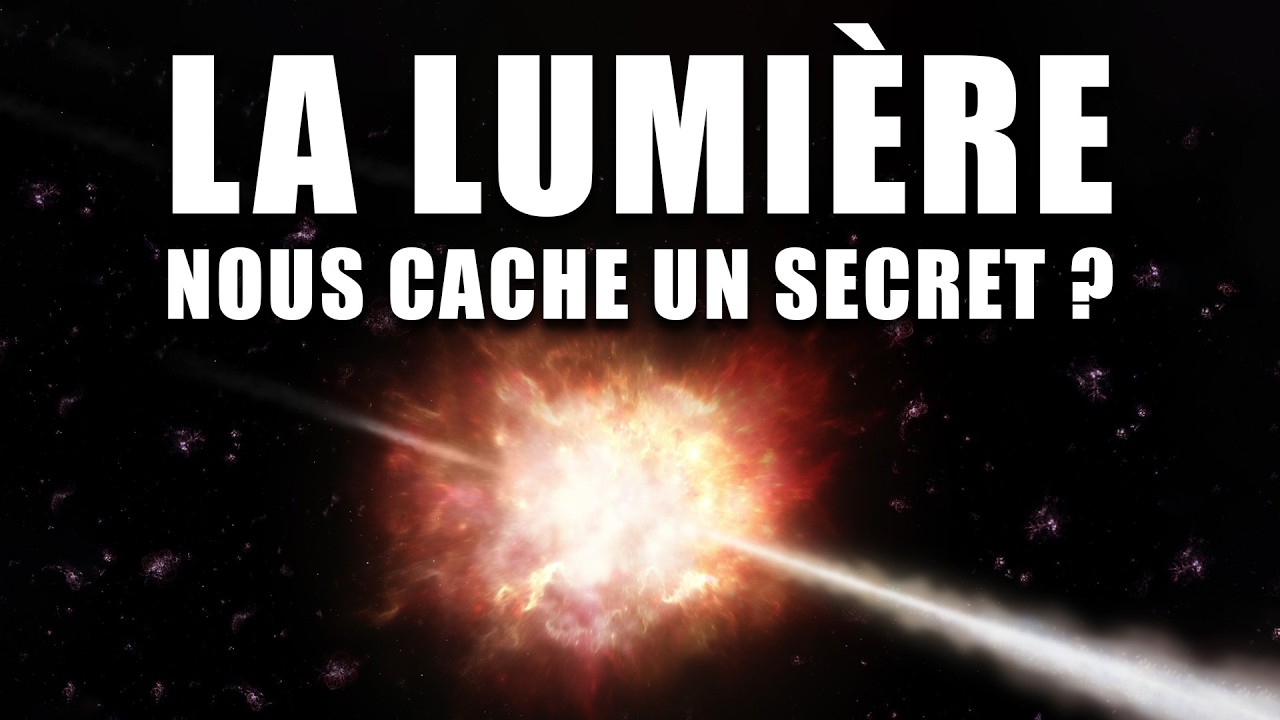
Et si on s’était trompé sur l’âge de l’Univers ? DNDE
What if we were wrong about the age of the Universe? DNDE
Title history
- Et si on s’était trompé sur l’âge de l’Univers ? DNDE — observed on 20261110-1737 UTC (YouTube)
Keywords
Summary
136 words
Critical Evaluation
Value of the Information & Strength of the Argument
The video provides a balanced overview of the cosmological controversy, clearly presenting the arguments for and against the tired light model. It correctly emphasizes that this hypothesis is not yet accepted, pointing out the lack of explanation for the cosmic microwave background. The discussion of Hera and DART is informative, explaining the scientific goals and potential implications for planetary defense. The NOM4D and Northstar segments are well contextualized within the broader push for in-space construction and reusable launch vehicles. The argumentation is generally coherent and avoids sensationalism, appropriately labeling the 26.7 billion-year figure as a claim rather than a certainty.
Scientific Rigor, Source Quality, Title Accuracy
The video cites official sources for each item: the University of Ottawa press release about the tired light model, ESA’s Hera news, DARPA’s NOM4D announcement, and Blue Origin’s Northstar press release. All sources are credible institutional or commercial entities. The title accurately reflects the main topic, though it hints at a more revolutionary claim than the video ultimately supports, as the host clearly states the model is far from proven. The presentation adheres to a factual tone, and the visual material is credited appropriately.
199 words
Title / Content Match
The title accurately reflects the lead story about a proposed alternative universe age, matching the video's content.
Quality & Reliability
8/10
The video presents recent cosmological hypotheses and space news with appropriate caveats, citing official institutional sources for each topic, though it does not provide a deep critical analysis.
Key Moments
Markers derived by PSI from the transcript: the creator did not define chapters.
- Introduction: question about universe age and presentation of the tired light model
- Detailed explanation of the tired light hypothesis and the 26.7 billion year age estimate
- Discussion of model's limitations, especially regarding the cosmic microwave background
- Hera spacecraft reaches Didymos and Dimorphos, first close-up image and science objectives
- DARPA's NOM4D automated in-space assembly demonstration with the Astra robot
- Blue Origin unveils Northstar engine, details on thrust, mass, and 3D printing
Cited Sources
- Theory predicting older universe without dark matter, dark energy passes key cosmological test — Source for the 26.7 billion year universe model
- Hera's first close-up of Didymos — ESA news about Hera's arrival at Didymos system
- NOM4D program demonstrates automated in-space assembly — DARPA announcement about the Astra robotic assembly demo
- Introducing Northstar, new booster engine — Blue Origin press release about Northstar engine
- DNDE Podcast on Spotify — Podcast link mentioned in video description
Contribution & Novelties
The video synthesizes recent space news in a accessible format, particularly highlighting the alternative cosmological model and its current status. Its originality lies in explaining why the tired light hypothesis, though not new, is being revisited in light of James Webb observations, and in presenting a balanced perspective without overclaiming. The selection of topics (universe age, Hera, NOM4D, Northstar) offers a coherent picture of current space exploration trends.
Pour aller plus loin :
- Tired light (Wikipédia) — Concept central du modèle alternatif discuté.
- Dark matter (Wikipédia) — La composante manquante que le modèle cherche à éviter.
- Cosmic microwave background (Wikipédia) — Le fond diffus cosmologique, test crucial pour la cosmologie.
- James Webb Space Telescope (Wikipédia) — Observatoire à l’origine des observations qui motivent ce débat.
125 words
Radar Profile
Le profil radar montre un équilibre entre quantité et fiabilité de l'information, avec un niveau technique modéré. La vidéo est fiable dans ses synthèses mais n'approfondit pas chaque sujet, ce qui donne un qualite_information légèrement inférieure à la quantité, et un niveau technique accessible à un large public.