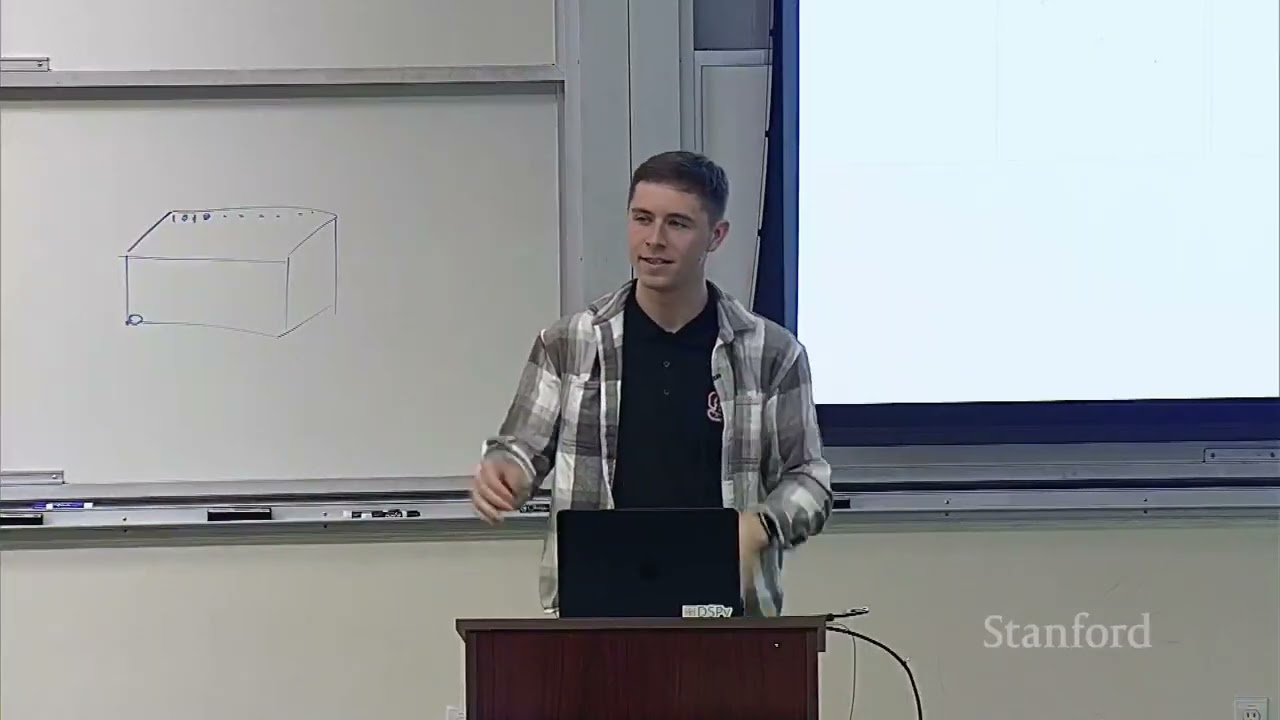
DSPy vs. LangGraph: AI Agent Frameworks Explained | Stanford CS329Z Lecture 5 with Michael Ryan
Title history
- DSPy vs. LangGraph: AI Agent Frameworks Explained | Stanford CS329Z Lecture 5 with Michael Ryan — observed on 20261113-2201 UTC (YouTube)
Keywords
Summary
163 words
Critical Evaluation
Value of the Information & Strength of the Argument
The lecture delivers substantial value by demystifying the practical use of DSPy and LangGraph, contrasting their design philosophies and showing real code examples. The speaker’s live coding demonstrations make abstract concepts tangible, and his emphasis on the role of optimizers and evaluations grounds the discussion in engineering reality. He clearly explains the trade-offs between frameworks: DSPy centralizes prompt and weight optimization, while LangGraph provides a more explicit state-machine control flow. The argumentation is logical and well-supported, though the speaker’s acknowledged bias toward DSPy is evident; he still manages to present LangGraph fairly. The comparison with other agent harnesses adds depth, as does the focus on reliability and observability, which are often overlooked in introductory materials. The presence of a live calendar application to illustrate tool use makes the (approximately 40-minute) demo engaging and concrete. Overall, the value of information is high for practitioners seeking to choose or understand agent frameworks.
Scientific Rigor, Source Quality, Title Accuracy
The scientific rigor is high for a practical lecture. Michael Ryan is a recognized expert, and the content is presented in a structured manner with clear definitions and live code that can be reproduced via the linked GitHub repository. The sources cited are primarily the framework documentation and the course material, with links provided in the description. Although the speaker does not list academic references, the authoritative context of Stanford and his role in DSPy development lend credibility. The title accurately captures the core comparison, and the content also includes additional relevant topics like orchestration and observability, which are consistent with the broad scope. The video does not appear to contain sponsored segments; no advertising was identified. The few comments available (not analyzed here, as none were provided) are not considered.
296 words
Title / Content Match
Title accurately reflects the main content: a comparative explanation of DSPy and LangGraph as AI agent frameworks, with additional coverage of orchestration and observability.
Quality & Reliability
8/10
Lecture by a recognized contributor to DSPy, presenting live code and comparing frameworks within a Stanford graduate course context. The content is well-structured, technically accurate, and balanced, though the speaker admits bias toward DSPy. The presentation is more practical than theoretical, with strong emphasis on engineering trade-offs.
Key Moments
Markers derived by PSI from the transcript: the creator did not define chapters.
- Introduction and audience poll about PyTorch familiarity, framing the need for abstraction.
- Three pillars of AI systems: system, data, and evaluations.
- Spectrum of agency: models, workflows, and agents; framework landscape overview.
- DSPy signatures: defining inputs/outputs, structured types, and prompt generation.
- DSPy modules and chain-of-thought; live demo of event extraction and emoji selection.
- DSPy optimizers: automatic prompt improvement; integration with external calendar tool.
- LangGraph introduction: state, nodes, and edges for agent orchestration.
- Comparison of open-source agent harnesses: mini-SWE-agent, OpenHands, and Pi.
- Reliability tools (Temporal) and observability (LangFuse, MLflow); best practices and challenges.
Cited Sources
- CS329Z Course Website — Course materials and slides referenced during the lecture.
- Stanford Online Agentic AI Program — Promotion of Stanford's online Agentic AI courses, mentioned in the description.
- Stanford Online AI Courses — Link to browse Stanford online courses in Agentic AI.
- Full CS329Z Playlist — Playlist for the entire CS329Z lecture series.
Concurring Sources
- DSPy Official GitHub — While not directly cited in the description, this is the repository for DSPy, and the lecture content aligns with its documentation.
- LangGraph Official Documentation — The lecture discusses LangGraph in detail, and its official docs corroborate the described features.
Contribution & Novelties
This lecture provides a hands-on, side-by-side comparison of DSPy and LangGraph, two prominent frameworks for building AI agents, within the context of a Stanford graduate course. It offers unique practical insights from a core DSPy contributor, including live coding examples that illustrate how signatures, modules, and optimizers work in practice, and how they differ from LangGraph’s graph-based approach. The lecture also covers additional open-source agent harnesses and reliability/observability tools, giving viewers a broad landscape view. Its originality lies in the direct comparison and the emphasis on engineering considerations rather than just conceptual overviews.
Pour aller plus loin :
- DSPy GitHub Repository — The official open-source repository for the DSPy framework discussed in the lecture.
- LangGraph Documentation — Official documentation for LangGraph, detailing its state-machine-based approach.
- Temporal Documentation — Reliability and orchestration platform for durable workflow execution, mentioned as a tool for robust agent systems.
- Stanford CS329Z Course — Additional course materials and lectures on engineering AI agents.
157 words
Radar Profile
The radar profile shows a strong balance across all dimensions, with slightly higher scores in information quantity and technical level, reflecting a practical, code-heavy tutorial. The reliability score is high due to the expert speaker, but the subjective bias toward DSPy keeps it slightly lower. The overall profile indicates a solid, useful resource for engineers.