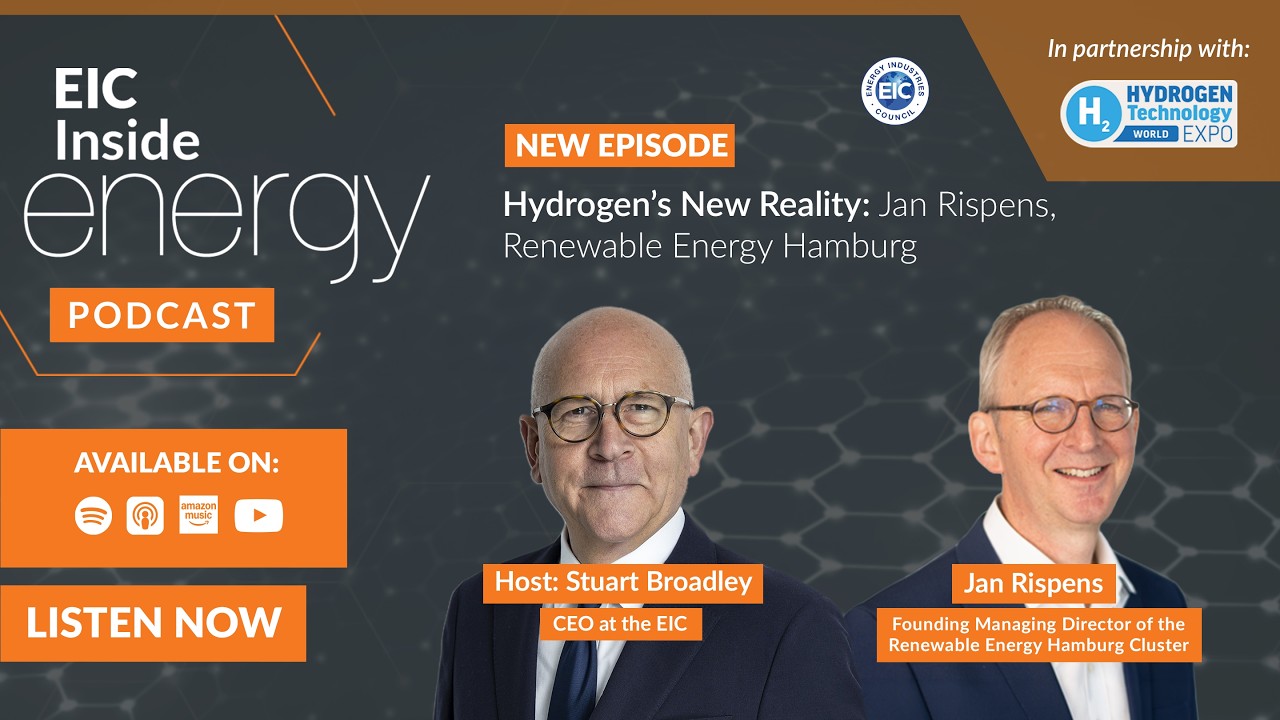
Hydrogen’s New Reality: Jan Rispens, Renewable Energy Hamburg
Keywords
Summary
244 words
Critical Evaluation
Value of the Information & Strength of the Argument
The interview provides valuable insights into the practical realities of deploying hydrogen infrastructure, drawing on the guest’s extensive experience in renewable energy and cluster management. The argumentation is grounded in concrete examples from Hamburg, with specific project details (capacity, timeline, technology providers) that lend credibility. Rispens offers a balanced perspective, acknowledging both the potential and limitations of hydrogen, and drawing parallels with the wind energy sector’s evolution. He argues that the current phase is critical for demonstrating viability, and that regulation should be simplified to allow the market to mature. The discussion is nuanced, avoiding overly optimistic or pessimistic stances, and highlights the importance of time synchronization between production, infrastructure, and offtake. However, the arguments are largely based on the speaker’s opinion and experience rather than empirical data or systematic analysis. The host occasionally interjects with broader geopolitical and economic context, but the core value lies in the insider view of project development and regulatory hurdles.
Scientific Rigor, Source Quality, Title Accuracy
The podcast does not cite specific studies, reports, or data sources, relying instead on the guest’s expertise and firsthand knowledge of the Hamburg projects. The host mentions a statistic about 12% of global hydrogen patents being in Germany, but no source is provided. The discussion is largely anecdotal and opinion-based, though the guest’s credentials and the host’s affiliation with a major trade association lend some authority. The title and description accurately reflect the content, focusing on the ’new reality’ of hydrogen and the Hamburg cluster’s projects. There is no misleading framing; the episode delivers what it promises. The partnership with the Hydrogen Technology World Expo and Carbon Capture Technology World Expo is disclosed, and while it may introduce a promotional element, the conversation remains substantive and not overly commercial. No comments were provided for analysis.
306 words
Title / Content Match
The title accurately reflects the content: the discussion focuses on the 'new reality' of hydrogen, moving from vision to projects, with a specific focus on Hamburg's hydrogen ecosystem. The subtitle correctly identifies the guest and his role.
Quality & Reliability
7/10
The content is an expert interview with a credible industry figure (Jan Rispens, founding managing director of the Renewable Energy Hamburg Cluster) and is hosted by a major energy trade association (EIC). It provides concrete project details (100 MW electrolyser, 40 km hydrogen grid, methanol tanks) with status updates (FID reached, construction underway). However, it relies heavily on the speaker's personal experience and opinion, with no peer-reviewed studies or independent data cited. Some claims (e.g., 12% of global hydrogen patents in Germany) are not sourced. The podcast is produced in partnership with a trade expo, which may introduce promotional bias, though the discussion remains substantive.
Key Moments
Markers derived by PSI from the transcript: the creator did not define chapters.
- Introduction by Stuart Broadley, mentioning the EIC's partnership with the Hydrogen Technology World Expo and Carbon Capture Technology World Expo in Hamburg, October 2026.
- Jan Rispens introduces himself and his background as an electrical engineer, and explains the structure and purpose of the Renewable Energy Hamburg Cluster.
- Rispens outlines the 'new reality of hydrogen' and the transition from vision to projects, highlighting 2027 as a crucial year.
- Detailed description of the three key Hamburg projects: the 100 MW electrolyser at Moorburg, the 40 km hydrogen distribution grid, and the methanol infrastructure for shipping.
- Discussion on the challenges: high expectations, regulatory uncertainty, and the difficulty of synchronizing production, infrastructure, and offtake.
- Critique of EU green hydrogen production rules, particularly the requirement for new renewable electricity and hourly balancing, which increase costs.
- Exploration of hydrogen's role in decarbonizing German heavy industry, including steel and chemicals, and the impact of ETS and CBAM.
- Discussion on the rapid growth of battery storage in Germany (30-50 GW planned) and its impact on the hydrogen business case.
- Rispens emphasizes that hydrogen is not a silver bullet and should focus on areas where electrification is not feasible, such as long-duration storage and industrial processes.
- Closing remarks on the need for realistic regulation, demonstrating project viability, and attracting long-term offtakers.
Contribution & Novelties
The episode provides an up-to-date, insider perspective on the status of hydrogen projects in Hamburg, a key European hydrogen hub. It offers concrete details on three major projects that have reached FID and are under construction, which is valuable for understanding the practical pace of the energy transition. The discussion also highlights the evolving role of battery storage and the need for a more nuanced approach to hydrogen deployment. The guest’s critique of EU regulation adds a critical voice to the policy debate.
Pour aller plus loin :
- Hydrogen economy — Overview of the concept and its challenges.
- Green hydrogen — Explanation of production methods and current status.
- Moorburg Power Plant — Background on the site of the 100 MW electrolyser project.
- Renewable Energy Hamburg Cluster — Official website of the cluster agency.
- EU hydrogen regulation — European Commission page on hydrogen policy.
143 words
Radar Profile
The radar profile shows a balanced content with moderate to high scores in information quantity, quality, and reliability, reflecting the expert interview format. The technical level is moderate, as the discussion is accessible but includes specific project details. The overall profile indicates a credible and informative episode, though it lacks rigorous sourcing.