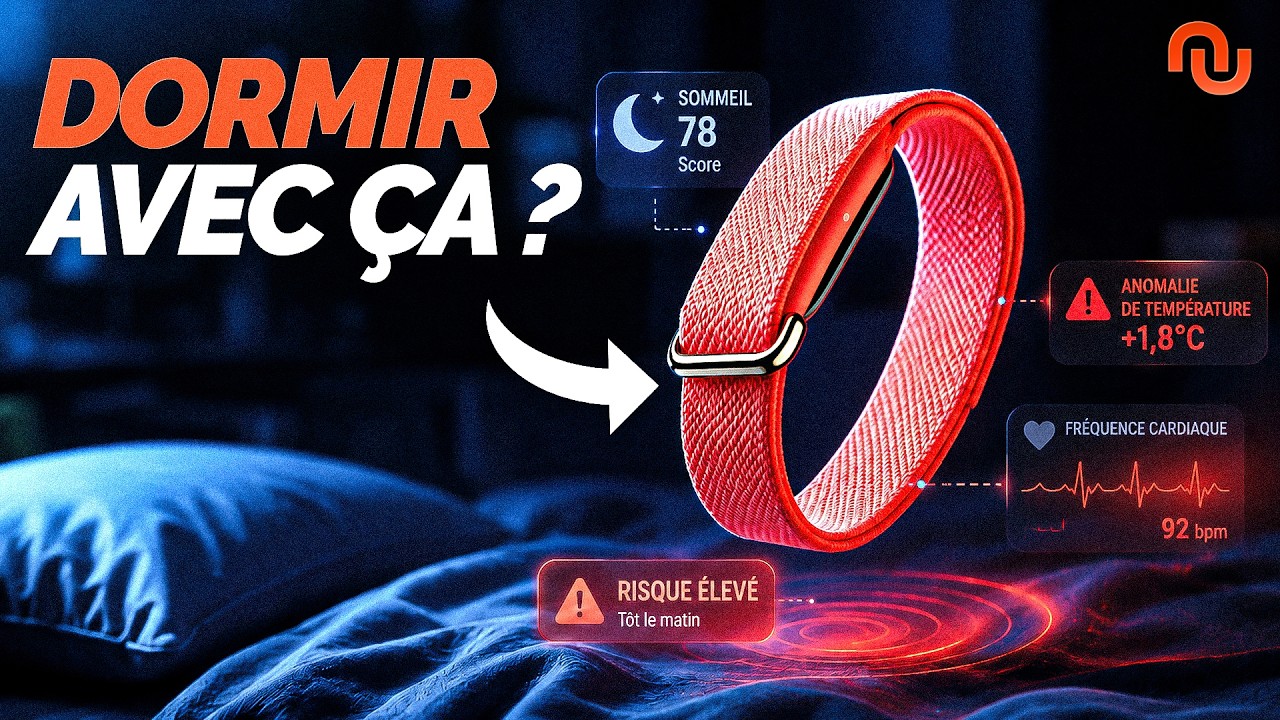
Pourquoi tout le monde va porter ÇA | Décode
Why Everyone Will Be Wearing THIS | Decoded
Title history
- Pourquoi tout le monde va porter ÇA | Décode — observed on 20261101-0122 UTC (YouTube)
Keywords
Summary
106 words
Critical Evaluation
Value of the Information & Strength of the Argument
The video offers a valuable overview of the emerging health AI ecosystem, highlighting key players and business models. It argues that AI changes the utility of health data by making it interpretable, as opposed to raw numbers. The argumentation is supported by examples such as the presenter’s own experience with Bevel and an anecdote about Apple Watch temperature notification before a Covid infection. However, the analysis lacks depth on regulatory and ethical issues, and the endorsement of Bevel may introduce bias.
Scientific Rigor, Source Quality, Title Accuracy
The video cites no direct scientific sources but references industry announcements and market data. It includes a link to the accompanying article on Numerama. The title matches the content, which is about the growing adoption of health wearables. The rigour is moderate; it does not critically assess the accuracy of the health metrics claimed, nor does it provide independent verification of the statistics mentioned (e.g., 32% of Americans using AI for health).
168 words
Title / Content Match
The title is somewhat clickbait but accurately reflects the content's focus on the rising trend of health-tracking wearables and AI coaching services.
Quality & Reliability
6/10
The video provides a broad overview of emerging AI health coaching services, but relies on personal anecdotes and promotional content, lacking rigorous scientific references. It mentions some statistics without clear sources, and the presenter openly endorses Bevel, potentially biasing the analysis. The overall information is generally accurate but not deeply verified.
Chapters
Cited Sources
- Google devient un géant de la santé, les bracelets et les coachs IA vont tout changer — Article corresponding to the video content.
- Numerama — Main website of the outlet.
- Numerama+ — Premium offer of the outlet.
- Numerama on Twitch — Twitch channel of the outlet.
- Numerama Playlists — Playlists on the outlet's YouTube channel.
- Numerama YouTube Channel — Main YouTube channel.
Contribution & Novelties
The video synthesizes and contextualizes the 2026 health tech landscape, linking Google’s new Fitbit ecosystem, subscription-based coaching from Whoop and Bevel, and the role of AI in making health data actionable. It highlights a shift from passive data collection to active, personalized interpretation, a perspective that mainstream tech media has only recently begun to cover.
Pour aller plus loin :
- Fitbit — A company central to the video’s discussion.
- Whoop — Pioneering the subscription model for fitness wearables.
- Artificial intelligence in healthcare — Provides broader context on AI applications in medicine.
91 words
Radar Profile
The profile shows medium scores across quantity, quality, and technicality, with a slightly lower reliability due to promotional bias, indicating a useful but not fully rigorous analysis.
💬 Balanced – Viewers are intrigued by the potential of AI health coaching but express clear concerns about data privacy, insurance implications, and the superficiality of the devices.