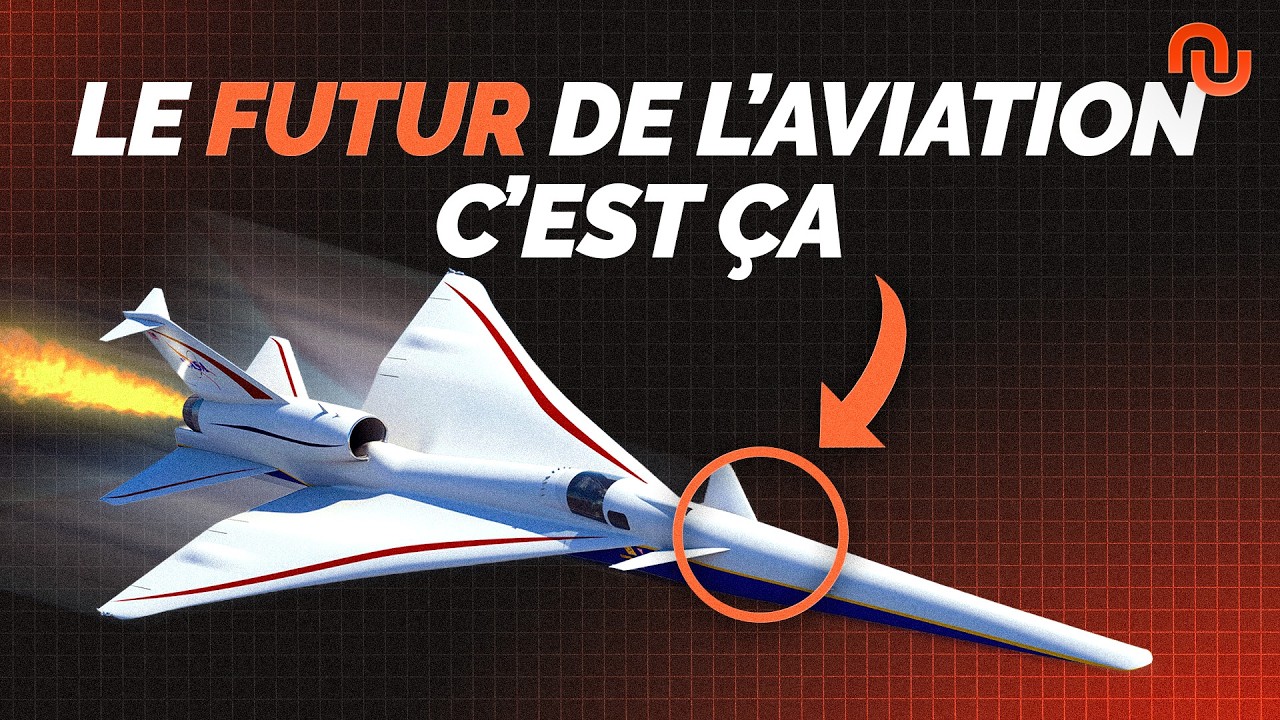
Pourquoi la NASA a construit l’avion le plus bizarre du monde
Why NASA built the world's strangest airplane
Title history
- Pourquoi la NASA a construit l’avion le plus bizarre du monde — observed on 20261101-0128 UTC (YouTube)
Keywords
Summary
211 words
Critical Evaluation
Value of the Information & Strength of the Argument
The video excels in making a complex engineering topic accessible. It clearly explains the relationship between aircraft shape and noise reduction, and supports its argument with concrete examples such as the Concorde history and the X-59’s technical details. The argumentation is solid: it builds a logical case for why the X-59 exists, from the physics of sonic booms to the regulatory and social hurdles. The inclusion of the Concorde crash adds emotional weight and historical context, strengthening the narrative. However, the video does not deeply explore alternative viewpoints on the environmental impact beyond a brief mention, which slightly limits the depth of critical analysis.
Scientific Rigor, Source Quality, Title Accuracy
The video demonstrates good scientific rigor by relying on well-established facts about supersonic flight and the Concorde disaster. It does not cite specific sources on screen, but the information is consistent with public NASA documentation and historical records. The title accurately reflects the content, directly inviting viewers to learn about the X-59’s strange design and its purpose. The overall quality is high, though the lack of explicit source citations within the video could be a minor weakness for a more research-oriented audience.
201 words
Title / Content Match
The title perfectly matches the content: the video explains why the X-59 looks bizarre and details its purpose, fulfilling the viewer's expectation.
Quality & Reliability
8/10
The video presents well-documented technical and historical information, relying on official NASA program details and verifiable facts about the Concorde crash. The explanation of the X-59's design and mission is accurate, though aimed at a general audience and lacks direct citation of specific sources within the video itself.
Chapters
- On découvre ensemble l’avion le plus étrange de la Nasa
- Et cet avion bizarre il a déjà volé
- C’est quoi l’objectif de cet avion ?
- La vitesse supersonique et le mur du son
- Le X-59, un bijou d’ingénierie
- Après le traumatisme du Concorde
- Le problème de l’aviation supersonique : le bruit
- Boom Technology, pour le retour des avions supersoniques commerciaux
- Mais il reste encore un problème à l’aviation supersonique
Cited Sources
- Numerama official website — Main website of the channel, providing additional articles and updates.
- Numerama+ subscription — Premium content platform offered by Numerama.
- Numerama on Twitch — Live streaming channel for discussions and behind-the-scenes.
- Numerama YouTube playlists — Organized playlists of Numerama's video content.
- Numerama YouTube channel — Official YouTube channel hosting this video.
Concurring Sources
- Lockheed Martin X-59 QueSST - Wikipedia — Confirms the aircraft's specifications and NASA's Quesst mission objectives.
- Concorde crash - Wikipedia — Provides details of the 2000 accident and its aftermath.
Contribution & Novelties
The video provides a succinct and engaging overview of the X-59 and its mission, synthesizing technical, historical, and regulatory aspects. Its novelty lies in explaining why the aircraft’s unusual design is essential for noise reduction, and in connecting the project to broader questions about the revival of supersonic travel. It also highlights the lingering environmental concerns, offering a balanced perspective.
Pour aller plus loin :
- Lockheed Martin X-59 QueSST - Wikipedia — Detailed technical article about the aircraft, its design, and development.
- Concorde - Wikipedia — History of the Concorde, including the 2000 crash and its retirement.
- Supersonic speed - Wikipedia — Explanation of supersonic flight and the phenomena of sonic booms.
- Boom Supersonic - Wikipedia — Information about the private company and its Overture project.
126 words
Radar Profile
The radar indicates high scores in information quantity and quality, reflecting the video's comprehensive and accurate content. The technical level is moderately high, accessible to general audiences while still conveying depth. Reliability is strong, supported by the use of official NASA programs and historical records. The overall profile shows a well-rounded, informative video.