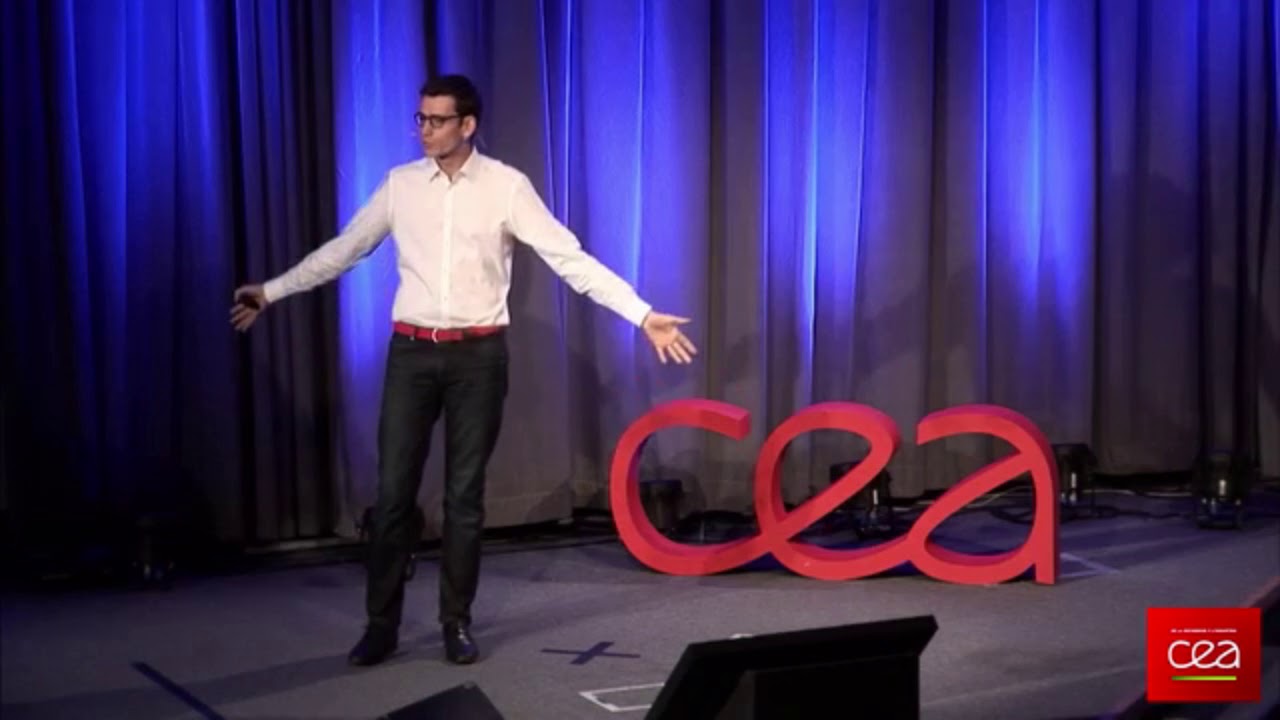
Et si on valorisait le CO2 ? - Thibault Cantat
What if we valued CO2? - Thibault Cantat
Keywords
Summary
211 words
Critical Evaluation
Value of the Information & Strength of the Argument
The presentation provides high-quality information about the chemical and economic constraints of CO2 valorization. The argumentation is structured and logically progresses from presenting the problem (CO2 accumulation) through existing solutions (CCS) and their limitations, to a detailed scientific explanation of why transforming CO2 is difficult (energy required to break bonds) and how catalysis helps. The comparative analysis of fuels vs. fine chemicals clearly demonstrates why the use of CO2 in chemistry is a more realistic short-term strategy, while remaining honest about the lack of short-term economic viability for fuels. The use of a concrete example (silicone waste as a hydrogen source) illustrates a novel, original research path.
Scientific Rigor, Source Quality, Title Accuracy
The scientific rigor is solid, coming from a CEA researcher with credible expertise. The talk is honest about current limitations and future economic obstacles, avoiding overpromising. The source cited in the description is the official CEA website, which is highly reputable. The title is perfectly adequate, presenting a clear question (‘Et si on valorisait le CO2 ?’) which the content fully answers.
184 words
Title / Content Match
The title is concise and perfectly matched to the content, as the talk directly addresses the question of how to give economic and scientific value to CO2.
Quality & Reliability
8/10
Presentation by a CEA researcher with high credibility, honest about technological limits and focusing on well-established chemical principles and recent patents. The scientific reasoning is sound, though the level of technical detail is adjusted for a general audience.
Key Moments
Markers derived by PSI from the transcript: the creator did not define chapters.
- Introduction to the problem of CO2 emissions (30 billion tonnes/year) and its stability in the atmosphere.
- Discussion on current solution: carbon capture and storage (CCS), the costs and long-term monitoring issues.
- Current uses of CO2: sodas, urea, and the fact that less than 0.1% is reused, highlighting the lack of valorization.
- Presentation of the 'dream' of turning CO2 back into hydrocarbons/fuels, but the energetic cost paradox is highlighted.
- The shift towards chemical applications (plastics, drugs, pesticides) which have higher added value than fuels.
- Scientific challenge: breaking the very stable C=O bonds; the need for energy and the entropic barrier is explained.
- Use of silicone waste as an energy source to drive the reaction, a new research pathway.
- Role of catalysts as 'Millennium Falcon' - allowing fast reaction at low energy with a metaphor.
- Patented process for methylamines from CO2, niche but high added value; future outlook for fuels and the role of politics vs science (COP21).
Cited Sources
- CEA - Commissariat à l'énergie atomique et aux énergies alternatives — Official website of the CEA (source mentioned in the video description) which is the research organization hosting the speaker, Thibault Cantat.
Contribution & Novelties
The talk offers an original perspective by shifting the focus from energy-intensive and economically unviable fuel production to high-value-added fine chemistry. It highlights an innovative experimental direction: using silicone waste (Si-H bonds) to drive the reduction of CO2. The contribution is conceptual, explaining key catalysis principles clearly, and practical, mentioning a recently patented process for producing methylamines.
Pour aller plus loin :
- Carbon capture and storage — Essential context for the first solution discussed (burying CO2), its costs and limitations.
- Catalysis — The fundamental concept enabling efficient, low-energy CO2 transformation.
- Electrochemical reduction of carbon dioxide — A complementary approach to CO2 valorization based on renewable energy.
106 words
Radar Profile
The profile shows a balanced presentation focusing on high technical quality and high reliability, with moderate technical depth suitable for a general audience, while information quantity remains solid.