MUSE : LA MACHINE À EXPLORER LE TEMPS - Roland BACON
MUSE: THE TIME MACHINE - Roland Bacon
Keywords
Summary
162 words
Critical Evaluation
Value of the Information & Strength of the Argument
The value of the information lies in its direct authoritative source, as Bacon covers the scientific rationale behind MUSE—from fundamental scales of astrophysics to the specific tracers used for distant galaxies. His argumentation is logical and structured, building from broad principles (galaxy types, stellar eigenvalues) to the precise question of how to detect early galaxies. He effectively uses images from Hubble and simulations to visually drive home the points. The reasoning from observational constraints (star formation density at different epochs) to the choice of spectral lines (Lyman-alpha) is crisp and compelling. The solidity is high, backed by decades of established astronomy and the specific engineering/design choices of MUSE.
Scientific Rigor, Source Quality, Title Accuracy
Roland Bacon is the Principal Investigator of MUSE, so the scientific rigour is peer-level. The conference is delivered at a CNRS-supported event (Canal-U), and he cites the collaborative effort of ~30 people. The content is accurate, though it is presented as an overview rather than a peer-reviewed publication. The title’s metaphor is appropriate and accurately evokes the instrument’s purpose of peering into the past. The overall presentation is well-illustrated with imagery from Hubble and MUSE’s actual data, reinforcing the validity of the claims.
206 words
Title / Content Match
The title is metaphorical and fits well: MUSE is presented as an instrument that allows us to look back in time to explore the distant universe.
Quality & Reliability
8/10
Presentation by the lead scientist (Roland Bacon) of the MUSE collaboration, produced in the context of a CNRS-supported conference. The content is expert-level, relies on established astronomical methods and recent (2017) results. The transcript is solid, though cut off before the technical details of MUSE itself.
Key Moments
Markers derived by PSI from the transcript: the creator did not define chapters.
- Introduction and overview of the MUSE project and the presentation plan.
- Exploring scales: light-years, nearby stars, and the stellar life cycle (Eagle Nebula, Orion, Crab).
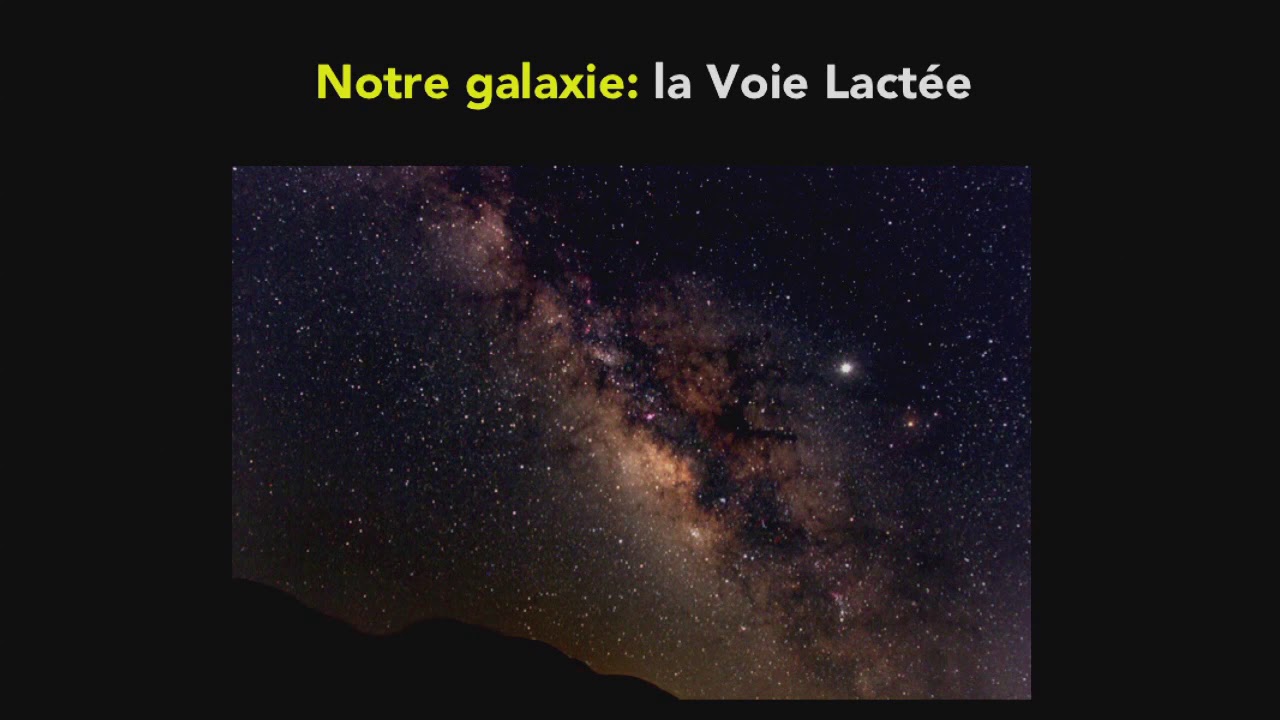
- Our galaxy, the Milky Way, and the local group, illustrating our place in the universe.
- Hubble sequence and classification of galaxies, and the cosmic star formation rate.
- Spectral signatures and tracers used to identify distant galaxies, leading to MUSE's role.
- Simulations of galaxy formation and evolution, highlighting mergers and gas accretion.
Cited Sources
- Canal-U (CNRS Media Server) — Official source of the conference (MUSE: LA MACHINE À EXPLORER LE TEMPS), distributed via Canal-U.
Contribution & Novelties
The talk provides a comprehensive educational bridge between fundamental astronomy and a flagship modern instrument. Its added value lies in presenting the scientific goals (observing the cosmic dawn) and technical challenges (integral field spectroscopy) of MUSE directly from its principal investigator. It effectively shows how astrophysicists plan to trace the history of galaxies.
Pour aller plus loin :
- MUSE (instrument) — The specific spectrograph discussed in depth, with technical details.
- Integral field spectrograph — The technology enabling 3D spectroscopy of galaxies.
- Galaxy formation and evolution — The theoretical and observational context of the talk.
- Hubble sequence — The classification scheme described in the presentation.
- Lambda-CDM model — The cosmological framework underlying the simulation of galaxy formation.
116 words
Radar Profile
The radar shows a strong profile in technical level and reliability, reflecting the expert status of the speaker and the solid astrophysical foundations. The quantity of information is slightly lower because the transcript stops before covering the technical details and results of MUSE itself, while overall quality is nevertheless high.