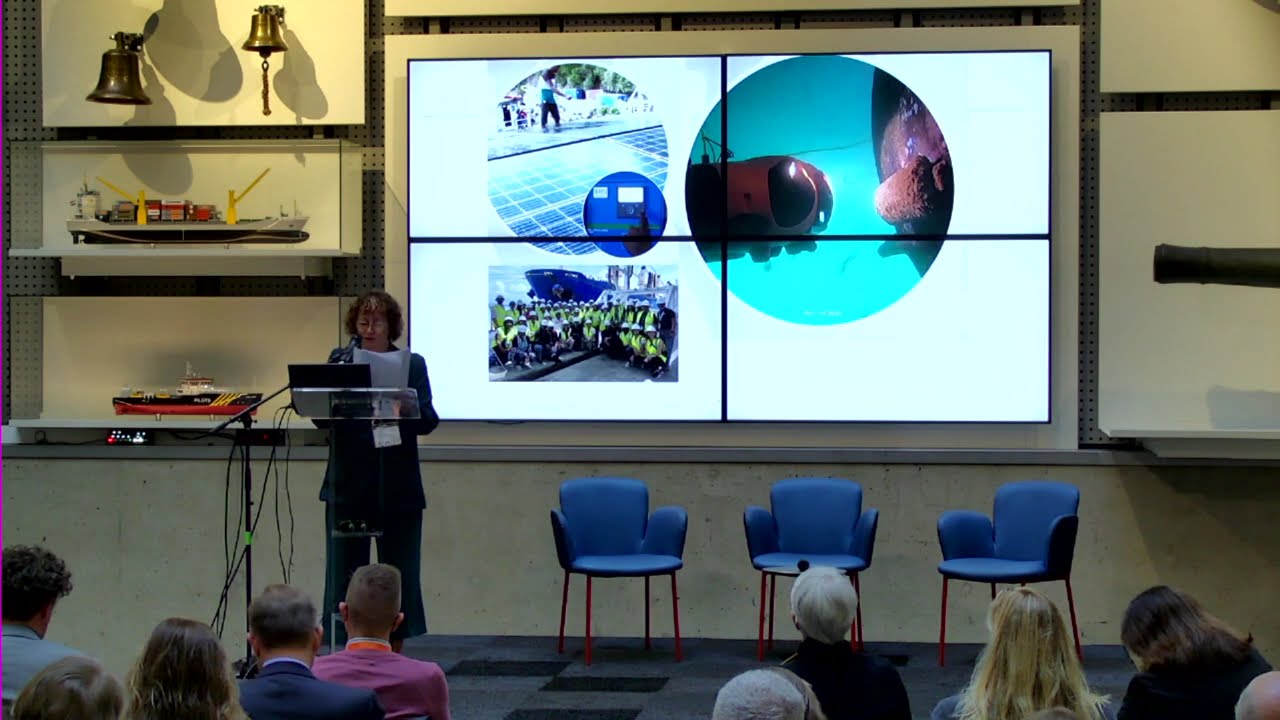
ICMM Congress 2024: Natasha Brown, IMO in Maritime Heritage & Future Contemporary Ocean Development
Keywords
Summary
169 words
Critical Evaluation
Value of the Information & Strength of the Argument
The presentation offers substantial value by consolidating the IMO’s historical narrative and its contemporary regulatory agenda into a coherent overview. It connects past maritime disasters to the evolution of international law, providing a clear causal chain that is useful for understanding the rationale behind current conventions. The argumentation is structured around the dual role of heritage and future development: heritage informs regulation, and regulation drives innovation. Brown supports her points with specific examples, such as the SOLAS 50th anniversary, the MARPOL convention, and the IMO’s GHG strategy. However, the argumentation remains largely descriptive and institutional, lacking critical analysis of challenges or controversies. The Q&A adds depth by addressing funding, military exemptions, and decarbonization obstacles, but responses are often general and policy-focused rather than evidence-based. Overall, the value lies in its comprehensive synthesis rather than in novel insights or rigorous debate.
Scientific Rigor, Source Quality, Title Accuracy
The talk is delivered by a credible institutional representative, and the information aligns with publicly available IMO documents and historical records. However, no specific sources or references are cited in the transcript, and the presentation relies on institutional memory and official narratives. The title accurately reflects the content, covering both maritime heritage and future ocean development. The absence of external citations and the promotional tone of certain segments (e.g., invitations to collaborate) slightly reduce the perceived rigor. The Q&A session demonstrates engagement with audience concerns, but answers are not backed by data or references. Overall, the scientific rigor is moderate, typical of a keynote address at a professional congress.
264 words
Title / Content Match
The title accurately reflects the content: the talk covers the IMO's role in maritime heritage and its engagement with contemporary ocean development, including decarbonization and diversity. The title is a faithful summary of the keynote.
Quality & Reliability
7/10
The speaker is a senior official of the International Maritime Organization (IMO), giving an institutional perspective on maritime heritage and ocean governance. The information is largely factual and verifiable (treaties, dates, organizational structure), but the presentation is a keynote address rather than a peer-reviewed study. Some claims are forward-looking and policy-oriented, with limited independent verification. The absence of citations in the transcript and the reliance on institutional narrative reduce the score slightly.
Key Moments
Markers derived by PSI from the transcript: the creator did not define chapters.
- Introduction of Natasha Brown and the IMO's mission.
- Historical roots: Rules of Oléron, load lines, and the Princess Alice disaster leading to COLREGs.
- The Titanic and the SOLAS convention; 50th anniversary of SOLAS 1974.
- Environmental treaties: MARPOL, ballast water, ship recycling.
- IMO's 2023 GHG strategy and decarbonization goals.
- Invitation to maritime museums to collaborate and use IMO digital assets.
- International days: Women in Maritime, Day of the Seafarer, World Maritime Day.
- Q&A: IMO funding model based on ship tonnage.
- Q&A: Military vessels and IMO treaties; Red Sea security.
- Q&A: Decarbonization pathways and economic measures.
Contribution & Novelties
The keynote provides a comprehensive overview of the IMO’s historical and contemporary role, linking maritime heritage to modern regulation and future sustainability goals. It offers a unique perspective from a senior IMO official, highlighting the organization’s outreach efforts and collaboration opportunities for maritime museums. The Q&A session adds practical insights into IMO’s funding and operational challenges.
Pour aller plus loin :
- International Maritime Organization — Official website with treaties, conventions, and current initiatives.
- SOLAS Convention — Key international treaty on maritime safety.
- MARPOL Convention — Main international convention on preventing pollution from ships.
- IMO GHG Strategy — 2023 strategy for reducing greenhouse gas emissions from ships.
106 words
Radar Profile
The radar profile shows a balanced emphasis on information quantity and quality, with moderate technical depth and good overall reliability. The content is accessible to a general audience while providing sufficient detail for professionals in maritime heritage and policy.