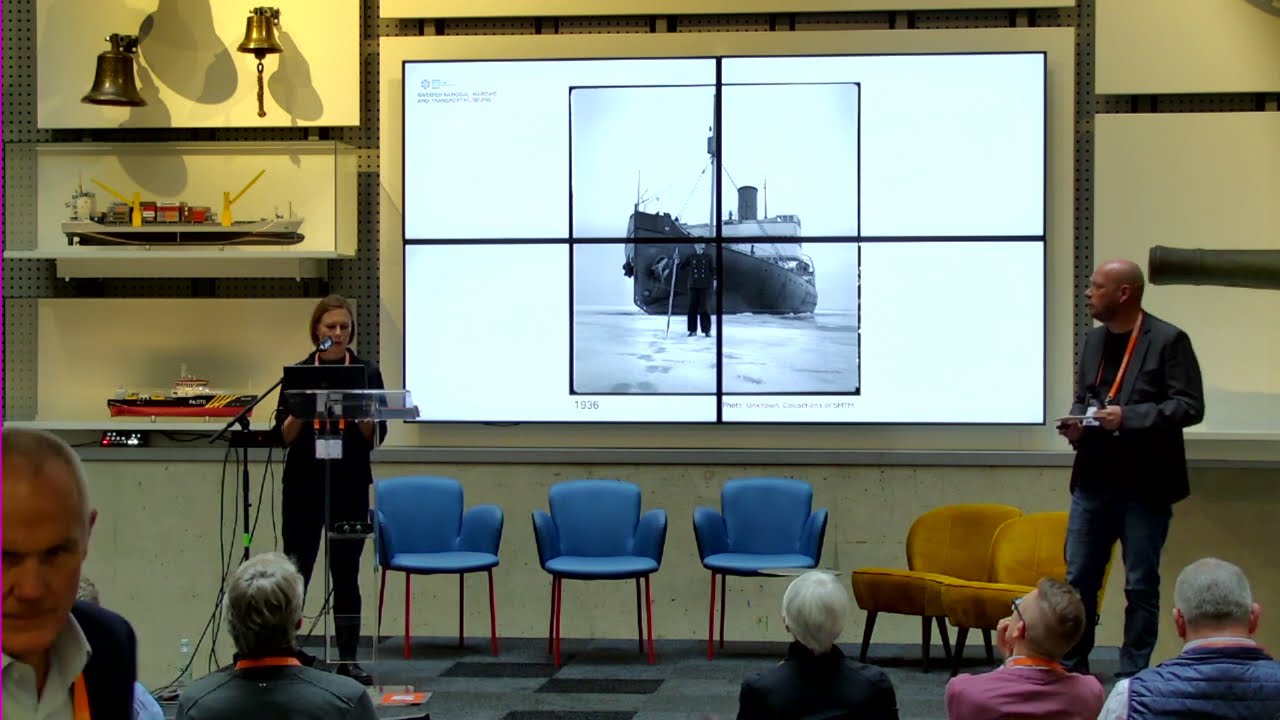
ICMM Congress 2024: Maritime Heritage Preservation
Title history
- ICMM Congress 2024: Maritime Heritage Preservation — observed on 20261028-1651 UTC (YouTube)
Keywords
Summary
204 words
Critical Evaluation
Value of the Information & Strength of the Argument
The value of the information lies in its presentation of real-world case studies from renowned maritime museums, offering concrete examples of how to balance preservation with public access and operational use. The Swedish presentation demonstrates a systematic, institutional approach to managing multiple vessels, highlighting the importance of shared knowledge and proactive maintenance. Samuel Hilgartner’s talk provides a thoughtful, philosophically grounded framework for conservation, advocating for a shift from static material preservation to a dynamic understanding of a vessel’s character and historical significance. The arguments are well-structured and supported by references to authoritative charters such as the Burra Charter and guidelines from Historic Ships UK. While the presentations are based on professional experience rather than formal research, they are persuasive and offer actionable insights for practitioners in the field.
Scientific Rigor, Source Quality, Title Accuracy
The video demonstrates a high level of scientific rigor through its reliance on established conservation charters and guidelines, such as the U.S. Department of the Interior’s properties of historical integrity, the Burra Charter, and Historic Ships UK’s operational capacity framework. The speakers cite these sources explicitly in their presentations, showing awareness of best practices. The title accurately reflects the content, as it corresponds directly to the session’s theme of maritime heritage preservation. The presentations are logically structured, and the arguments are supported by specific examples and historical references. However, the video is a conference session rather than a peer-reviewed publication, so the evidence is primarily anecdotal and practice-based. The title-content alignment is excellent, with no noticeable discrepancy.
260 words
Title / Content Match
The title accurately reflects the content: it is a session from the ICMM Congress 2024 focused on maritime heritage preservation, matching the presentations on ship conservation and museum vessel management.
Quality & Reliability
8/10
The video presents expert presentations from international museum professionals on maritime heritage preservation. The content is based on institutional practices and case studies, with references to established charters and guidelines. However, the transcript lacks explicit citations to external sources, and the arguments are presented as professional expertise rather than peer-reviewed research. Overall, the information is reliable and authoritative within the field of maritime museums.
Key Moments
Markers derived by PSI from the transcript: the creator did not define chapters.
- Introduction by moderator Frits Lohmeyer, setting the stage for the session on maritime heritage preservation.
- Swedish presentation begins: overview of the Swedish National Maritime and Transport Museums and their ship collection.
- Detailed case study of the icebreaker Sankt Erik, including its history and preservation approach.
- Case study of the torpedo boat Västervik, presented as a time capsule with restrictions on modification.
- Samuel Hilgartner introduces a dynamic approach to vessel conservation, emphasizing the concept of 'character.'
- Discussion of philosophical foundations, including Aristotle's four causes and its application to conservation.
- Andrew Baines presents on the creation and development of the UK's Historic Ships Team, focusing on maritime skills.
- Group discussion and Q&A session among the speakers and audience.
Contribution & Novelties
The primary original contribution of this video is the sharing of professional, practice-based experiences in maritime heritage preservation. The Swedish case studies illustrate a collaborative, agency-wide framework for managing a diverse fleet, highlighting the importance of documentation and proactive planning. Samuel Hilgartner’s approach to vessel conservation, centered on the vessel’s ‘character,’ offers a novel theoretical lens that integrates philosophical concepts with practical decision-making. The video also underscores the need to balance material preservation with active use and public engagement, challenging traditional static preservation paradigms.
Pour aller plus loin :
- Burra Charter — An international conservation charter that provides principles for the preservation of cultural heritage, directly relevant to the guidelines mentioned in the video.
- Museum ship — Overview of museum ships as a category of heritage preservation, offering context for the vessels discussed.
- Historic preservation — General concepts and history of preservation practices, useful for understanding the theoretical background.
- Tacit knowledge — The concept of implicit knowledge, which underlies the importance of skill retention in ship conservation as highlighted by the UK presentation.
173 words
Radar Profile
The radar profile shows high scores in quantity and quality of information, a moderate technical level, and high global reliability. This indicates a content-rich and authoritative presentation, though it may require some familiarity with conservation terminology to fully appreciate the arguments.