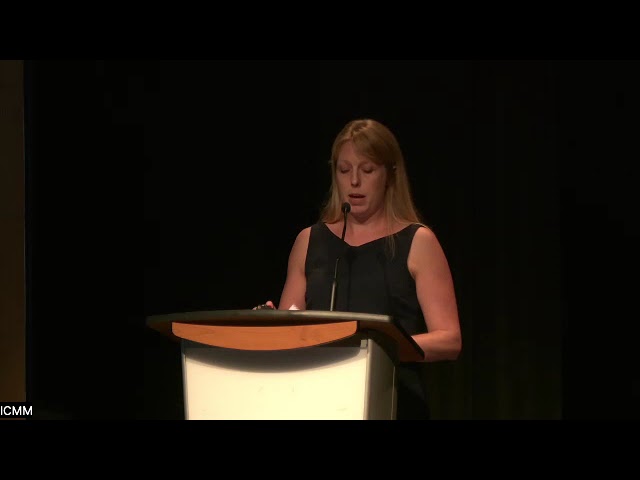
Learning From the Past - Louise Sanger, Lloyd's Register Foundation
Keywords
Summary
218 words
Critical Evaluation
Value of the Information & Strength of the Argument
The talk offers valuable insight into a novel collaborative initiative that bridges maritime heritage and contemporary environmental policy. The argumentation builds on the credibility of Lloyd’s Register Foundation and its historical depth, making a plausible case for learning from past transitions to inform future safety and sustainability. However, the evidence presented is anecdotal and programmatic rather than systematic; no concrete results or impacts are demonstrated. The value lies in the conceptual framework and the call to action, which are well-structured but lack critical evaluation of potential pitfalls or conflicting interpretations.
Scientific Rigor, Source Quality, Title Accuracy
The presentation is scientifically grounded in historical resources, referencing specific collections like the digitized ship plan and survey report collection (1.2 million items) and partnerships with established bodies (e.g., History & Policy, Ocean Decade Heritage Network). However, the talk does not present original research or detailed data; it is more of a strategic proposition. The title aligns perfectly with the content. The speaker acknowledges previous work and existing initiatives, indicating a modest level of scholarly awareness. The use of sources is appropriate for a conference introduction, though rigorous verification of claims is not possible from the talk alone. The title-content alignment is strong, with the program explicitly seeking to learn from the past.
218 words
Title / Content Match
The title accurately reflects the content: the program emphasizes using historical maritime evidence to inform future sustainability decisions.
Quality & Reliability
7/10
The presentation is delivered by a senior researcher at Lloyd's Register Foundation, a reputable maritime safety organization. The program's rationale is grounded in historical evidence and current sustainability challenges, but the talk is largely promotional and lacks detailed empirical data. Claims are plausible and well-argued, yet not independently verified.
Key Moments
Markers derived by PSI from the transcript: the creator did not define chapters.
- Introduction of the 'Learning from the Past' program and invitation to join.
- Definition of 'Learning from the Past': linking silos of research to address ocean challenges.
- Background on Lloyd's Register Foundation and its historical collections.
- Example of green shipping corridors and impacts on cultural heritage.
- Case study on the seaweed industry and need for historical evidence.
- Call for citizen science and museum contributions.
- Invitation for maritime museums to become core partners and join the initiative.
Cited Sources
- Lloyd's Register Foundation's digitized ship plan and survey report collection — Mentioned as a vast resource of 1.2 million items available online, illustrating the historical evidence base.
- The Ocean Foundation — Partner helping to shape the program and extend it to coastal and marine community stakeholders.
- Ocean Decade Heritage Network — Collaboration supporting the cultural heritage framework of the UN Ocean Decade.
- History & Policy — Supports a 'hindsight perspectives' grant as part of the program.
- Museum of London Archaeology's citizen programme — Supported through the program as an example of citizen science.
- Zooniverse (Old Weather project) — Cited as an example of citizen science projects that museums could promote.
- Safe Seaweed Coalition — Coalition working with the Foundation on seaweed industry safety and sustainability.
- Maritime Digital Hub — Ongoing partner in the program.
- National Maritime Museum, Greenwich — Partner institution.
- Global Association for Transition Engineering — Partner organization.
Concurring Sources
- UN Decade of Ocean Science for Sustainable Development (2021-2030) — The talk aligns with the UN decade's goals of leveraging knowledge and partnerships for ocean sustainability.
- International Maritime Organization (IMO) 2030 emission reduction targets — Mention of these targets sets the context for the maritime energy transition.
Contribution & Novelties
The original contribution of this talk is the formalization of a ‘Learning from the Past’ framework that systematically integrates maritime heritage evidence into current ocean sustainability policy-making. It emphasizes linking cultural heritage, industry, and academia to address complex challenges such as shipping decarbonization and coastal community displacement. The program’s novelty lies in its focus on creating a united network and citizen science projects to mobilize museum audiences. It also proposes to use historical transitions (e.g., past maritime technological shifts) to inform current transitions.
Pour aller plus loin :
- Lloyd’s Register Foundation — To explore the foundation’s work and heritage resources.
- Zooniverse (Old Weather) — An example of citizen science that engages the public with historical maritime data.
- UN Decade of Ocean Science for Sustainable Development — Framework that provides context for the program’s goals.
- Green Shipping Corridors — Getting to Zero Coalition — Provides insights into the green corridors example discussed.
- Maritime Heritage and Sustainability — A concept explored in academic literature; for a broader perspective, see the Journal of Maritime Archaeology (no specific URL provided).
176 words
Radar Profile
The radar profile shows a moderate level of information quantity (7/10) and quality (6/10), with a low technical complexity (3/10) and a high reliability score (7/10) reflecting the speaker's affiliation and credible framework. This indicates an accessible, expert-led talk that is strong on context and partnerships but lighter on technical depth and empirical evidence.