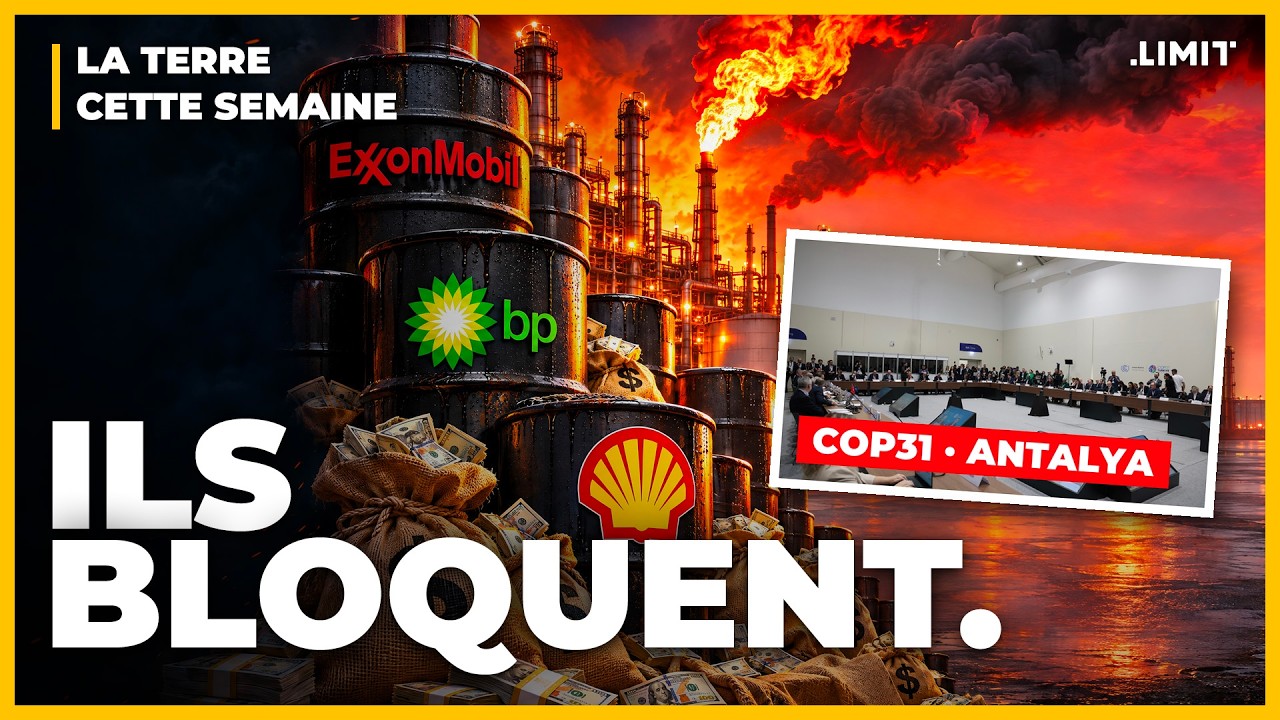
COP31 : ils veulent bloquer la sortie du pétrole
COP31: They want to block the phase-out of oil
Title history
- COP31 : ils veulent bloquer la sortie du pétrole — observed on 20261119-2048 UTC (YouTube)
Keywords
Summary
204 words
Critical Evaluation
Value of the Information & Strength of the Argument
The video provides substantial value by synthesizing multiple recent scientific findings and contextualizing them within current policy events. It effectively explains complex topics like the difference between global average temperature and regional warming, and the role of the ocean as a carbon sink. Arguments are well-structured, with clear cause-and-effect explanations. The presentation of data is balanced, acknowledging uncertainties (e.g., the study limitations and the difference between correlation and causation). However, some framing is explicitly activist (e.g., calling the COP31 draft ’the text that angers’), which is a deliberate editorial stance.
Scientific Rigor, Source Quality, Title Accuracy
The video demonstrates high scientific rigor by citing peer-reviewed articles with DOI links (e.g., Nature Climate Change, Science, PNAS) and official agency data (EIA, AGSI). It also transparently mentions when figures are estimates or from NGO reports. The title closely matches the content: the video focuses on COP31 and fossil fuel phase-out blocking. The chapter list aligns well with the narrative. No comments were provided for analysis.
172 words
Title / Content Match
The title accurately reflects the focus on COP31 negotiations and attempts to block fossil fuel phase-out.
Quality & Reliability
8/10
The video cites numerous peer-reviewed studies with DOIs, provides balanced context, and explicitly notes limitations. However, it is a news roundup from an activist-oriented channel, so some framing is present.
Chapters
- Introduction
- Le pouls de la planète
- COP31 : le texte qui fâche
- L'hiver avec des réserves de gaz au plus bas
- Le 1,5 °C ? La plupart des régions y sont déjà
- Data centers : 54 % au fossile
- Abysses : 245 animaux dans un caillou
- Planter des arbres : pas toujours une bonne idée
- En bref : Inde, Baïkal et respiration
- Ce qui arrive
- Une raison d'agir
Cited Sources
- LIMIT on Bluesky — Channel's social media profile, linking to additional content.
- LIMIT Media website — Official website of the channel, providing background and additional articles.
- El Niño : Godzilla (related video) — A previously published video from the channel, referenced for context on El Niño.
- Regional 1.5°C warming study — Nature Climate Change study (9 Nov 2026) showing most regions already experienced >90% of 1.5°C warming.
- Ocean carbon sink study — Science study (12 Nov 2026) measuring ocean CO2 absorption using oxygen measurements.
- Deep-sea nodule biodiversity study — Scientific Reports study finding up to 245 animals on single polymetallic nodules.
Contribution & Novelties
49 words
Radar Profile
The profile shows high information quantity and moderate-to-high technical depth, with strong reliability. The video is dense but well-structured, appealing to an audience seeking up-to-date climate news with credible sourcing.