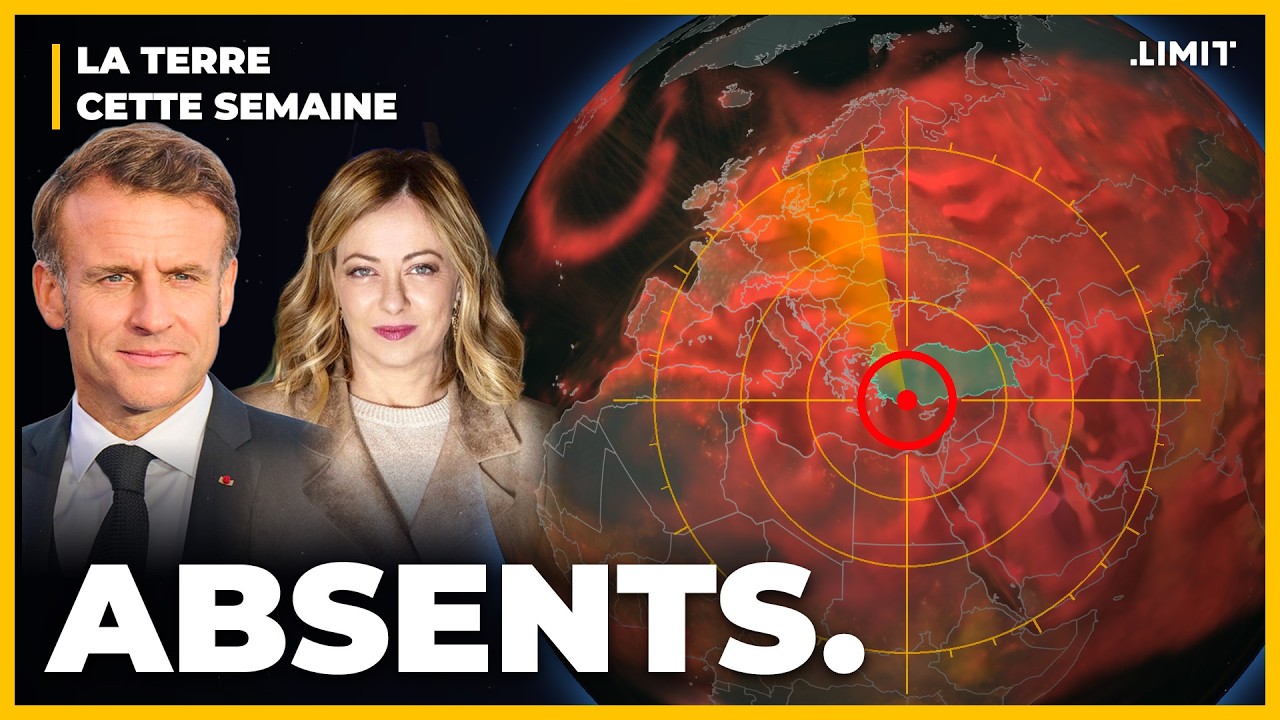
LA GUERRE EN IRAN FAIT BAISSER LE CO2… (et pourtant c'est un record) #COP #Iran #Climat
THE WAR IN IRAN IS LOWERING CO2… (yet it's a record) #COP #Iran #Climate
Title history
- LA GUERRE EN IRAN FAIT BAISSER LE CO2… (et pourtant c'est un record) #COP #Iran #Climat — observed on 20261115-1725 UTC (YouTube)
Keywords
Summary
195 words
Critical Evaluation
Value of the Information & Strength of the Argument
The value of this video lies in its synthesis of complex, often contradictory data into a coherent narrative. It explains the paradox of falling fossil emissions alongside record total CO2 by distinguishing fossil versus land-use emissions, a nuance frequently overlooked in mainstream media. The argumentation is solid: it cites specific figures, attributes sources, and contextualizes uncertainties (e.g., margin of error in the Global Carbon Budget). The inclusion of expert quotes (like Pierre Friedlingstein) strengthens credibility. Geopolitical analysis (Iran, Hormuz) is clearly linked to energy markets and climate impacts, avoiding oversimplification. Overall, the video makes a compelling case for understanding systemic interactions rather than isolated trends.
Scientific Rigor, Source Quality, Title Accuracy
The scientific rigor is high: the video relies on primary reports (Global Carbon Budget, NOAA, Copernicus, IPCC-style data) and provides a comprehensive list of references in the description. It clearly distinguishes between peer-reviewed studies, provisional data, and expert opinions. The title is an accurate teaser that matches the content precisely, without exaggeration. The production is transparent about sources and offers a detailed source document. The only minor weakness is the reliance on preliminary projections (e.g., 2026 emissions), which are noted as such. Overall, the sourcing is exemplary for a news recap format.
212 words
Title / Content Match
The title accurately reflects the central paradox discussed: a decrease in fossil CO2 emissions due to the Iran conflict while total emissions reach a record. The content fully addresses this with detailed explanations.
Quality & Reliability
8/10
The video is well-documented, citing multiple primary sources (Global Carbon Budget, NOAA, Copernicus) and expert interviews. Some data are preliminary and not yet peer-reviewed, and geopolitical interpretations are clearly separated from scientific facts.
Chapters
- Introduction
- Le pouls de la planète
- El Niño se renforce encore
- COP31 à Antalya : les absents, l'argent, le classement
- Bilan carbone mondial : une baisse, un record quand même
- Ormuz : le pétrole repasse, les attaques aussi
- Terres rares et data centers
- L'étude de la semaine : les glaces, et une bonne nouvelle
- Ce qui arrive
- Conclusion
Cited Sources
- LIMIT's BlueSky profile — Social media link provided in the video description for following the channel.
- Complete sources document — A comprehensive list of all referenced sources, credits, and additional details.
- LIMIT official website — The media outlet's homepage for more content and context.
- Video: Allons-nous avoir la tête sous l'eau ? (with Heïdi Sevestre) — Linked as a related video on cryosphere and sea level rise.
- Video: El Niño : Godzilla — Linked as a background video on extreme El Niño events.
Contribution & Novelties
The video’s original contribution is its clear explanation of the apparent paradox between a drop in fossil CO2 emissions and a record total CO2, using the interaction of geopolitical shocks (Iran war, Hormuz) and natural climate variability (El Niño) affecting land use. It also adds a review of the proposed addition of the cryosphere to planetary boundaries, a recent scientific development.
Pour aller plus loin :
- Global Carbon Budget — The main source for emission projections; helps contextualize the annual CO2 accounting.
- Planetary boundaries — The framework that the cryosphere is proposed to join; essential for understanding Earth system limits.
- El Niño–Southern Oscillation — The climate pattern behind the land-use emission increases and weather extremes discussed.
116 words
Radar Profile
The radar profile indicates a high quantity of information (9/10) and good information quality (8/10), with a technical level that is advanced but accessible (7/10). Reliability is strong (8/10), reflecting the reliance on peer-reviewed sources and transparent citation. The overall balance suggests a very trustworthy and informative video for a moderately informed audience.