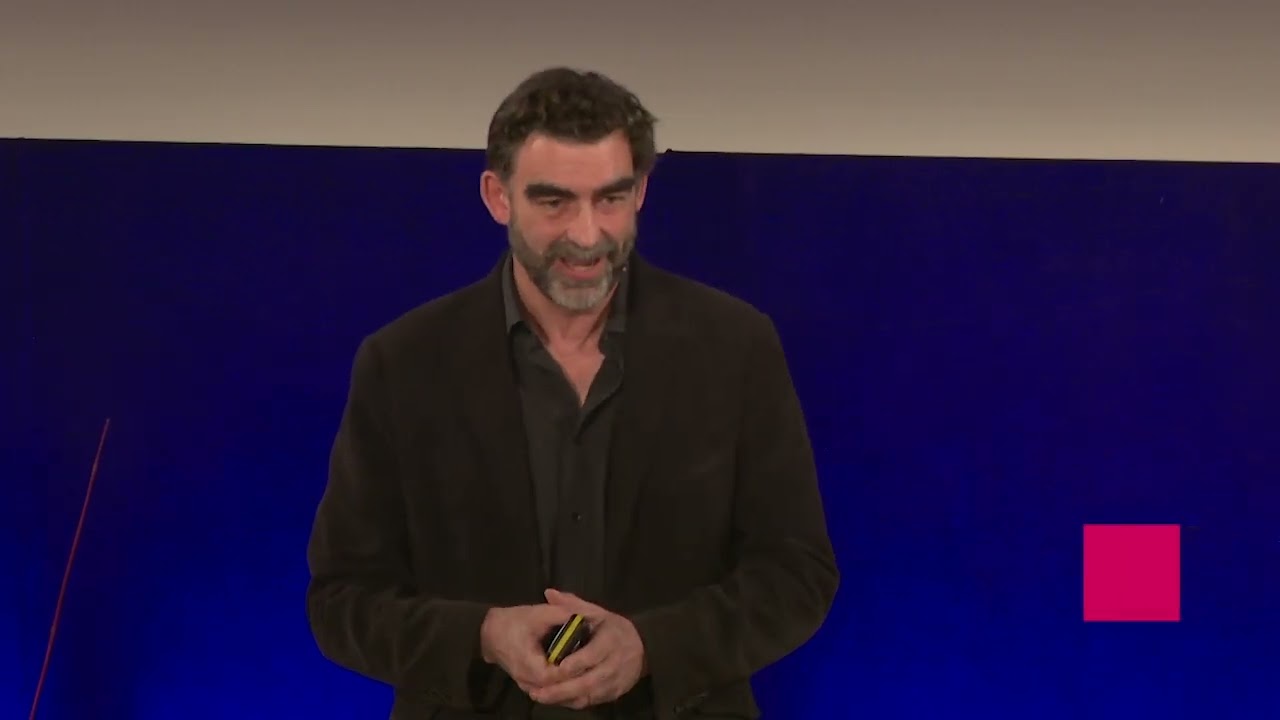
Professor Nick Lane : How can we know anything about the origin of life?
Keywords
Summary
241 words
Critical Evaluation
Value of the Information & Strength of the Argument
The talk’s value lies in its provision of a coherent and evidence-based framework for thinking about the origin of life, synthesizing decades of research. Lane’s argumentation is logical and progressive, moving from the complexity of cells to the energetic and metabolic constraints, and finally to the plausibility of hydrothermal vent settings. He presents his own hypothesis (the alkaline vent model) while acknowledging uncertainties, and grounds his reasoning in known biochemistry and the structure of the universal tree of life. The discussion of the reverse Krebs cycle as a primitive metabolic pathway is particularly insightful, linking the autotrophic origins of metabolism to modern biosynthesis. The treatment of genetic information, proposing biophysical affinities rather than purely random processes, adds a novel perspective that is gaining traction. However, the talk is not a balanced review; it strongly advocates a particular viewpoint, and the speculative nature of some claims is admitted. Nevertheless, it provides a compelling intellectual argument that challenges conventional narratives.
Scientific Rigor, Source Quality, Title Accuracy
Lane maintains a high level of scientific rigor, referencing the work of key researchers such as Bill Martin, Christian de Duve, and Deb Kelley, and he grounds his claims in published literature. He is careful to distinguish between established facts and hypotheses, and he often phrases uncertain findings with appropriate qualifiers. The talk includes visual aids and metabolic maps that enhance comprehension. The title ‘How can we know anything about the origin of life?’ is well matched to the content: Lane systematically demonstrates the kinds of evidence and reasoning that allow scientists to reconstruct plausible origins, while acknowledging the inherent limitations. The lecture is well-structured, and the use of analogies (e.g., slot machines, lightning bolts) makes complex ideas accessible without dumbing down the content. In summary, the talk is emotionally engaging and scientifically responsible, with a clear alignment between its promise and its delivery.
317 words
Title / Content Match
The title accurately reflects the talk's focus on the epistemological challenges and approaches to studying the origin of life.
Quality & Reliability
8/10
The talk is given by an established expert in evolutionary biochemistry, presenting research-based ideas with clear reasoning and references to scientific literature, though some claims are speculative.
Key Moments
Markers derived by PSI from the transcript: the creator did not define chapters.
- Comparison between observing the early universe and studying Earth's past
- Discussion of the complexity of bacterial cells and the ribosome machinery
- Christian de Duve's quote on catalysts and proto-metabolism
- Explanation of cellular respiration and proton-motive force
- Description of ATP synthase as a rotating motor
- Reverse Krebs cycle and autotrophic metabolism in ancient bacteria
- Origin of genetic information via biophysical interactions
- Tree of life and the nature of LUCA in hydrothermal vents
Contribution & Novelties
This talk offers a clear synthesis of Nick Lane’s distinctive perspective on the origin of life, emphasizing the role of energy gradients and hydrothermal vent chemistry. It does not present new unpublished research but rather integrates existing evidence into a compelling narrative that highlights the importance of proton gradients and the reverse Krebs cycle. The discussion of the genetic code’s possible physical basis adds a fresh angle to the origin-of-information problem. The talk is particularly valuable for its pedagogical approach, and it invites viewers to think critically about what we can reasonably infer about deep time.
Pour aller plus loin :
- Abiogenesis — Provides a general overview of theories on life’s origin, complementary to Lane’s hydrothermal vent focus.
- Hydrothermal vent — Describes the geological setting that Lane argues is the cradle of life, including the Lost City vents.
- Last universal common ancestor — Discusses the concept of LUCA and its inferred properties, central to Lane’s tree-of-life reasoning.
- Krebs cycle — Details the metabolic pathway that Lane proposes worked in reverse in early life, and which he discusses at length.
179 words
Radar Profile
The radar profile shows high scores in information quantity and quality, but lower in technical level, reflecting the talk's accessibility despite its depth. The overall reliability score is high, though the speculative elements temper it slightly.
💬 Based on the 24 comments analyzed, the reaction is predominantly positive, with many viewers praising Nick Lane's delivery and scientific clarity, though a few express skepticism about the theories presented.