Nine Lives: The Women Who Shaped British Archaeology
Title history
- Nine Lives: The Women Who Shaped British Archaeology — observed on 20261120-1939 UTC (YouTube)
Keywords
Summary
216 words
Critical Evaluation
Value of the Information & Strength of the Argument
The video provides valuable historical information about women who were often overlooked in mainstream archaeology narratives. It brings together archival photographs, letters, and institutional records to reconstruct their professional and personal lives. The argumentation is solid, using specific examples and quotes from primary sources to support each biography. It also critically addresses the colonial and orientalist context of the period, acknowledging the problematic aspects of some figures’ legacies. The inclusion of unnamed workers and the emphasis on systematic erasure adds depth and a nuanced perspective, making the argument both informative and thought-provoking.
Scientific Rigor, Source Quality, Title Accuracy
The scientific rigor is high, as the video is based on materials from reputable institutions like the British International Research Institutes and the Petrie Museum. It cites specific archival items, such as photographs and letters, and references published works by the women themselves. The quality of sources is strong, though the video does not provide direct external citations or links. The title accurately reflects the content, as it indeed profiles nine women who shaped British archaeology. The video is well-structured and aligns with its stated scope, making it a reliable introductory resource.
199 words
Title / Content Match
The title accurately reflects the content, which profiles nine influential women archaeologists and their contributions to British archaeology.
Quality & Reliability
8/10
The video is grounded in archival materials from reputable institutions like the British International Research Institutes and the Petrie Museum. It presents a critical perspective on colonial history and acknowledges the erasure of local workers. However, it is a concise overview and lacks explicit in-video citations to specific academic sources.
Key Moments
Markers derived by PSI from the transcript: the creator did not define chapters.
- Introduction to the video and the concept of Nine Lives, with start of Amelia Edwards' story.
- Discussion of Jane Harrison and her impact on classical studies and modernist literature.
- Winifred Lamb's excavations in Greece and Turkey, including her hiring of women and documentation of local workers.
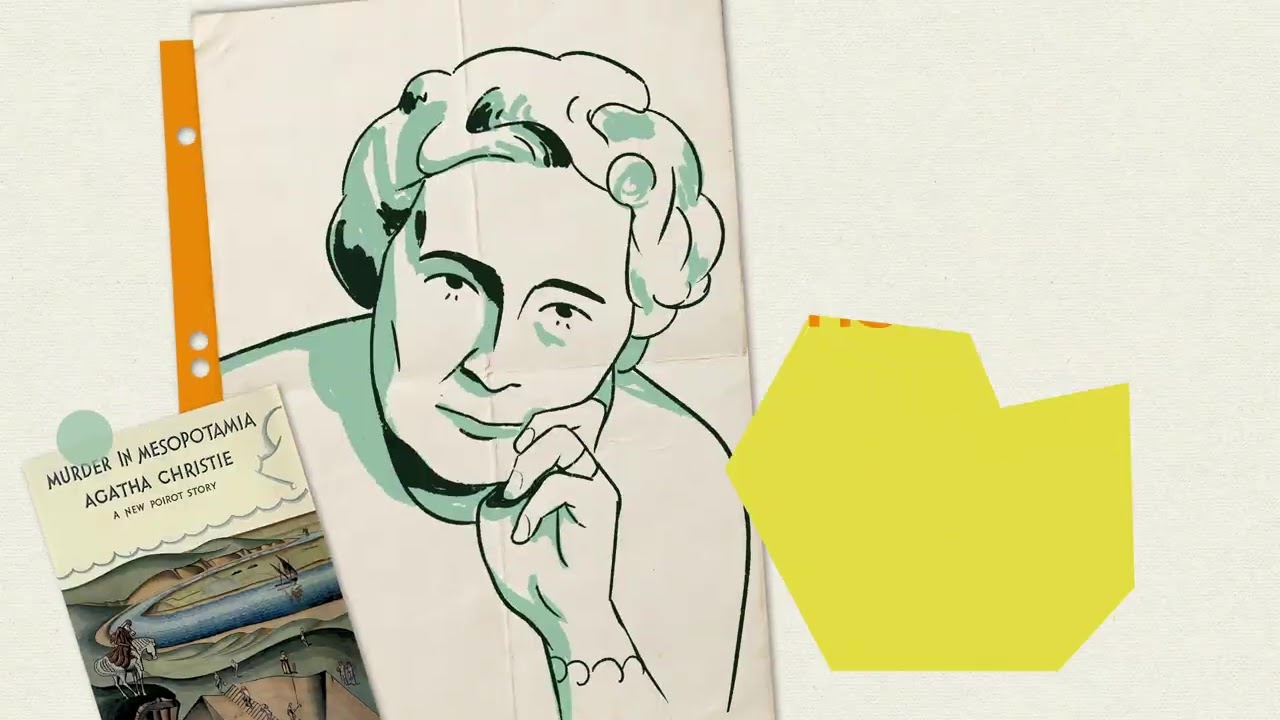
- Agatha Christie's involvement in Nimrud and the discovery of the 'Mona Lisa' ivory mask, with critique of colonial narratives.
- Kathleen Kenyon's excavations at Jericho and her career, followed by mentions of other women like Olwen Brogan and Clare Goff.
- Conclusion highlighting the forgotten local workers and the ongoing need to uncover their stories.
Cited Sources
- Women Transcending Boundaries — An online research project created by the BIRI Digital Coordination and Strategy Project that serves as the basis for this video.
- A Thousand Miles Up the Nile — Amelia Edwards' travelogue that sparked interest in Egyptology, mentioned in the video.
- Roman Sculpture from Augustus to Constantine — Eugénie Sellers Strong's groundbreaking work on Roman art, referenced in the video.
- Murder in Mesopotamia — Agatha Christie's novel inspired by her time in Iraq, mentioned with a critical lens.
- The Petrie Museum of Egyptian and Sudanese Archaeology — Founded by Amelia Edwards' legacy, one of the institutions highlighted.
Concurring Sources
- Amelia Edwards - Wikipedia — Corroborates Edwards' founding of the Egypt Exploration Society and her influence.
- Kathleen Kenyon - Wikipedia — Confirms Kenyon's excavations at Jericho and her directorship at the British School of Archaeology in Jerusalem.
Contribution & Novelties
The video’s original contribution lies in its synthesis of archival materials to highlight the professional contributions of nine women archaeologists while simultaneously deconstructing the imperial and patriarchal structures that often erased their local collaborators. It brings together diverse geographical contexts—from Egypt to Iran to East Africa—to show a global network of women in archaeology. The critical reflection on how colonial-era narratives reproduced racism and exoticism adds a modern scholarly perspective not typically found in traditional histories.
Pour aller plus loin :
- Amelia Edwards — Encyclopedic overview of Edwards’ life and contributions to Egyptology.
- Jane Ellen Harrison — Details on Harrison’s work in Greek religion and her influence on modernist literature.
- Kathleen Kenyon — Biography of Kenyon, including her excavations at Jericho and her role in Palestinian archaeology.
- A Hundred Years of Women in Archaeology — General context on women’s roles in archaeology, providing a broader scholarly frame.
147 words
Radar Profile
The radar profile shows high scores in quality and reliability (8/10 each), moderate in quantity (7/10), and lower in technical level (5/10). This indicates that the video excels in trustworthy, well-sourced content but is accessible to a general audience rather than deeply technical. The overall shape suggests a solid educational documentary with a strong factual foundation and balanced narrative approach.