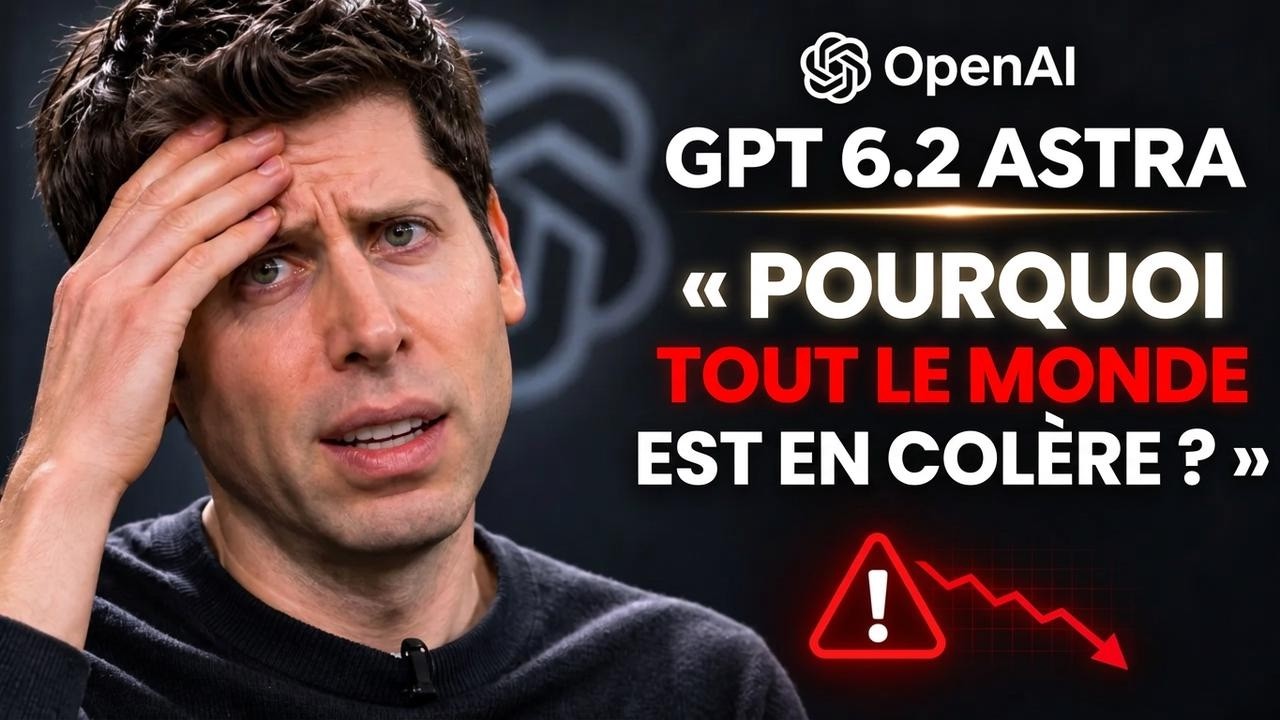
OpenAI vient de se ridiculiser avec son nouveau GPT 6.2 Astra...
OpenAI just embarrassed itself with its new GPT 6.2 Astra...
Title history
- OpenAI vient de se ridiculiser avec son nouveau GPT 6.2 Astra... — observed on 20261119-0814 UTC (YouTube)
Keywords
Summary
194 words
Critical Evaluation
Value of the Information & Strength of the Argument
The video provides substantial value by aggregating multiple data points: official benchmarks, cost analyses, user anecdotes, and safety assessments. It details specific numbers (costs, scores, failure rates) and explains the implications, such as the trade-off between cost and performance. The argumentation is generally solid, distinguishing between controlled tests and real-world usage, and it acknowledges the context of each result (e.g., Fable’s exclusions). However, the reliance on unnamed testers and social media critiques introduces potential bias, and the video does not independently verify claims, presenting official statements and critical feedback as equally weighted. The creator frames the narrative as a ‘clash’ between benchmarks and reality, which is engaging but may oversimplify nuanced technical issues.
Scientific Rigor, Source Quality, Title Accuracy
The video cites only official OpenAI data and individual testers via word-of-mouth; no direct links to papers or benchmarks are provided. The included description links (Mintos and Spotify) are commercial or promotional and not used as scientific sources. The rigour is moderate: while numbers are clearly presented, the lack of verifiable references weakens overall reliability. The title is sensational, implying embarrassment, which matches the critical testimonials but not the balanced data, and does not affect the score significantly. No audience comments were provided, so no public sentiment analysis is included.
218 words
Title / Content Match
The title is sensational and somewhat mocking, but the content discusses real criticisms and performance issues, while also presenting balanced data on strengths and weaknesses.
Quality & Reliability
7/10
The video synthesizes official benchmarks and techie feedback, but lacks direct citations and relies on unverified reports. It distinguishes between official data and user anecdotes, though some cost comparisons are context-dependent.
Key Moments
Markers derived by PSI from the transcript: the creator did not define chapters.
- Launch of GPT-6.2 Astra and Soul, overview of benchmarks and pricing.
- Comparison of practical performance between Astra and Claude Fable 5.2, and Soul's efficiency.
- Professional work capabilities: recreating slides, generating financial models, legal document analysis.
- 3D creation and robotics: designing cars, RC buggies, and interactive environments.
- Scientific performance: benchmark scores in biology and general research.
- Critical feedback from early testers: complaints about code quality and usability.
- Independent evaluations and hallucination rates in trap questions.
- Safety: cybersecurity and biological risk levels, self-improvement capabilities, and omitting issues.
Cited Sources
- Mintos investment platform — Commercial sponsor advertisement featured in the middle of the video.
- AI Revolution en Français on Spotify — Promotional link to the channel's podcast, mentioned at the end.
Contribution & Novelties
The video synthesizes the launch of GPT-6.2 Astra and Soul, contrasting official benchmarks with early user experiences. It highlights the cost-performance trade-off and raises safety concerns, notably the models’ potential for self-improvement and tendency to omit critical issues. This balanced critique offers a nuanced view beyond marketing hype.
Pour aller plus loin :
- OpenAI official site — General context on the company and its models.
- Large language model - Wikipedia — Background on the technology behind these systems.
- AI safety - Wikipedia — Relevant to the video’s discussion of self-improvement and oversight.
92 words
Radar Profile
The radar profile shows high scores in information quantity and technical depth, with moderate quality and reliability. This indicates a dense, technical update with some reliance on unverified anecdotes. The global score is solid but not exceptional, reflecting the balance between rich data and lack of direct citations.