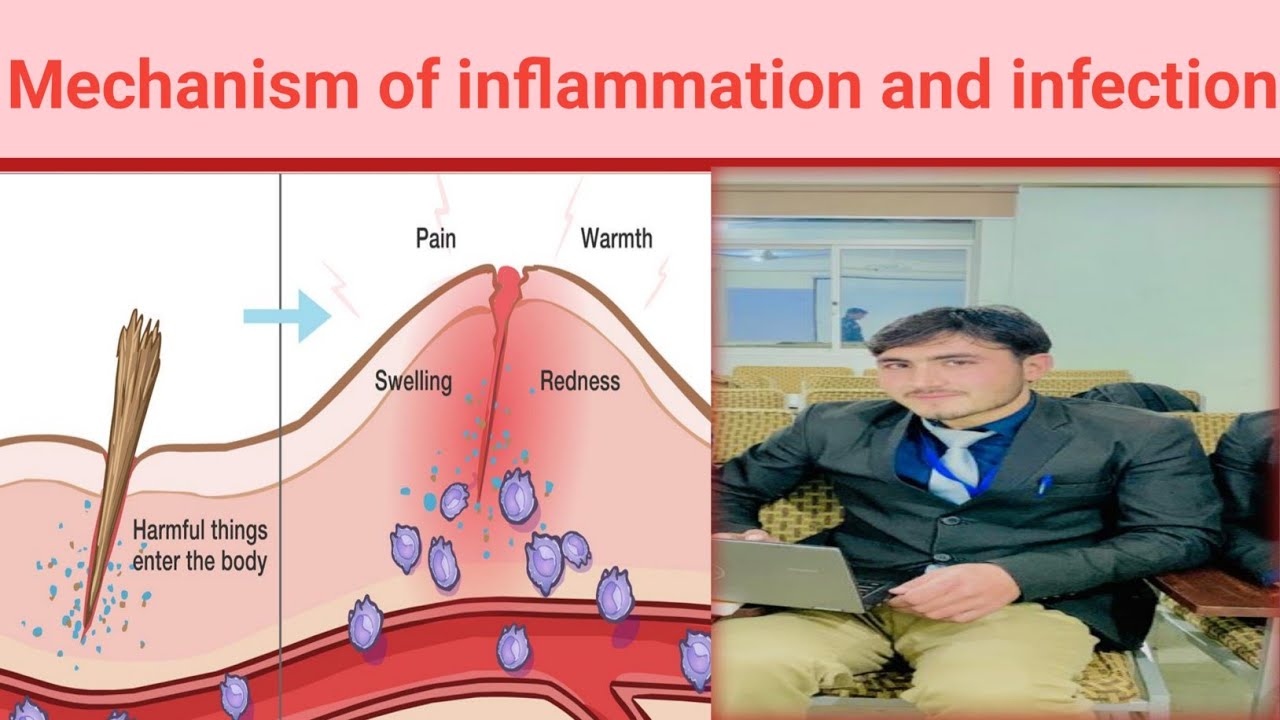
Mechanism of inflammation infection pathophysiology chapter:2 part:1 BSN third semester in pashto
Keywords
Summary
168 words
Critical Evaluation
Value of the Information & Strength of the Argument
The video provides a foundational overview of infection and inflammation, which is valuable for nursing students at an introductory level. The argumentation relies on established medical knowledge, presented sequentially from infection stages to inflammatory responses. The instructor explains concepts clearly, using simple language in Pashto, and reinforces key terminology (e.g., incubation, prodrome, acute phase). However, the argumentation lacks critical analysis or references to primary research. It is a straightforward dissemination of textbook knowledge, not an evidence-based discussion. The value lies in its accessibility for non-English-speaking students, but it does not offer novel insights or engage with controversies.
Scientific Rigor, Source Quality, Title Accuracy
Scientific rigor is moderate: the content aligns with standard pathophysiology textbooks and the historical description of signs by Celsus is correctly cited. However, no specific sources or citations are provided within the video. The title accurately reflects the content, specifying the chapter, part, and target audience. No comments or external materials were provided, so the public’s reception cannot be assessed. The overall rigor is acceptable for a teaching video, though it does not meet the standards of peer-reviewed content.
191 words
Title / Content Match
The title accurately reflects the content: a lecture on the mechanisms of infection and inflammation, specifically designed for third-semester BSN students.
Quality & Reliability
7/10
Content is basic yet accurate, covering established pathophysiology concepts; however, the presentation lacks visual aids and is based solely on oral delivery, limiting depth and verification.
Key Moments
Markers derived by PSI from the transcript: the creator did not define chapters.
- Introduction and start of chapter 2: mechanism of infection and inflammation
- Explains stages of infectious disease: incubation period and factors influencing it
- Describes the prodromal period and acute phase with systemic manifestations
- Discusses acute phase response, plasma proteins, and leukocyte changes in bacterial infections
- Introduces inflammation as a protective response and lists the cardinal signs
Contribution & Novelties
This video contributes to nursing education by presenting infection and inflammation topics in Pashto, making medical knowledge accessible to Pashto-speaking students. The original content lies in its linguistic adaptation rather than novel scientific data. The explanations are basic and follow a standard curriculum.
Pour aller plus loin :
- Inflammation - Wikipedia — Provides a comprehensive overview of inflammatory processes, including mediators and mechanisms.
- Infection - Wikipedia — Explains the types and stages of infectious diseases, complementing the video’s content.
- Innate immune system - Wikipedia — Details the immediate host defenses, relevant to the inflammation and infection discussion.
97 words
Radar Profile
The radar profile shows moderate scores across all dimensions, with quality slightly higher than quantity and technical level. This indicates a balanced but not exceptional educational resource, suitable for beginners but lacking depth.