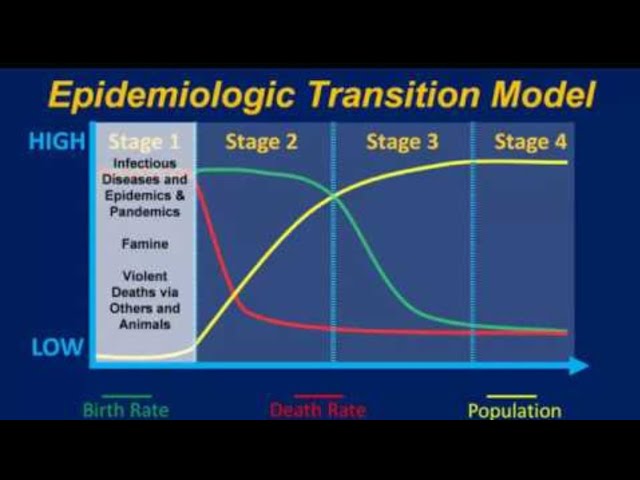
Epidemiological Transition chapter:6 part:1 Epidemiology BSN Six semester in pashto #epidemiology
Title history
- Epidemiological Transition chapter:6 part:1 Epidemiology BSN Six semester in pashto #epidemiology — observed on 20261026-1652 UTC (YouTube)
Keywords
Summary
171 words
Critical Evaluation
Value of the Information & Strength of the Argument
The video provides a coherent and sequential explanation of demographic and epidemiological transition concepts, using clear definitions and examples. The argumentation is largely descriptive and didactic, relying on standard models such as the demographic transition model. It effectively links cause and effect, for instance, explaining how improved sanitation and vaccination reduce death rates, leading to a population boom, and then how social changes influence fertility decline. The lecturer also clarifies the rationale behind the replacement fertility level of 2.1. However, the presentation is relatively basic, with limited critical analysis or discussion of nuances, and the repetitive style may reduce engagement. The value lies in its utility as an introductory educational resource for nursing students.
Scientific Rigor, Source Quality, Title Accuracy
The scientific rigor is moderate: the content is consistent with established epidemiological and demographic knowledge, but no sources or references are cited within the video or its description. The lecturer does not mention specific studies or data sources, relying on general knowledge. The title accurately reflects the content and scope of the lecture. The video appears to be part of a series, indicated by ‘chapter:6 part:1’, which helps contextualize the material. No external resources are provided, so the audience must rely on the lecturer’s exposition. The lack of citations is a weakness for a scientific audience, but acceptable for an introductory educational video.
232 words
Title / Content Match
The title accurately describes the content, which is a lecture on epidemiological transition as part of an epidemiology course for nursing students.
Quality & Reliability
7/10
The video provides a clear, structured overview of epidemiological transition and demographic concepts. However, the oral presentation in Pashto mixes English terms, and the depth is basic. No external sources are cited within the video, limiting verifiability, but the content aligns with standard public health knowledge.
Key Moments
Markers derived by PSI from the transcript: the creator did not define chapters.
- Introduction: definition of epidemiological transition.
- Definition of demography and population; basic concepts (birth, death, migration).
- Population density and structure; introduction to population pyramids.
- Explanation of the four stages of demographic transition with examples.
- Discussion of fertility measures, including total fertility rate and replacement level fertility.
- Conclusion: summary of indicators and outlook on aging populations.
Contribution & Novelties
The video provides a structured, bilingual (Pashto-English) introduction to epidemiological and demographic transition, which is particularly valuable for nursing students in regions where such resources are scarce. It clarifies key terms and models, such as the demographic transition model and replacement fertility, with a practical, health-education perspective. The original contribution lies in its pedagogical framing for a specific audience rather than novel scientific insights.
Pour aller plus loin :
- Demographic transition — Context for the model described in the video.
- Population pyramid — Visual tool for age-sex structure.
- Total fertility rate — Core indicator discussed.
- Epidemiological transition — Direct link to the main topic.
104 words
Radar Profile
The radar profile shows moderate scores across all dimensions, with a slightly higher score for information quantity relative to technical level, indicating a broad but not deeply technical presentation. The balance suggests an accessible educational video rather than a high-density scientific treatise.