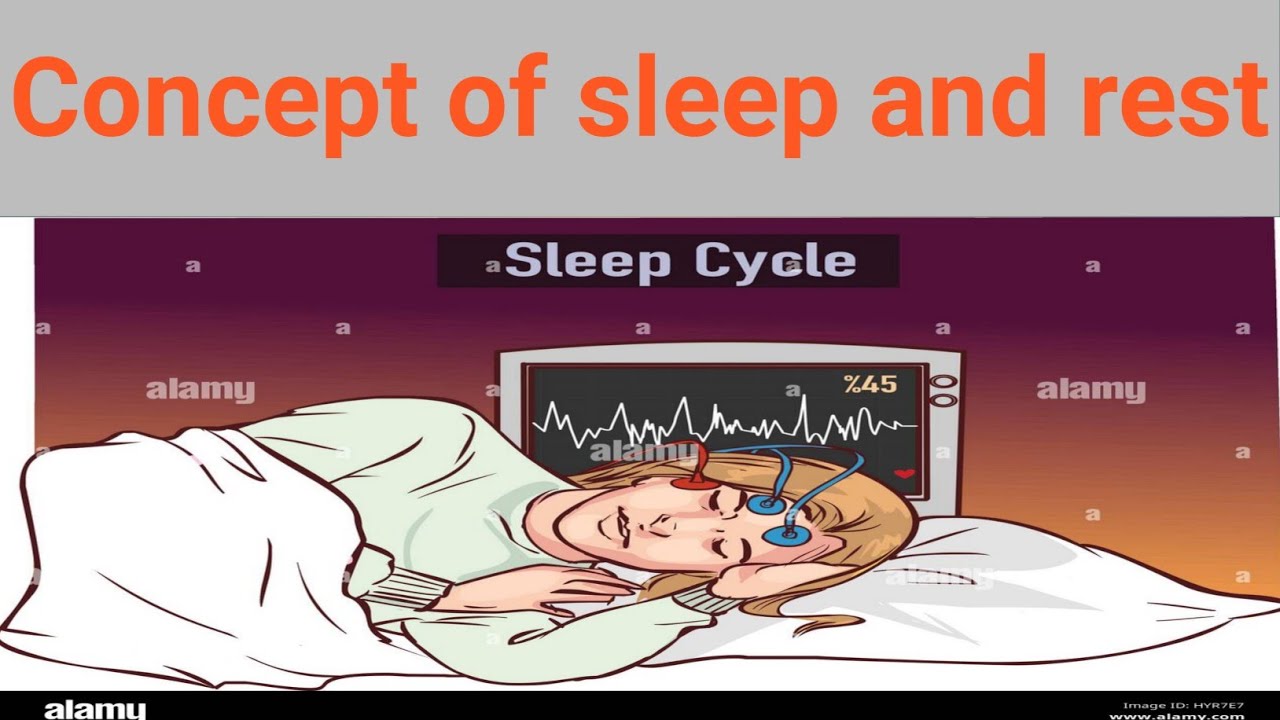
Concept of sleep and restChapter:7 part:1Fundamentalof nursing BSN Secondsemester kmu slid in pashto
Keywords
Summary
215 words
Critical Evaluation
Value of the Information & Strength of the Argument
The value of the information lies in its comprehensiveness for foundational nursing education, covering essential definitions, stages of sleep, and clinical implications. The argumentation is straightforward and relies on accepted medical knowledge, presenting the material in a logical sequence from basic definitions to complex sleep stages and nursing applications. However, the presentation does not engage with opposing viewpoints or deeper research, limiting its argumentative depth. The lecture is suitable for beginners but offers little beyond standard textbook content.
Scientific Rigor, Source Quality, Title Accuracy
Scientifically, the content aligns with established nursing and physiological knowledge, but the video does not cite any primary or secondary sources. The transcription is of poor quality, containing numerous errors (e.g., ‘rela’ for ‘relax’, ‘detction’ for ‘deception’), which undermines clarity. The title is coherent with the content, though it has formatting issues (missing spaces). No sources are mentioned in the video or description, which reduces the reliability of the information from an academic standpoint. The lecture is a personal educational narration rather than a peer-reviewed contribution.
179 words
Title / Content Match
The title matches the content well, though it contains formatting errors (no spaces between words).
Quality & Reliability
6/10
The video provides a basic overview of sleep and rest concepts in nursing, covering definitions, stages, functions, and nursing interventions. However, it lacks citations and the transcription is poor. The information is standard and generally accurate.
Key Moments
Markers derived by PSI from the transcript: the creator did not define chapters.
Contribution & Novelties
The video does not present new research or novel insights; it synthesizes standard nursing knowledge on sleep and rest. Its primary contribution is educational, aiming to convey foundational concepts to nursing students. No original studies or advanced theories are introduced. For viewers seeking deeper understanding, the following resources are recommended.
Pour aller plus loin :
- Sleep — Comprehensive overview of sleep physiology and stages.
- Rapid eye movement sleep — Detailed information on REM sleep characteristics and functions.
- Nursing interventions for sleep promotion — Evidence-based approaches to improve sleep in clinical settings.
91 words
Radar Profile
The radar profile shows moderate scores across all dimensions, indicating a basic educational video with average information quality but limited depth and reliability. The quantity of information is sufficient for an introductory lecture, but technical rigor and sourcing are lacking.