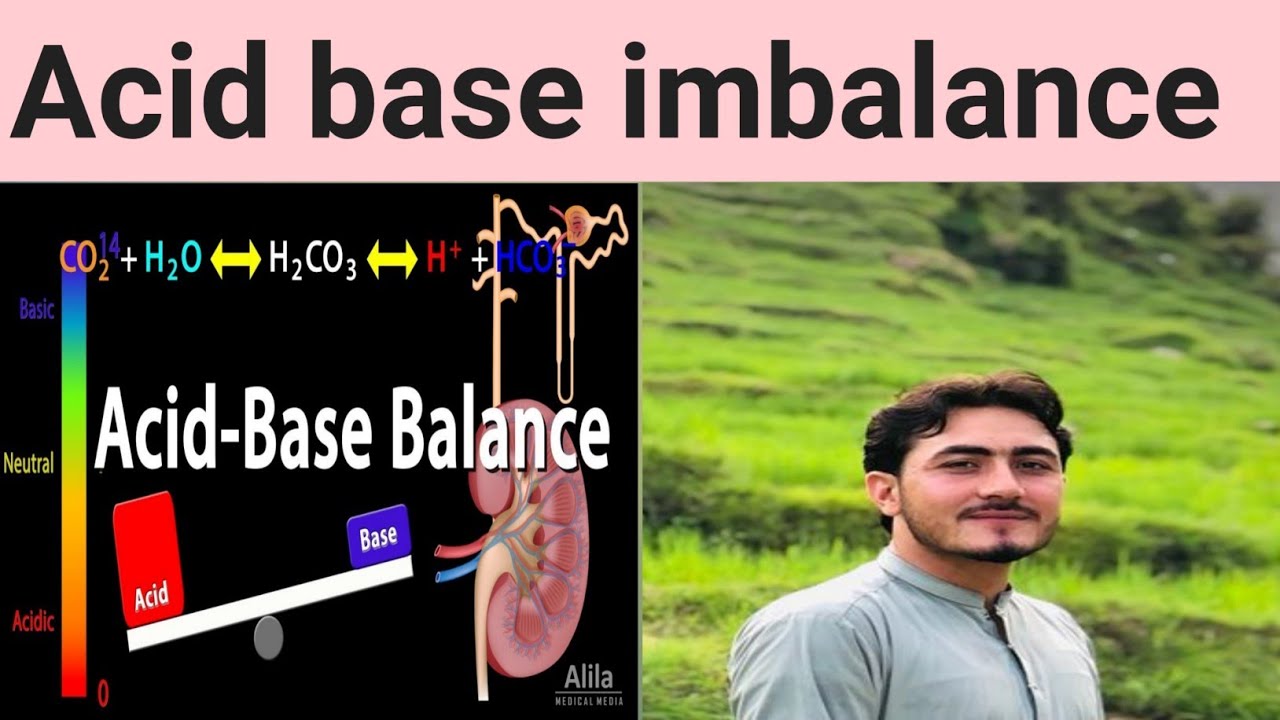
Arterial blood gases chapter:5 part:B pathophysiology BSN Third semester kmu slides in pashto#kmup
Keywords
Summary
157 words
Critical Evaluation
Value of the Information & Strength of the Argument
The video provides a clear educational value for nursing students by breaking down ABG interpretation into manageable steps and linking pathophysiological mechanisms to clinical presentations. The argumentation is systematic: it starts with buffer definitions, then explores each acid-base disorder using pH, PaCO2, and HCO3- parameters, and illustrates compensatory mechanisms. However, the reasoning is largely based on rote memorization rather than deep physiological explanation, and the presentation sometimes jumps between topics without smooth transitions. The didactic approach is solid for an introductory level, but the lack of visual aids and the repetitive speech reduce overall impact.
Scientific Rigor, Source Quality, Title Accuracy
The video is a lecture-style tutorial, but it does not cite any external sources or research. The quality of information aligns with standard nursing handbooks, though no references are provided for verification. The title accurately reflects the content: it specifies the chapter, part, course level, and language. The delivery in Pashto may limit accessibility, but the scientific content appears conventional. The audience may find the slides helpful, yet the audio quality and lack of visual reinforcement could hinder comprehension.
189 words
Title / Content Match
The title accurately describes the content: an ABG pathophysiology lecture for BSN students, delivered in Pashto with slides. The content matches the title well.
Quality & Reliability
7/10
The lecture explains arterial blood gas (ABG) interpretation with a structured step-by-step approach, covering buffer systems, respiratory and metabolic acid-base disorders, and compensation mechanisms. However, the transcript is partially garbled due to heavy accent and unclear audio, reducing precision. The content is didactic and aligns with standard nursing education, but lacks references and depth for advanced understanding.
Key Moments
Markers derived by PSI from the transcript: the creator did not define chapters.
- Introduction: Defines buffer system and its role in resisting pH changes.
- Discusses sodium bicarbonate and carbonic acid as the main blood buffer, emphasizing the 20:1 ratio.
- Explains respiratory acidosis: low pH (<7.35) with elevated PaCO2 and compensatory HCO3 increase.
- Covers metabolic acidosis: low pH, low HCO3, and causes like diabetic ketoacidosis.
- Introduces respiratory alkalosis: high pH with low PaCO2, often due to hyperventilation.
- Details metabolic alkalosis: high pH with elevated HCO3, and compensation via respiratory depression.
- Summarizes the step-by-step ABG interpretation approach and clinical examples.
Contribution & Novelties
This video offers a basic educational introduction to ABG interpretation within the context of the KMU nursing curriculum. Its novelty lies in delivering this content in Pashto, catering to local nursing students. It emphasizes a systematic stepwise method for classifying acid-base disorders, which is a valuable pedagogical tool. However, it does not introduce new research or advanced insights.
Pour aller plus loin :
- Arterial blood gas test — Relevant for standard definitions and parameters.
- Acid–base homeostasis — Useful for understanding physiological buffer mechanisms.
- Respiratory acidosis — Detailed clinical perspective on this disorder.
92 words
Radar Profile
The radar profile shows moderate scores across all axes, with quality and reliability slightly higher than quantity and technical level, reflecting a basic but solid educational video. The emphasis on clinical reasoning is balanced but not advanced.