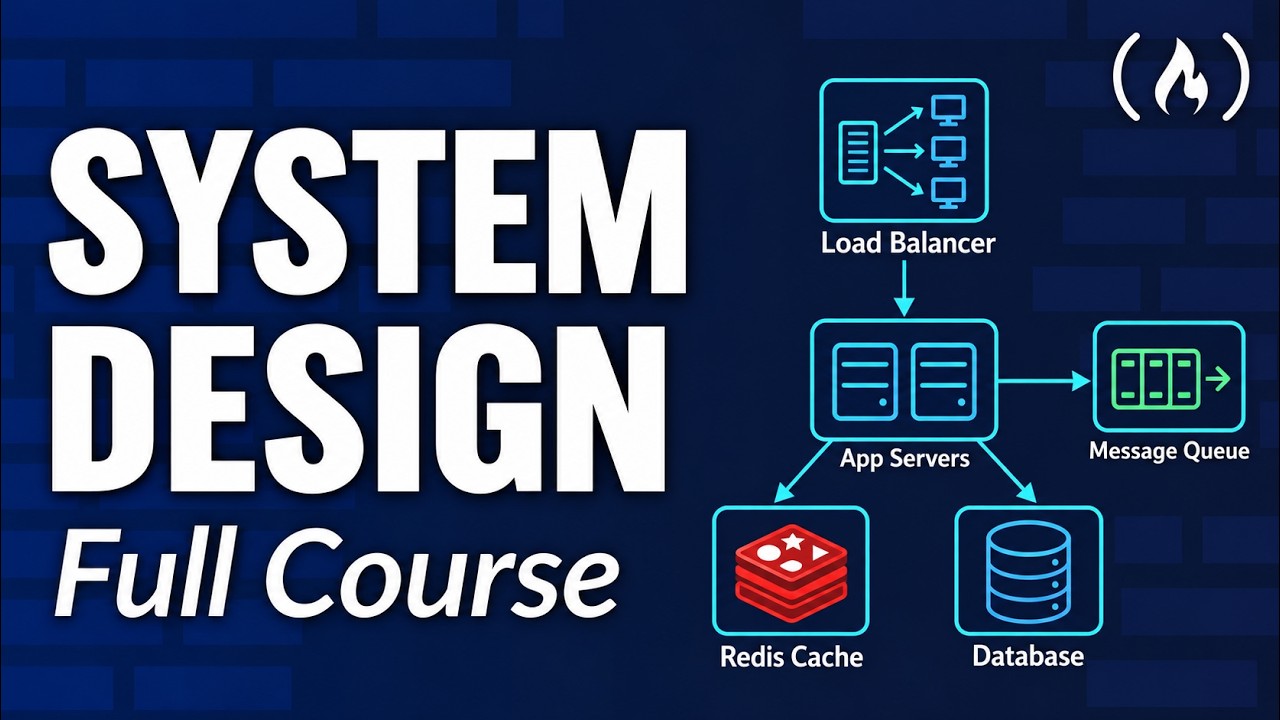
Design Software Systems Like a Senior Engineer – Complete Course
Keywords
Summary
124 words
Critical Evaluation
Value of the Information & Strength of the Argument
The video provides a clear and actionable framework that helps engineers structure their approach to vague system design problems. The argumentation is strong: the instructor explains not only what to do but why, tying decisions to trade-offs and real-world implications. For example, the discussion of SQL vs NoSQL, consistency vs availability, and caching strategies demonstrates engineering judgment. The use of three complete case studies reinforces the methodology and shows how the same framework adapts to different requirements. The emphasis on communication and collaboration with the interviewer is also valuable, as it reflects how system design is a collaborative exercise in practice.
Scientific Rigor, Source Quality, Title Accuracy
The content is based on the instructor’s experience and common industry practices, but no external academic or technical sources are cited. The information aligns with well-known system design principles such as the CAP theorem, caching, sharding, and load balancing. The title is perfectly adequate: ‘Design Software Systems Like a Senior Engineer – Complete Course’ accurately describes the scope and depth of the material. Since no comments are provided, audience feedback cannot be analyzed.
189 words
Title / Content Match
The title accurately reflects the content: a comprehensive course on system design for software engineers, covering framework and real-world examples.
Quality & Reliability
8/10
The content is practical, well-structured, and consistent with common system design practices. However, no external sources are cited, and the framework is based on the instructor's experience.
Chapters
- Why System Design Matters
- Interview Formats Overview
- The 5 Step Framework
- Tradeoffs and Extensions
- Requirements and Capacity Planning
- Architecture and Data Flows
- API Design
- Storage and Schema Design
- Scaling to Millions
- Non-Functional Targets
- Capacity Math and Architecture
- API Design and Idempotency
- Data Modeling and Inventory Logic
- Concurrency and Race Conditions
- Sharding, Caching and Scaling
- Search at Scale (Elasticsearch)
- Replication and Global Routing
- Scale Estimation
- Architecture and Real Time Communication
- Data Modeling and API Flows
- Multi Device Sync and Offline Delivery
- Fanout, Media Storage and CDN Delivery
- Event Driven Architecture and Batch Processing
- Encryption and Rate Limiting
- Sharding and Cleanup Jobs
- Failure Handling and Global Scaling
- Feature Flags and Rollouts
- How to Actually Get Better
Cited Sources
- freeCodeCamp News — Link provided in the video description as a resource for programming articles.
- Hayk Simonyan's Website — Instructor's personal website, linked in the video description.
- Scrimba — Sponsor link in the video description, a coding platform.
- freeCodeCamp — Main educational platform, linked in the video description.
External References
Contribution & Novelties
The video’s main contribution is distilling system design interview preparation into a coherent, repeatable framework, illustrated with three realistic examples. It goes beyond rote memorization by focusing on evaluation criteria and practical trade-offs.
Pour aller plus loin :
- CAP theorem — Fundamental trade-off in distributed systems, relevant to consistency/availability discussions.
- Sharding — Database scaling technique covered extensively in the video.
- Load balancing — Key component in high-level architecture.
68 words
Radar Profile
The video scores high on information quantity and quality, with a strong practical focus. Technical depth is appropriate for senior-level interview preparation.