A Subtle Issue in General Relativity Physicists Still Don't Agree On!
Title history
- A Subtle Issue in General Relativity Physicists Still Don't Agree On! — observed on 20261101-0205 UTC (YouTube)
Keywords
Summary
179 words
Critical Evaluation
Value of the Information & Strength of the Argument
The video offers substantial value by synthesizing recent research on the twin paradox and Mach’s principle, including works by Erikson and Grøn, Abramowicz and Bite, and Brill and Cohen. The argumentation is logically structured: it starts with a well-known paradox, introduces key physical concepts (proper vs. coordinate acceleration), then challenges the naive generalization that higher acceleration always implies younger age. The discussion of frame-dragging and the shell argument is particularly insightful. However, the presenter acknowledges gaps, such as the lack of a strong-field solution for linear dragging, which demonstrates scientific honesty. The reasoning is generally sound, though some simplifications might mislead a non-specialist audience.
Scientific Rigor, Source Quality, Title Accuracy
The scientific rigor is high: the video cites specific papers and explicitly names researchers, even noting where calculations are only approximate. The presenter distinguishes between established results and his own speculation (e.g., about perfect inertial dragging). The title is well-matched to the content, accurately capturing the controversy. No unsupported claims are made; even the historical anecdotes about Einstein’s views are plausible and framed as such. The adequacy of the title is excellent: it promises a subtle issue and delivers exactly that, with nuance and depth.
204 words
Title / Content Match
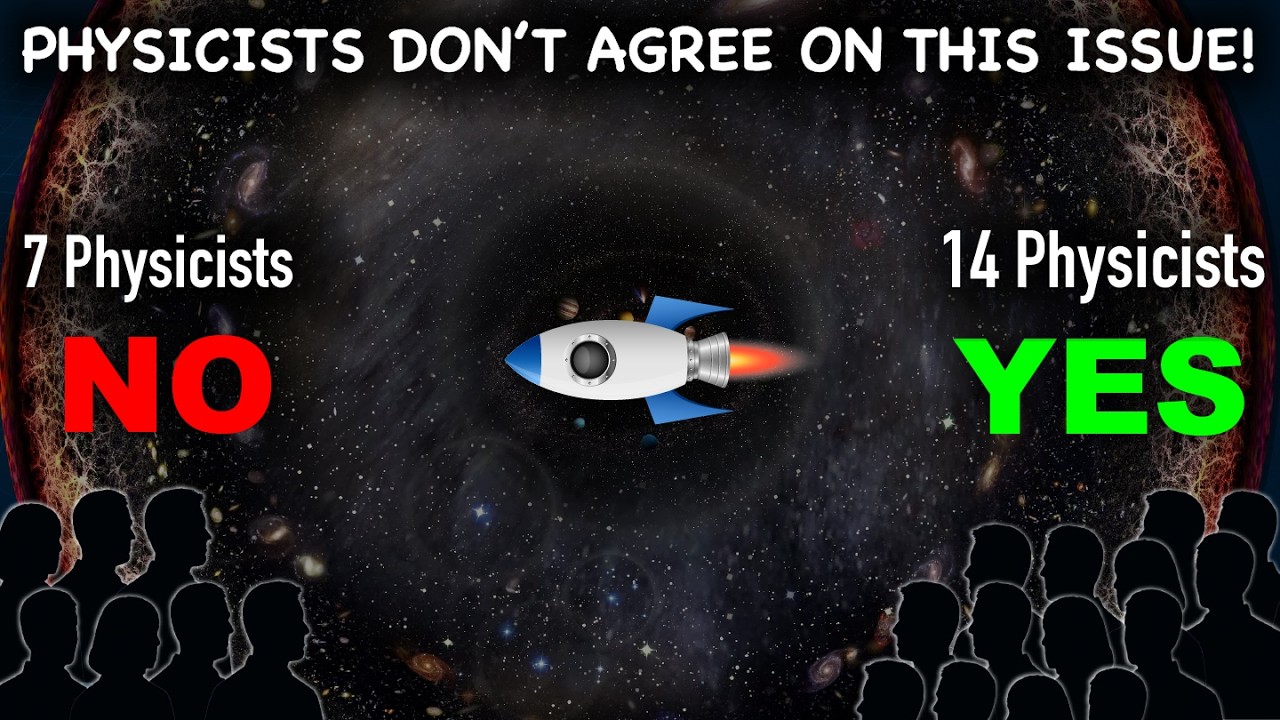
The title accurately reflects the content: it addresses a subtle issue in general relativity on which physicists still disagree, as shown by the 1993 conference poll.
Quality & Reliability
8/10
The content is rigorous, grounded in academic references cited in the video, and clearly explained. Some simplifications are necessary for popularization.
Key Moments
Markers derived by PSI from the transcript: the creator did not define chapters.
- Introduction to the twin paradox and the conference poll in 1993.
- Explanation of 3-acceleration vs 4-acceleration and their roles in flat spacetime.
- Scenario with an orbiting twin that challenges the idea that higher acceleration implies younger age.
- Discussion of Einstein's interpretation of Mach's principle and the general principle of relativity.
- Introduction of frame-dragging and the shell argument for perfect inertial dragging.
- Presentation of the second conference question and the implications of boundary conditions.
- Conclusion summarizing the debate and the status of Mach's principle in general relativity.
External References
Contribution & Novelties
The video provides a clear and accessible synthesis of a nuanced argument, connecting the twin paradox to Mach’s principle and recent literature. It highlights the subtlety that general relativity does not inherently favor a Machian interpretation, but can be made Machian under special boundary conditions like perfect inertial dragging. The original contribution lies in explaining this debate with concrete examples and references.
Pour aller plus loin :
- Mach’s principle — Background on the principle and its historical role in relativity.
- Frame-dragging — Explanation of the Lense-Thirring effect and inertial frame dragging.
- Twin paradox — Detailed analysis of the paradox and its resolutions in special and general relativity.
107 words
Radar Profile
The scores indicate a video with high information density and quality, a strong technical level, but slightly lower reliability due to inevitable simplifications in popularization. This profile suggests a highly informative and reliable resource for those with some physics background.
💬 très positif — Sur les 30 commentaires analysés, la grande majorité exprime une appréciation positive, avec des remerciements et des discussions techniques enrichissantes. Quelques commentaires posent des questions approfondies, mais aucun ne conteste la qualité du contenu.