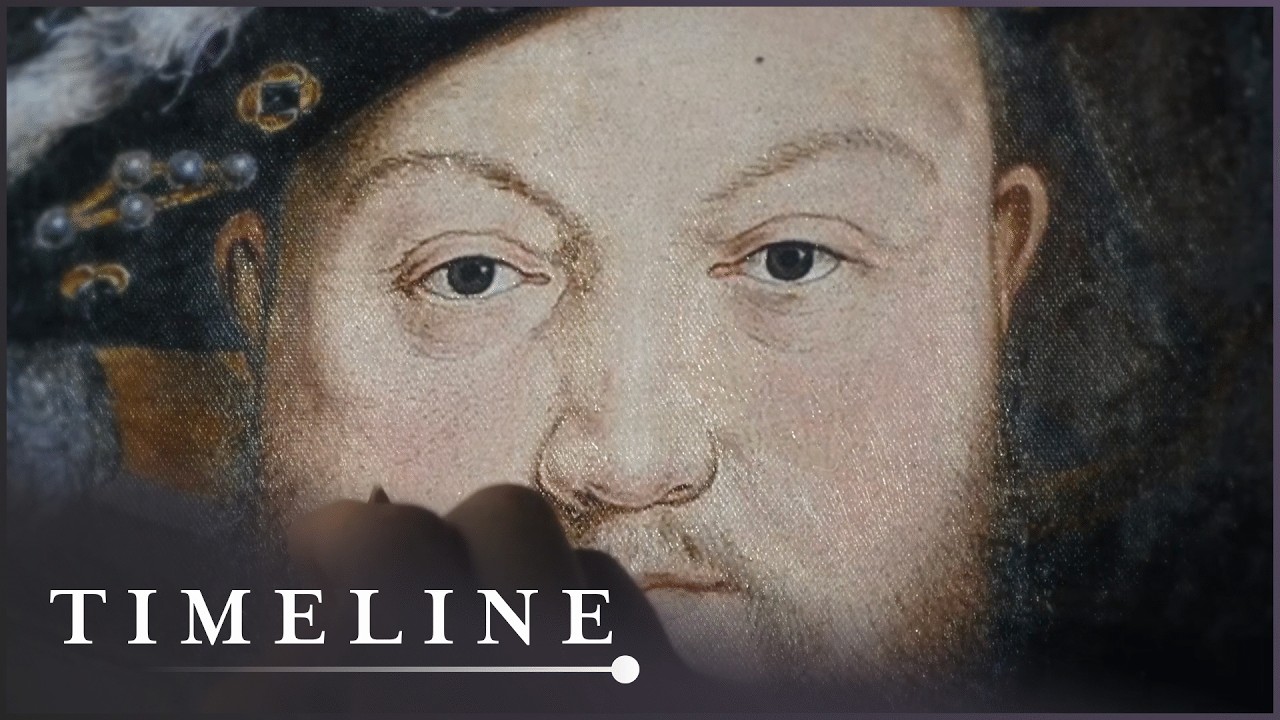
The Real Story Of Henry VIII: Inside The Mind Of A Tudor Tyrant
Title history
- The Real Story Of Henry VIII: Inside The Mind Of A Tudor Tyrant — observed on 20261114-2323 UTC (YouTube)
Keywords
Summary
147 words
Critical Evaluation
Value of the Information & Strength of the Argument
The value of the information lies in its use of primary sources to reconstruct Henry’s inner world, supported by expert analysis from historians. The argument is coherent, building a case for Henry’s growing paranoia and its influence on his decisions. The documentary successfully separates myth from fact, using evidence from documents such as the Anglica Historia and the Eltham Ordinances. However, some interpretations are speculative, especially regarding Henry’s psychology, which is inherently difficult to verify. The arguments are generally well-founded, though the reliance on psychological profiling may be contentious.
Scientific Rigor, Source Quality, Title Accuracy
The production demonstrates scientific rigor by consulting leading experts and referencing specific archival documents. Sources are cited in the narrative, including the Vatican’s Anglica Historia and the British Library’s letter to Wolsey. The title is highly appropriate, as the film indeed investigates Henry’s mind. The content is well-researched, though the lack of direct citations in the description limits external verification. The inclusion of a promotional segment does not detract from the educational value. The documentary adheres to the standards of a professional history production.
188 words
Title / Content Match
The title accurately reflects the content, focusing on Henry VIII's personality and reign.
Quality & Reliability
8/10
The documentary is produced by a reputable history channel, featuring expert historians and referencing primary sources such as the Anglica Historia and the Eltham Ordinances. However, it is not peer-reviewed and presents a narrative interpretation.
Key Moments
Markers derived by PSI from the transcript: the creator did not define chapters.
- Introduction to the series and the mystery of Henry VIII.
- Henry's birth and childhood as the spare heir.
- Death of Prince Arthur and Henry becoming heir.
- Henry VII dies, Henry becomes king and orders arrests of Empson and Dudley.
- Henry marries Catherine of Aragon.
- Birth and death of Henry's son, rising paranoia.
- Execution of the Duke of Buckingham.
- The Eltham Ordinances reveal Henry's controlling nature.
Cited Sources
- Anglica Historia — A 16th-century account by Polydore Vergil, described in the video as an eyewitness account revealing Wolsey's manipulation.
- Eltham Ordinances — Court document listing rules for the royal household, used in the video to illustrate Henry's controlling behavior.
- Treason Act 1534 — Legislation mentioned in the description as a key primary source related to Henry's reign.
Concurring Sources
- Henry VIII — General biography corroborating the major events discussed in the documentary.
- Anne Boleyn — Context for the marriage and execution, supporting the documentary's narrative.
Contribution & Novelties
This documentary’s original contribution is its focus on Henry VIII’s psychology, using rare primary sources to shed light on his motivations. It offers a nuanced portrait that challenges simple narratives. For further exploration, the following resources are relevant:
- English Reformation — Understand the religious changes triggered by Henry’s break with Rome.
- Tudor court — The environment that shaped Henry’s behavior.
- Thomas Cromwell — Key advisor whose career illustrates the treacherous politics of the reign.
74 words
Radar Profile
The radar profile shows high scores in information quantity and reliability, with a slightly lower technical level and moderate novelty. This indicates a comprehensive, well-sourced documentary that is accessible to a general audience while offering deep historical insights.