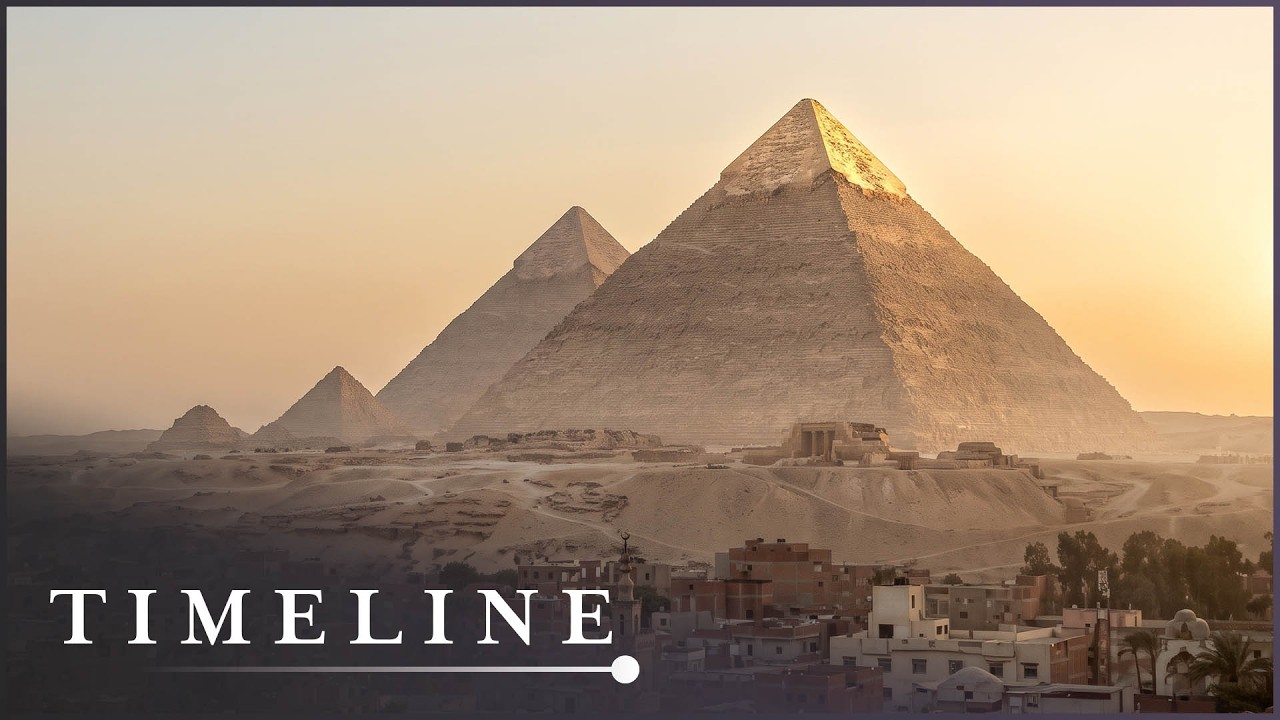
The Oldest Papyrus In Human History: The Diary That Built Giza
Title history
- The Oldest Papyrus In Human History: The Diary That Built Giza — observed on 20261102-2215 UTC (YouTube)
Keywords
Summary
179 words
Critical Evaluation
Value of the Information & Strength of the Argument
The video delivers substantial informational value by presenting recent archaeological discoveries and scientific analyses that overturn traditional assumptions. It effectively argues that the Nile’s shifting course and a harbor at Giza were crucial to pyramid construction, and that the workers were skilled, state-sponsored laborers. The argumentation is generally solid, grounded in tangible evidence like papyrus texts, bone analysis, and satellite data. However, certain segments, especially Cleopatra’s facial reconstruction, rely on limited data and include speculative leaps, which the documentary itself acknowledges. The presentation of Akhenaten’s reign is compelling but somewhat one-sided, emphasizing negative aspects without fully exploring alternative scholarly views. Overall, the evidence is presented coherently, with experts supporting each claim, though occasionally the excitement of discovery outweighs the caution of scientific uncertainty.
Scientific Rigor, Source Quality, Title Accuracy
The documentary demonstrates strong scientific rigor by citing specific finds (Merer papyrus, workers’ village, animal bones) and employing a range of archaeological and analytical methods. Expert interviews add credibility, though the sources of these experts are not explicitly cited beyond their appearances. The production quality is high, with clear explanations of techniques like radiocarbon dating and facial reconstruction. The title’s focus on the Merer papyrus is justified as a pivotal discovery, but the video expands far beyond this, covering multiple unrelated mysteries; this mismatch may mislead viewers expecting a narrower focus. No comments were provided for analysis, so public reception cannot be assessed.
241 words
Title / Content Match
The title emphasizes the Merer papyrus diary as the central theme, but the video covers several other topics like Cleopatra, Akhenaten, and ancient DNA. The title is somewhat narrower than the content.
Quality & Reliability
8/10
The documentary relies on archaeological evidence, expert interviews, and scientific techniques such as satellite imagery, drill coring, and ancient DNA analysis. It presents multiple perspectives and acknowledges uncertainties, though some reconstructions are speculative.
Key Moments
Markers derived by PSI from the transcript: the creator did not define chapters.
- Introduction to ancient Egyptian mysteries and the goal of using modern science to uncover them.
- Discovery of the Merer papyrus, the oldest known papyri, on the Red Sea shore.
- Satellite imagery and drill cores reveal a lost Nile branch and a large harbor at Giza.
- Examination of a Roman coin depicting Cleopatra with a hooked nose, challenging her beauty myth.
- Analysis of skeletal remains from Amarna showing poor diet and hard labor, contradicting the utopian ideal.
- Workers' village at Giza reveals cattle bones and beer jars, indicating well-fed and valued laborers.
- Ancient DNA from Abusir el-Meleq discusses Egyptian ancestry and debunks the Mesopotamian influence theory.
Contribution & Novelties
The documentary synthesizes recent discoveries into a coherent narrative, highlighting how interdisciplinary methods (satellite archaeology, bioarchaeology, paleogenetics) are rewriting Egyptian history. Its main contribution lies in making these academic findings accessible to a broad audience while preserving scientific nuance, especially regarding the pyramid builders’ identity and the reality of Akhenaten’s rule.
Pour aller plus loin :
- Merer papyrus — The primary source discussed, offering direct evidence of pyramid construction logistics.
- Cleopatra — Historical context and debates about her appearance, relevant to the reconstruction segment.
- Akhenaten — Covers the pharaoh’s religious revolution and the Amarna period, including controversies.
- Ancient DNA — Explains the methodology and challenges of extracting genetic material from old remains, as used in the last segment.
118 words
Radar Profile
The profile shows balanced scores across quantity, quality, technical level, and reliability, indicating a well-rounded documentary with solid scientific grounding. The slightly lower technical score suggests it remains accessible to general audiences while maintaining accuracy.