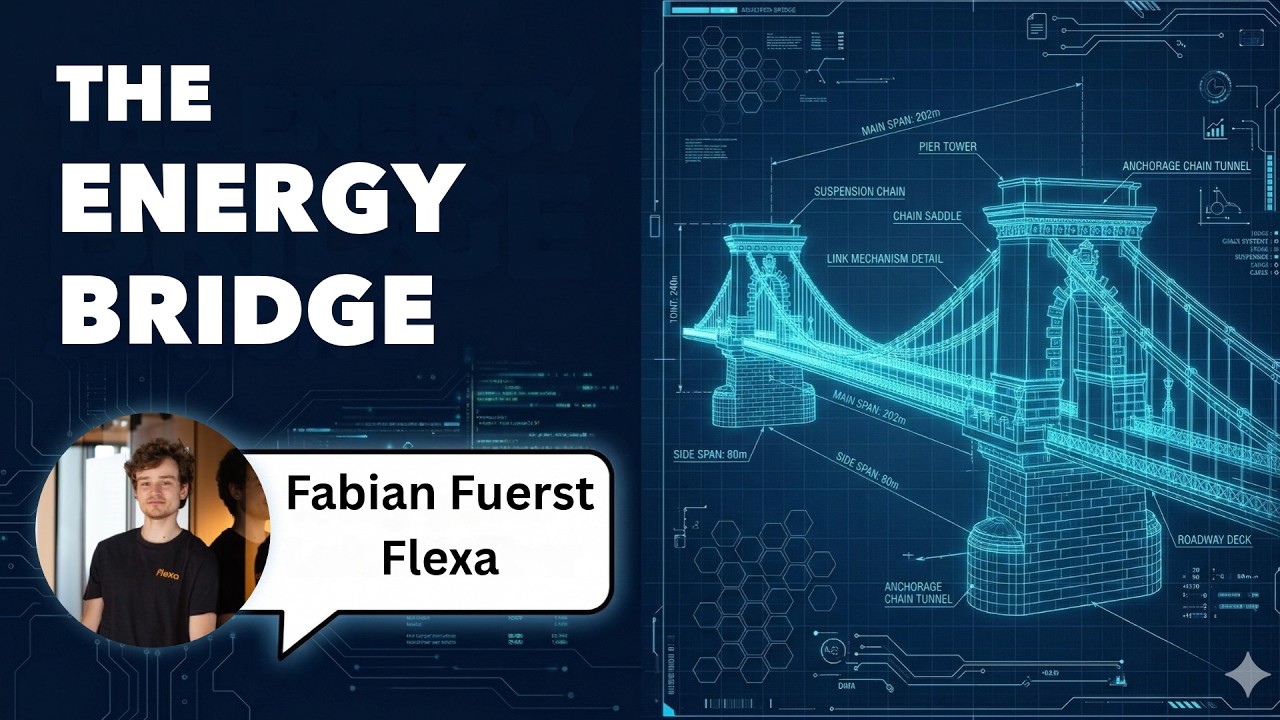
Copper Meets Code: VPPs, Residential Flexibility & Electron Orchestration | F. Fürst, Flexa | S2E17
Title history
- Copper Meets Code: VPPs, Residential Flexibility & Electron Orchestration | F. Fürst, Flexa | S2E17 — observed on 20261118-0355 UTC (YouTube)
Keywords
Summary
166 words
Critical Evaluation
Value of the Information & Strength of the Argument
The value lies in the concrete operational details shared by a practitioner who has built a large-scale VPP. Fürst explains the multi-step process of data collection, forecasting, and dispatch, providing a realistic view of the challenges and solutions. His argument that software can substitute grid expansion is supported by the scale and adaptability of his systems, though he acknowledges the need for regulatory changes. The reasoning is coherent and grounded in real-world experience, making it a valuable firsthand account of how VPPs function in practice.
Scientific Rigor, Source Quality, Title Accuracy
The interview is an expert opinion with no external formal sources cited. The reliability is based on the guest’s direct involvement and credible background (McKinsey, previous ventures). However, claims about market sizes, grid stress, or technology performance are not independently verified. The title faithfully represents the content, focusing on the ‘copper vs. electrons’ paradigm and residential flexibility. The discussion is substantive and avoids sensationalism, though broader claims about European regulation would benefit from official policy references.
176 words
Title / Content Match
Title accurately describes the conversational focus on VPPs, residential flexibility, and the shift from infrastructure expansion to software orchestration.
Quality & Reliability
8/10
The guest is a credible founder with deep operational knowledge, but the content relies solely on his personal experience without external citations or data verification.
Key Moments
Markers derived by PSI from the transcript: the creator did not define chapters.
- Introduction of Fabian Fürst and his background in energy, from a wind farm internship to McKinsey.
- Origin of Flexa as a joint venture between Enpal and Entrix; rationale for leveraging large homogeneous asset pools.
- Technical description of the orchestration system: data collection, forecasting, optimization, and the role of the proprietary box.
- Discussion on grid physical limits, regulatory obstacles in Germany, and the need for policy agility to enable residential flexibility.
Cited Sources
- TEB Klub membership — Mentioned as a call to action for audiences to join the Energy Bridge community.
Contribution & Novelties
The episode provides a rare behind-the-scenes look at the operational challenges and technical solutions of a large residential VPP, emphasizing the importance of hardware (the box) and regulatory friction. The guest offers practical insights on battery degradation, consumer preferences, and the role of heat pumps as thermal storage.
Pour aller plus loin :
- Virtual power plant — Foundational concept discussed throughout the episode.
- Demand response — Core mechanism for orchestrating residential assets.
- Smart grid — Related to the integration of distributed energy resources and communication technologies.
86 words
Radar Profile
The profile shows high scores in information quantity and quality, with a slightly lower technical depth and global reliability, reflecting a practitioner's perspective rather than an academic review.