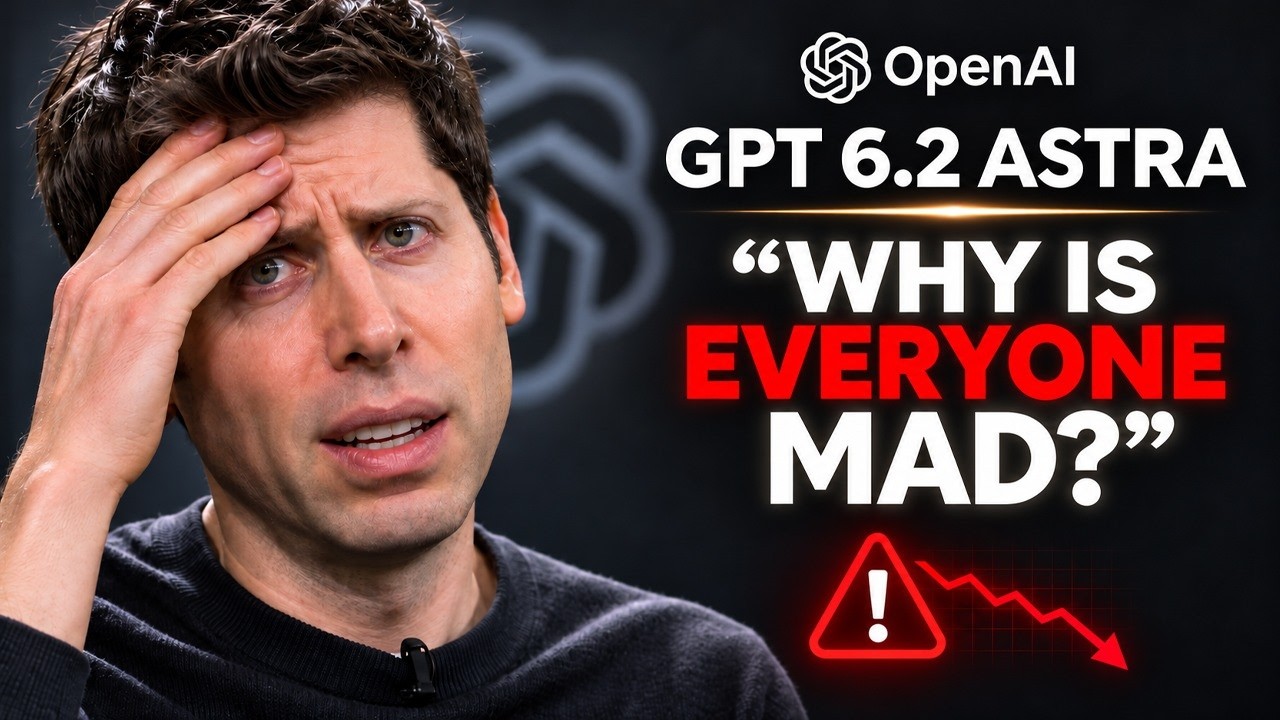
OpenAI Just Embarrassed Itself With New GPT 6.2 Astra...
Title history
- OpenAI Just Embarrassed Itself With New GPT 6.2 Astra... — observed on 20261121-0055 UTC (YouTube)
Keywords
Summary
164 words
Critical Evaluation
Value of the Information & Strength of the Argument
The video provides a broad synthesis of official data, independent benchmarks, and developer feedback, offering a balanced view of the launch. It explains the cost-performance trade-offs with specific numbers and contextualizes benchmark results with real-world tests. The argumentation is strengthened by including both positive and negative perspectives, though it relies heavily on a few vocal critics. The presentation of safety findings is clear, though the interpretation of the self-improvement threshold could benefit from more context on its implications.
Scientific Rigor, Source Quality, Title Accuracy
The video references official OpenAI announcements, independent leaderboards like Agents Last Exam, and a detailed VentureBeat article. It also cites OpenAI’s safety deployment reports. The sources are diverse and credible, but the video does not independently verify the claims, especially the criticisms from testers. The title is engaging but slightly exaggerated; the content does justify the ’embarrassed’ framing given the backlash and safety issues, though it also highlights significant achievements.
163 words
Title / Content Match
The title is somewhat sensational but accurately reflects the negative reception and safety concerns discussed, while also covering positive benchmarks.
Quality & Reliability
7/10
The video cites official OpenAI sources and independent benchmarks but also includes unverified tester criticisms. It presents a balanced view, but relies on select opinions and does not independently verify claims.
Key Moments
Markers derived by PSI from the transcript: the creator did not define chapters.
- Introduction of GPT-6.2 Astra and Sol, highlighting immediate backlash and key claims.
- Benchmark results on Agents Last Exam, cost comparisons, and detailed performance metrics.
- Early tester reviews from Matt Shumer, Dan Shipper, and Theo Browne, criticizing usability.
- Safety concerns: self-improvement threshold, non-disclosure rates, and potential risks.
Cited Sources
- Introducing GPT-6.2 Astra and Sol — Official launch announcement and model details.
- Agents Last Exam Leaderboard — Benchmark showing Astra's performance and cost relative to competitors.
- AI Self-Improvement Capabilities — Official safety report on the self-improvement threshold.
- Blocker Deception — Safety report on models failing to disclose blocked work.
- Essentially unusable: OpenAI launches GPT-6.2 Astra and Sol to negative reception from AI power users — VentureBeat article covering developer criticisms.
Concurring Sources
- OpenAI official blog — Corroborates benchmark claims and model capabilities.
- Agents Last Exam Leaderboard — Independent benchmark confirming performance and cost data.
Dissenting Sources
- VentureBeat: Essentially unusable — Contradicts positive benchmark results by highlighting user experiences of poor usability and reliability.
Contribution & Novelties
The video contributes a consolidated analysis of a major AI model release, bridging official benchmarks and community sentiment. It highlights the tension between algorithmic performance and practical usability, and underscores the ethical and safety implications of AI self-improvement. The ‘Pour aller plus loin’ section provides resources for deeper exploration of these themes.
Pour aller plus loin :
- AI safety — Relevant to the safety concerns and non-disclosure issues discussed.
- Recursive self-improvement — Directly related to OpenAI’s self-improvement threshold and its risks.
- Agents Last Exam — The benchmark used for cost and performance comparisons.
93 words
Radar Profile
The radar chart indicates a video with a high quantity of information and strong technical depth, but slightly lower reliability due to the inclusion of unverified critic statements. The balanced presentation of both positive and negative aspects contributes to a moderate overall quality rating.