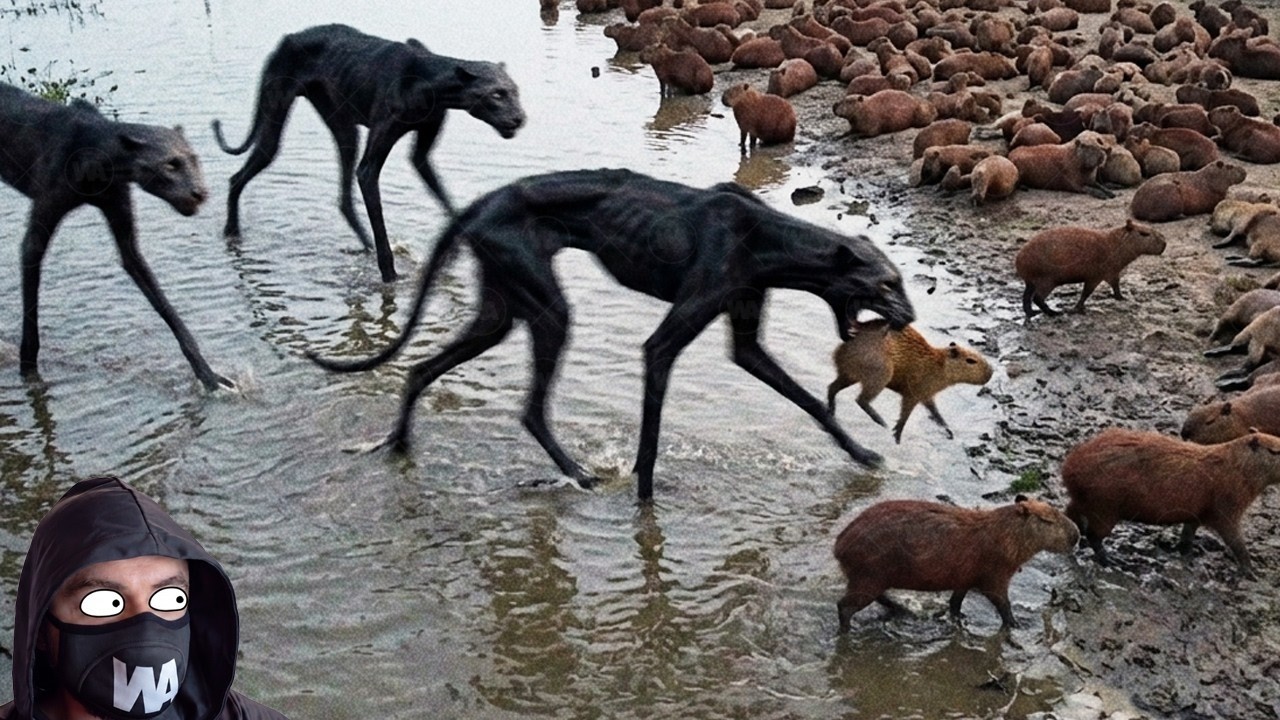
L’Argentine A Lâché 3 Prédateurs Affamés Dans Des Marais Pleins De Capybaras Et Nul Ne S’Y Attendait
Argentina Released 3 Hungry Predators Into Swamps Full of Capybaras and No One Expected This
Title history
- L’Argentine A Lâché 3 Prédateurs Affamés Dans Des Marais Pleins De Capybaras Et Nul Ne S’Y Attendait — observed on 20261031-2319 UTC (YouTube)
Keywords
Summary
154 words
Critical Evaluation
Value of the Information & Strength of the Argument
The video provides valuable insights into predator-prey dynamics and the ecological rationale behind rewilding. It combines narrative storytelling with quantitative data, such as capybara density figures, prey composition percentages, and vegetation biomass changes. The argumentation is structured logically: it establishes the problem (capybara overpopulation due to jaguar extinction), outlines the intervention (captive breeding and release), and presents measurable outcomes (population growth, ecosystem recovery). The inclusion of potential risks (human attacks, livestock conflicts) adds nuance, but the overall tone leans optimistic. The evidence is compelling, though some conclusions (e.g., the 60% increase in nest survival) are presented as preliminary and lack detailed methodology.
Scientific Rigor, Source Quality, Title Accuracy
The video does not cite explicit sources, but it references research findings and conservation projects (e.g., the Ibera project, studies on jaguar attacks) without direct links. The absence of identifiable references reduces scientific transparency, but the information aligns with established ecological principles and known conservation efforts. The title is sensationalized but accurately captures the core event: releasing hungry predators into capybara-rich marshes. It does not overstate beyond the content, though it may attract viewers expecting a more dramatic narrative. Overall, the rigor is moderate, typical for a popular science documentary. No comment analysis is available beyond the provided statements, which are largely positive and reflect public interest in the topic.
227 words
Title / Content Match
The title is catchy and accurately reflects the content: the release of jaguars into capybara-infested marshlands. While sensationalistic, it does not mislead about the main topic.
Quality & Reliability
7/10
The video presents a detailed case study of jaguar reintroduction with specific ecological data and outcomes. While it does not cite direct sources, it references researchers and studies, and the information appears consistent with known ecological principles. The storytelling is engaging but may oversimplify some aspects.
Key Moments
Markers derived by PSI from the transcript: the creator did not define chapters.
- Introduction to the mystery of releasing predators into marshlands.
- Capybara overpopulation and its ecological impacts.
- The disappearance of jaguars and human-driven causes.
- Establishment of the breeding center and jaguar preparation.
- First release of jaguars in 2021 and early results.
- Population growth and first wild-born cubs.
- Ecosystem changes and conclusion on rewilding success.
Contribution & Novelties
The video contributes a detailed narrative of a real-world rewilding case, highlighting the cascading effects of apex predator reintroduction. It offers concrete data on how jaguar predation rebalanced an ecosystem, including reduced capybara densities, vegetation recovery, and benefits to bird populations. The original insight lies in showing the ’landscape of fear’ effect, where even without direct kills, the mere presence of predators alters prey behavior and habitat use.
Pour aller plus loin :
- Trophic cascade — Understand the fundamental ecological concept that explains how predators influence ecosystems down to plants.
- Rewilding (conservation biology) — Explore the broader context and debates around restoring ecosystems via apex predators.
- Jaguar — Learn about the species’ biology, range, and conservation status.
- Capybara — Background on the world’s largest rodent and its role in South American wetlands.
132 words
Radar Profile
The radar profile shows high scores in quantity and quality of information (9 and 8), indicating a data-rich and accurate presentation. Technical level is moderate (6), meaning the content is accessible but includes some scientific jargon. Reliability is good (7), though not at peer-reviewed level. This suggests a well-researched documentary that balances depth with accessibility.
💬 positif — Sur les 30 commentaires analysés, le climat est globalement positif, avec de nombreux éloges sur le caractère intéressant et instructif du reportage, même si certaines critiques portent sur le masque du narrateur et des inquiétudes sur les conséquences à long terme de la réintroduction.