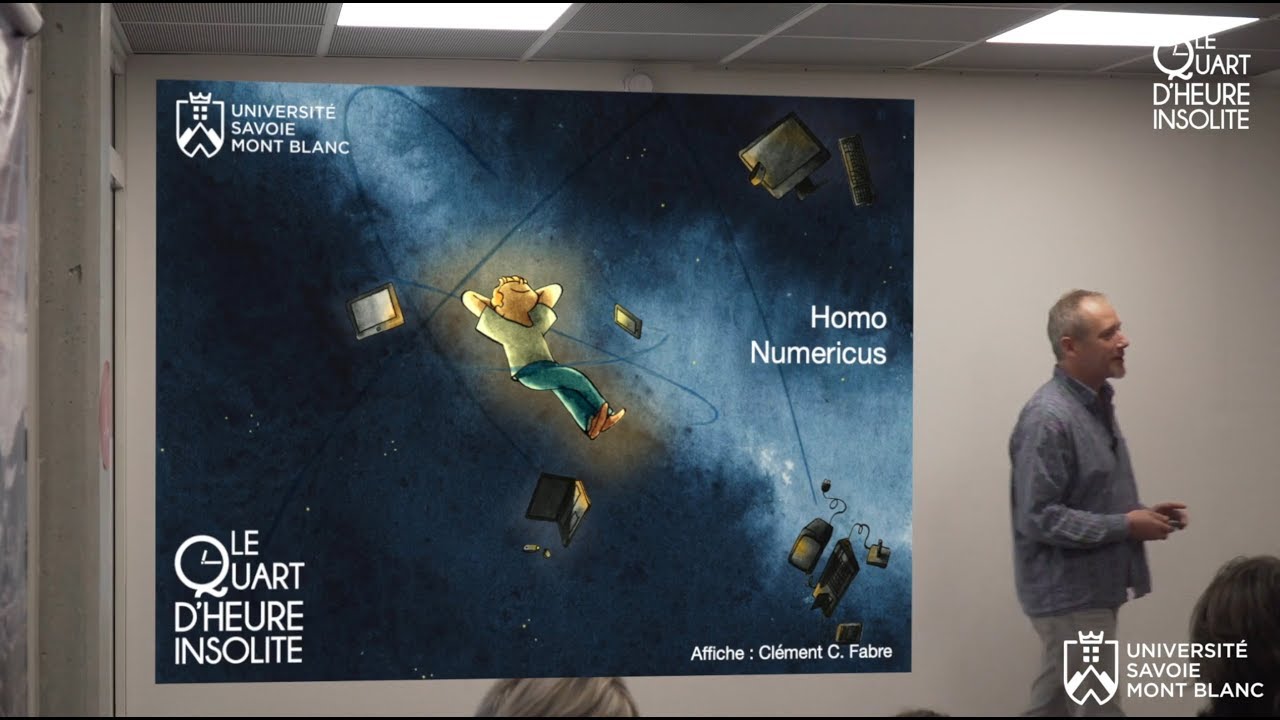
Quart d'Heure Insolite #20 : Homo Numericus
Unusual Quarter Hour #20: Homo Numericus
Keywords
Summary
118 words
Critical Evaluation
Value of the Information & Strength of the Argument
The informational value is primarily anecdotal and historical, providing a personal perspective on early personal computing. The argumentation is subjective, based on lived experience, but it is coherent and structured as a storytelling. The speaker does not aim to prove a scientific point, but rather to convey a cultural memory. The reasoning is straightforward, with no complex analysis, but it effectively communicates the excitement and challenges of using early computers.
Scientific Rigor, Source Quality, Title Accuracy
The title accurately reflects the content: the speaker discusses his personal relationship with computing, which aligns with the theme ‘Homo Numericus’. The sources mentioned are personal recollections and references to community websites (e.g., ‘ordinosaures’, ‘abandonware-magazines’) rather than formal scientific references. While the factual details about specific machines are correct, the talk lacks citation of scholarly works. For a public lecture, this is acceptable, but it limits the scientific rigor. The title-content alignment is strong, contributing positively to the overall assessment.
165 words
Title / Content Match
The title matches the content well: the speaker presents his personal relationship with computing, illustrating the concept of Homo Numericus.
Quality & Reliability
6/10
The speaker is a recognized physicist and teacher-researcher, but the content is based on personal memories without academic citations. The factual information about 1980s computers is accurate.
Key Moments
Markers derived by PSI from the transcript: the creator did not define chapters.
- Introduction and thanks to the IUT students producing the video.
- Explanation of the chosen theme 'Homo Numericus' and the speaker's personal relation to computing.
- First encounter with a Thomson TO7 computer and memory of writing BASIC programs.
- Technical specifications of early home computers: memory sizes, processor frequency, and cassette storage.
- Review of the magazine 'Jeux et Stratégie', its strategy games and included code listings.
- Detailed discussion of the game 'Pente' and how to program it in BASIC, emphasizing the user's adaptation of code.
- Concluding remarks on the diversity of computer models in the 1980s and the evolution towards standardisation.
Cited Sources
- Ordinosaures (a website for vintage computers) — The speaker mentions this site to illustrate the variety of old computer models.
- Abandonware Magazines (archive of old computing magazines) — The speaker refers to this website where old issues of 'Jeux et Stratégie' and similar magazines are scanned.
Concurring Sources
- Home computer — This article confirms the general capabilities and limitations of 1980s home computers as described by the speaker.
- Thomson TO7 — Technical details of the TO7 match the speaker's description, supporting the reliability of his memories.
Contribution & Novelties
The video offers a personal, non-technical narrative of the early personal computer era, which can resonate with audiences interested in the cultural history of technology. It provides a ground-level view of how beginners interacted with computing, contrasting with modern user-friendly interfaces. The talk highlights the creativity and persistence required to run simple games, a perspective rarely captured in formal histories.
Pour aller plus loin :
- Home computer — Relevant to understand the broader context of 1980s personal computers.
- BASIC — The programming language discussed in the video, essential for understanding early hobbyist programming.
- Thomson TO7 — The specific computer model the speaker used; factual details confirm the described limitations.
- Pente — The board game that was adapted into a BASIC program, illustrating the crossover between traditional games and early computing.
130 words
Radar Profile
The radar profile shows moderate scores across most dimensions, with slightly stronger performance in information quality and reliability, while technical depth and quantity are lower. This reflects a personally engaging but non-specialist talk that offers historical insight rather than technical depth.