Grupo de Estudio | Intensivo de Primavera - Introducción a la Psicología U1
Study Group | Spring Intensive - Introduction to Psychology U1
Keywords
Summary
139 words
Critical Evaluation
Value of the Information & Strength of the Argument
The video offers high pedagogical value for psychology students, condensing and clarifying complex historical material. The presenters use questioning and examples to solidify understanding, making the content accessible. Their argumentation is based on the course manual and typical exam patterns, though not rigorous scientific analysis. They provide mnemonic devices and conceptual distinctions (e.g., first, second, third person psychology) that are effective for exam preparation. However, the spontaneous nature of the session leads to occasional digressions and repetitions, but the overall structure is coherent and focused.
Scientific Rigor, Source Quality, Title Accuracy
The rigor is adequate for a tutorial context, with the information aligned to the official curriculum. The presenters draw from the course manual but do not cite external academic sources explicitly. The title accurately represents the content, and the video meets its stated purpose. No formal source verification is provided, but the material is consistent with standard psychological history. The session is a supplementary tool, not a peer-reviewed resource, which limits its scientific rigor but fits its educational intent.
179 words
Title / Content Match
The title accurately reflects the content: a study group session revising Unit 1 of an Introduction to Psychology course.
Quality & Reliability
7/10
Content is consistent with standard psychology curriculum, presented by teaching assistants with practical exam tips. However, claims are not backed by direct academic sources and occasional simplifications occur.
Key Moments
Markers derived by PSI from the transcript: the creator did not define chapters.
- Introduction of Sabi and Marce, teaching assistants, and the purpose of the study group.
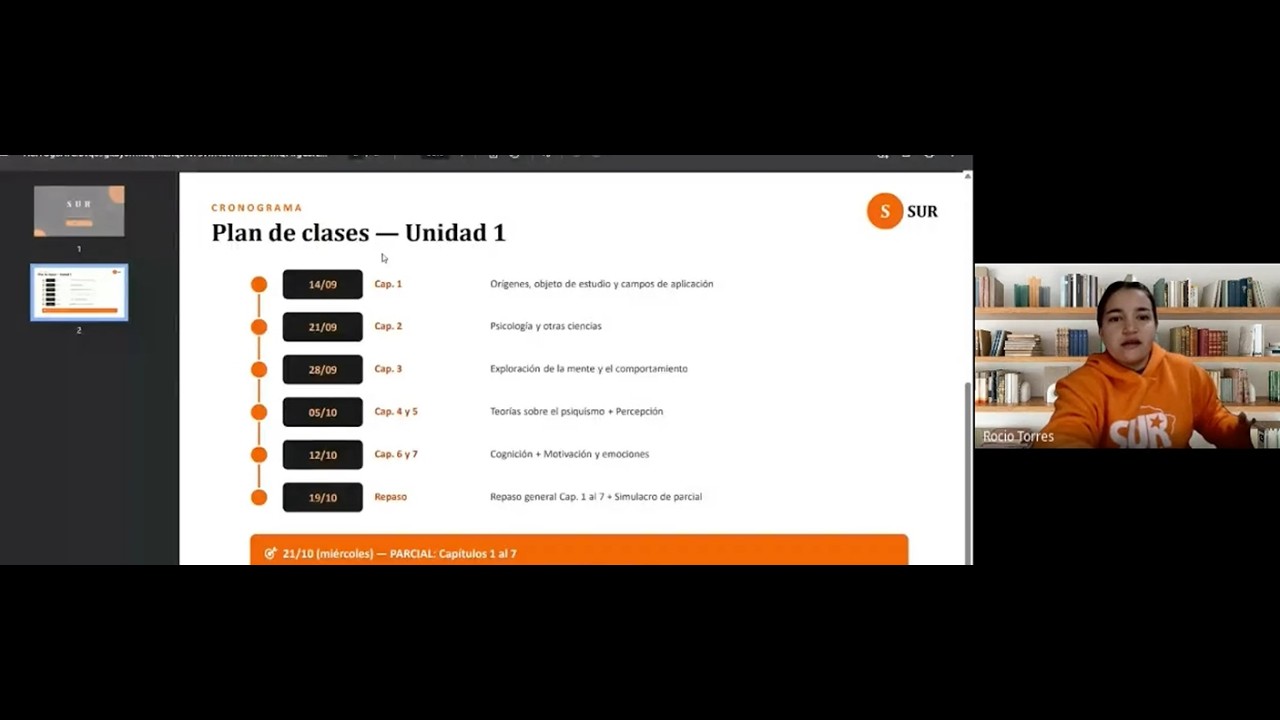
- Presentation of the schedule for the intensive spring course.
- Launch of a quiz to assess students' current knowledge.
- Discussion of quiz results and identification of key areas to reinforce.
- Review of presocratic philosophers: Socrates, Plato, Aristotle, and Hippocrates.
- Explanation of the three psychologists: first-person (structuralism), second-person (psychoanalysis, gestalt), third-person (behaviorism, cognitive).
- Foundation of scientific psychology in 1879 by Wundt and the structuralist school.
- Discussion of definitions of psychology and the role of statistics and neuroscience.
- The four main schools: gestalt, behaviorism, psychoanalysis, and cognitivism.
- Exam strategies, including common multiple-choice question patterns and distractors.
Cited Sources
- WhatsApp Group for Study Materials — Link shared in description for students to join the group, receive meeting links, materials, and updates.
Contribution & Novelties
This video provides a structured and interactive review of Unit 1, specifically tailored to the course’s exam format. It consolidates information from the manual into mnemonic devices and conceptual groupings, such as the three psychological perspectives, which help students integrate historical and theoretical content. The peer-assisted learning model is effective for reinforcing key concepts and addressing common pitfalls.
Pour aller plus loin :
- History of Psychology — Useful for expanding on the historical development of psychology.
- Structuralism — Explores Wundt’s school in more detail.
- Behaviorism — Delves into one of the major schools discussed.
- Cognitive Psychology — Further understanding of the cognitive revolution.
103 words
Radar Profile
The profile shows moderate to high information quantity, moderate quality and reliability, and a moderate technical level. This suggests a balanced, accessible educational resource suitable for students, but not a rigorous scientific source.