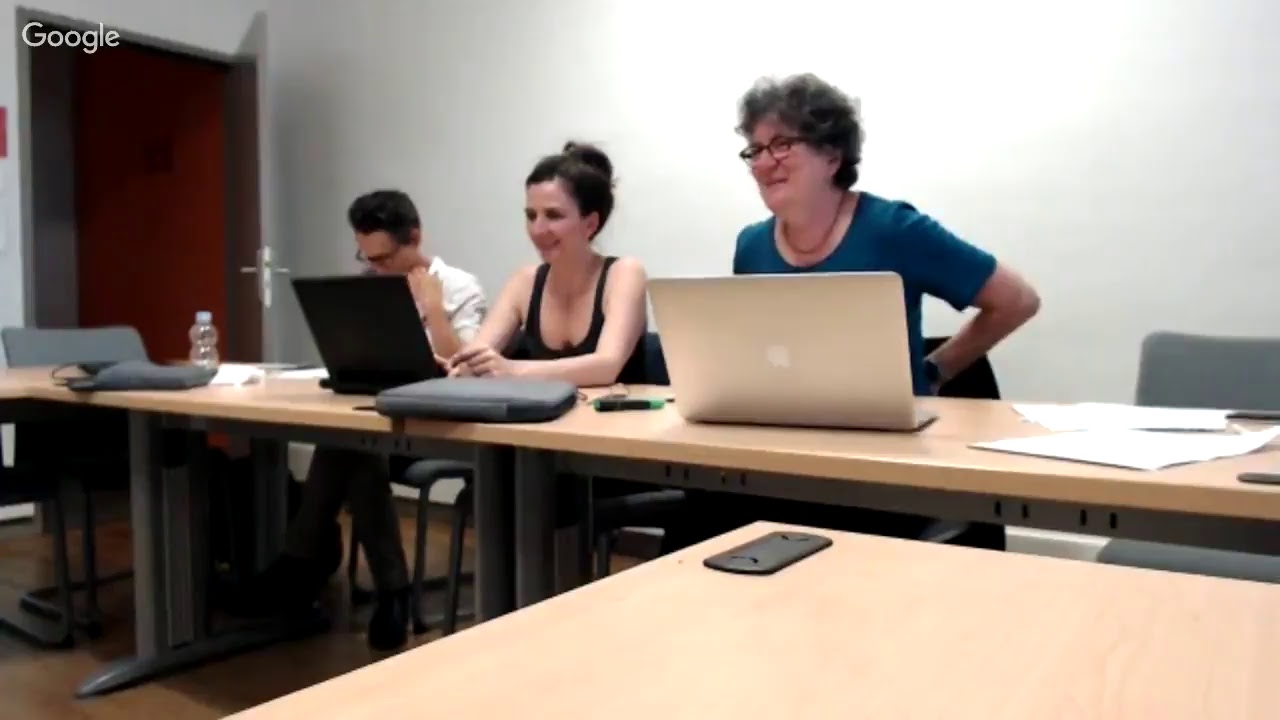
Atelier 5 : l’architecture des bibliothèque et l’architecture du web
Workshop 5: the architecture of libraries and the architecture of the web
Keywords
Summary
186 words
Critical Evaluation
Value of the Information & Strength of the Argument
The value of the discussion lies in its critical engagement with Merzeau’s text, unpacking nuanced distinctions and questioning simplistic oppositions. The argumentation is solid, rooted in close reading and theoretical references, though it remains exploratory rather than conclusive. The participants demonstrate strong analytical skills, offering multiple perspectives that enrich the interpretation. The debate is well-structured, moving from summary to critique to constructive proposals, which strengthens its intellectual contribution.
Scientific Rigor, Source Quality, Title Accuracy
The session directly engages with a specific academic article, and the discussion is grounded in scholarly references (e.g., Tim Berners-Lee, Michel de Certeau). The title accurately captures the core theme, although the content is broader than ‘architecture’ alone, covering governance and politics. The sources are appropriately cited, but no external verification is provided. The discussion demonstrates rigor in textual analysis, but lacks empirical evidence or systematic methodology, typical of a seminar debate.
155 words
Title / Content Match
The title accurately reflects the content—a workshop discussion on library architecture versus web architecture, with a focus on digital environments.
Quality & Reliability
7/10
Discussion among scholars with deep theoretical grounding, but no empirical data or formal peer review; relies on interpretive reading of a specific article.
Key Moments
Markers derived by PSI from the transcript: the creator did not define chapters.
- Marcello Vitali-Rosati introduces the chosen text and summarizes Louise Merzeau's argument about the difference between library and web architectures.
- Evelyne Broudoux responds, challenging the stock vs flow opposition and emphasizing the temporal dimension in libraries.
- Discussion on the role of recommendation systems and the loss of collective governance in digital platforms.
- Participants debate the political implications and the possibility of libraries becoming spaces for collective negotiation of knowledge.
- Laurence intervenes on the distinction between advice and recommendation, linking to spatial practices and Michel de Certeau's concepts.
Cited Sources
- De la bibliothèque à l’Internet : la matrice réticulaire — Article by Louise Merzeau (2017) discussed throughout the workshop; central to the session.
Contribution & Novelties
The session’s contribution is a nuanced, multi-voiced interpretation of Merzeau’s article, going beyond the text to propose actionable ideas for rethinking libraries and institutions. The discussion highlights the concept of ‘habitability’ as critical for digital spaces and argues for a collective, dynamic negotiation of knowledge architectures, contrasting with algorithmic personalization. It bridges library science, digital humanities, and political theory, offering a fresh perspective on the role of public institutions in the digital age.
Pour aller plus loin :
- Architecture of information — This concept is directly related to the structuring of knowledge in digital and physical spaces, as discussed in relation to libraries.
- Digital humanities — The seminar is situated within this field, and the discussion exemplifies its critical approach to digital environments.
- Commons — The idea of collective negotiation and common governance of knowledge spaces aligns with the commons paradigm, referenced in the conclusion of Merzeau’s article.
148 words
Radar Profile
The radar profile shows strong qualitative and interpretive elements (high quality of information, good fiabilité) but moderate quantitative density (no empirical data). The technical level is moderate, reflecting a theoretical discussion rather than a hands-on technical tutorial. Overall, a balanced profile suited to an academic seminar.