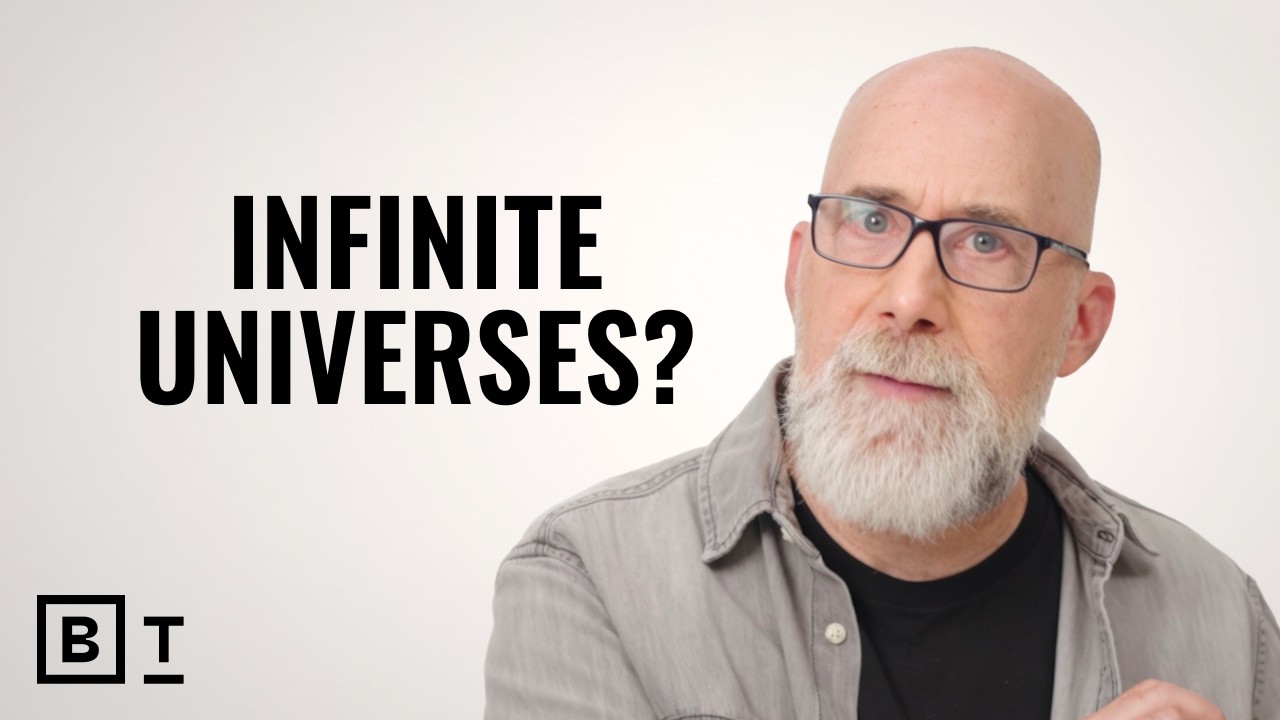
A physicist’s case against the Many Worlds theory | Adam Frank
Title history
- A physicist’s case against the Many Worlds theory | Adam Frank — observed on 20261119-1454 UTC (YouTube)
Keywords
Summary
189 words
Critical Evaluation
Value of the Information & Strength of the Argument
The value of the information lies in presenting a coherent and accessible argument for a less mainstream interpretation of quantum mechanics. Frank builds his case by first laying out the standard formalism and its interpretive challenges, then systematically critiques Many Worlds for what he sees as an extreme ontological commitment. He argues that accepting an infinity of unobservable universes is a higher price than acknowledging the centrality of measurement. The argumentation is solid and logical, though it remains one scientist’s viewpoint. Frank does not engage with counterarguments deeply, but his reasoning is clear and well-structured, and he grounds his support of QBism in the Born rule and the information-theoretic turn in quantum physics.
Scientific Rigor, Source Quality, Title Accuracy
Rigueur scientifique: Frank is a professor of astrophysics and his explanation of quantum mechanics is technically accurate, though the focus is on interpretive claims. He references key figures like Niels Bohr, David Mermin, and John Wheeler, but does not provide citations or references to specific papers. The discussion is at a level appropriate for a general scientific audience, without over-simplification. Sources: The video description includes links to Big Think membership and a full interview, but no direct links to the scientific literature. The speaker’s claims are not backed with formal citations, which is typical for an opinion interview. Adéquation titre/contenu: The title is an excellent match: the entire video is a case against Many Worlds, although the speaker also spends considerable time advocating for QBism as an alternative. This does not detract from the main message.
264 words
Title / Content Match
The title accurately reflects the content: the speaker explicitly argues against the Many Worlds interpretation and advocates for an alternative (QBism).
Quality & Reliability
8/10
The argument is clearly presented by a professional astrophysicist with deep familiarity with the subject, but it is an opinion-based interpretation rather than a systematic literature review or original research.
Key Moments
Markers derived by PSI from the transcript: the creator did not define chapters.
- Introduction and thesis: critique of Many Worlds and support for QBism.
- Quantum mechanics is 120 years old and nobody agrees on its meaning.
- The dream of perfect prediction shattered by quantum uncertainty.
- Technology forced adoption of quantum mechanics.
- Mermin's 'shut up and calculate' attitude and its limitations.
- Need for interpretation of quantum math.
- Explanation of the Schrödinger equation and wave function.
- The Born rule introduces probabilities and the measure factor.
- Measurement problem arises from observer dependence.
- Physicists try to avoid the Born rule; Many Worlds example.
- Critique of Many Worlds: infinite unobservable universes.
- Introduction of QBism and Bayesian probabilities.
- QBism: wave function is an agent's description, not objective reality.
- Participatory universe concept from John Wheeler.
- QBism aligned with quantum information theory and future promise.
Cited Sources
- Big Think membership page — General reference to the channel's membership program, not directly related to content.
- Full interview with Adam Frank — Extended interview from which this clip is taken; gives more context.
Concurring Sources
- QBism page — Supports the description of QBism as an interpretation emphasizing observer-dependence.
Contribution & Novelties
The video offers a concise and persuasive defense of QBism as a response to the measurement problem, contrasting it with the Many Worlds interpretation. Frank’s contribution is to frame QBism not just as a technical interpretation but as a participatory account of science itself, echoing Wheeler’s ideas. He highlights that QBism embraces observer-dependence rather than fleeing from it, and connects this to modern quantum information theory.
Pour aller plus loin :
- QBism - Wikipedia — Relevant for an overview of the interpretation and its origins.
- Many-worlds interpretation - Wikipedia — Provides details on the alternative view being critiqued.
- Born rule - Wikipedia — Explains the rule that plays a central role in the argument.
- Quantum information - Wikipedia — Discusses the field that informs QBism’s information-theoretic approach.
- John Archibald Wheeler - Wikipedia — Background on the scientist who coined the ‘participatory universe’ concept.
143 words
Radar Profile
The radar profile shows moderate to high scores across information quantity, quality, and rigor, with the highest score in fiabilité_globale and qualité_information. This reflects a well-articulated opinion from an expert, but the lack of concrete citations slightly lowers the quantity and objectivity. The overall shape is relatively balanced, indicating a solid but not exhaustive treatment of the subject.