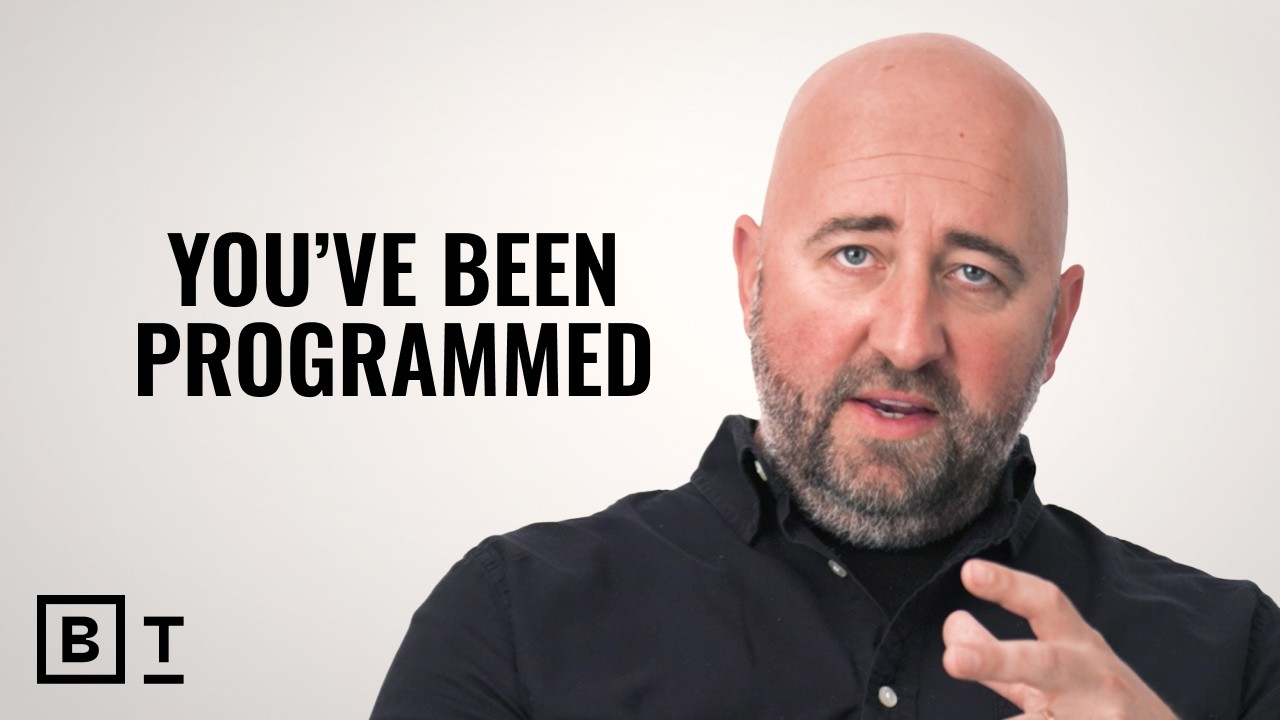
Free will: The real casualty of the algorithm | Luke Burgis
Title history
- Free will: The real casualty of the algorithm | Luke Burgis — observed on 20261028-1328 UTC (YouTube)
Keywords
Summary
130 words
Critical Evaluation
Value of the Information & Strength of the Argument
The video offers a compelling and well-structured argument that free will is the real casualty of algorithmic curation, moving beyond the common free speech discourse. Burgis synthesizes ideas from philosophers, psychologists, and spiritual writers to build a coherent case. The argument is logically sound, though it relies on theoretical and anecdotal evidence rather than empirical data. His use of personal anecdotes and historical examples makes it accessible, but the lack of concrete research limits its scientific rigor. Nevertheless, the discussion provides valuable conceptual tools for understanding technology’s influence on autonomy, making it a worthwhile contribution to the debate.
Scientific Rigor, Source Quality, Title Accuracy
The video is an opinion piece rather than a rigorous scientific analysis. Burgis cites multiple intellectual figures—Le Bon, Bowen, Girard, Dunbar, Augustine, Aquinas—but does not provide specific references or empirical studies. The title accurately captures the central thesis, and the content stays on topic. While the discussion is intellectually rich, it is not grounded in verifiable sources, which weakens its scientific credibility. The description links to a membership site and a course, which are not directly related to the content, but the full interview is referenced. The title is well-aligned with the content.
206 words
Title / Content Match
The title accurately reflects the core argument that algorithms and social contagion threaten free will.
Quality & Reliability
7/10
Expert opinion based on philosophical and psychological concepts, well-argued but not empirically verified.
Key Moments
Markers derived by PSI from the transcript: the creator did not define chapters.
- Introduction: social contagion and its role in modern life
- Free will vs. free speech: the algorithms' real impact
- Overview of the three temptations of the screen
- Curiositas and the distinction from genuine curiosity
- Acedia: the restlessness of mind and soul
- Pseudo self vs. solid self in a hyper-connected world
- The demonic nature of technology and loss of agency
Cited Sources
- Big Think Membership — Promotional link for Big Think membership.
- Yale Course: The Psychology of Psychopaths — Sponsored course mentioned in the introduction.
- Full Interview with Luke Burgis — Link to the full interview from which this clip is taken.
Contribution & Novelties
The video offers a fresh perspective on the impact of algorithms by framing it as an erosion of free will rather than just free speech. It introduces the ancient concept of acedia as a modern digital malaise and connects it to psychological constructs like the pseudo self. This interdisciplinary approach, blending philosophy, psychology, and spiritual tradition, provides a novel lens for understanding digital addiction and social conformity.
Pour aller plus loin :
- Social contagion — Wikipedia overview of the phenomenon Burgis repeatedly references.
- Mimetic theory (René Girard) — Girard’s foundational work on imitation and desire, central to Burgis’s argument.
- Dunbar’s number — The cognitive limit on stable social relationships, discussed as a springboard for rethinking online connections.
- Acedia — Historical definition of the term, which Burgis applies to modern restlessness.
- Differentiation of self (Murray Bowen) — Bowen’s concept that underpins the pseudo self/solid self distinction.
145 words
Radar Profile
The radar profile shows a balanced but moderate performance across all dimensions, with a slight strength in information quality and fiability. The video is strong conceptually but lacks empirical grounding, resulting in a moderate technical level and overall reliability score.