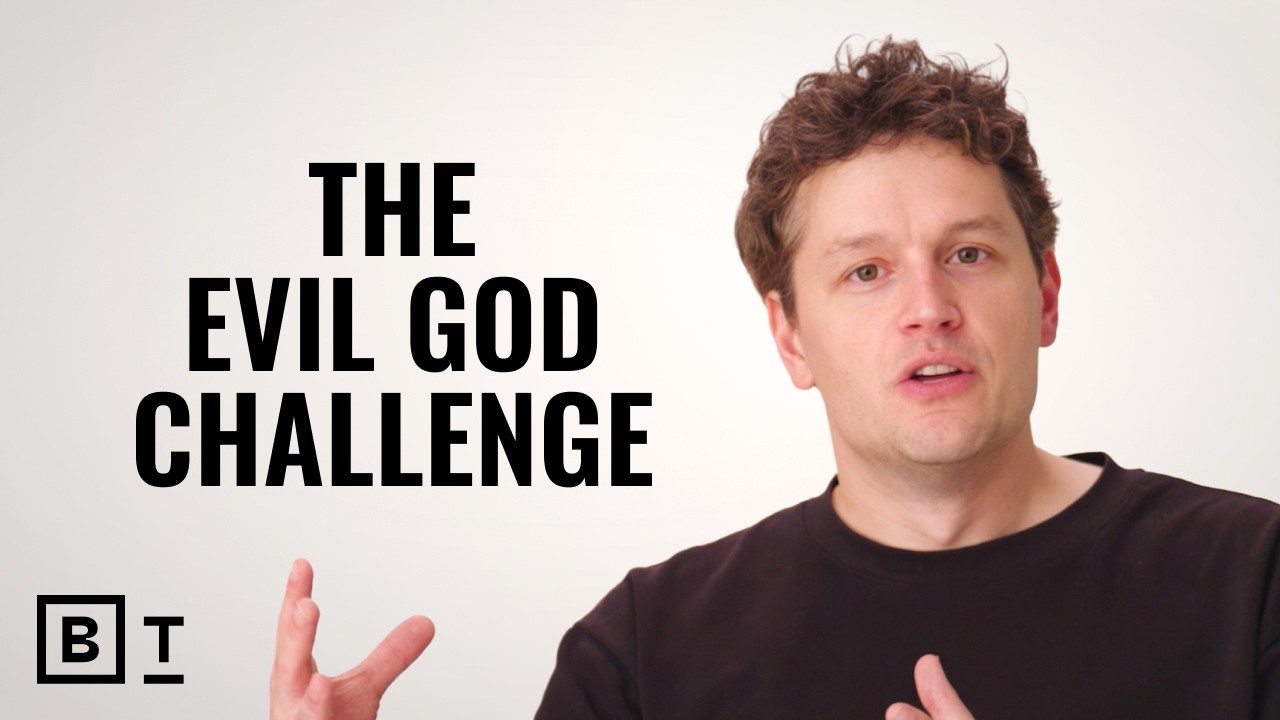
Pantheism: The view that the world and God are one | Jack Symes
Keywords
Summary
181 words
Critical Evaluation
Value of the Information & Strength of the Argument
The video offers a clear and engaging presentation of the Evil God Challenge and its philosophical counterarguments. Symes provides a structured analysis, breaking down the challenge into specific claims and systematically rebutting them. He uses concrete examples (e.g., breakfast choices, scriptural killings) to illustrate abstract concepts. His argument relies on cumulative evidence and asymmetry, which is a legitimate philosophical method. However, some claims are debatable, such as the characterization of negative religious experiences and the weighting of scriptural passages. The argument is persuasive within its own framework but does not decisively settle the debate.
Scientific Rigor, Source Quality, Title Accuracy
Symes demonstrates rigor by referencing specific academic works (Steven Law, Richard Swinburne) and empirical data (Alister Hardy Research Centre). He also cites a book by Steven Wells for scriptural body counts. However, he does not provide direct citations for all claims, and some sources are anecdotal. The title ‘Pantheism’ is misleading and does not reflect the content; it likely comes from a broader interview where pantheism might be discussed, but this clip focuses on the Evil God Challenge. Commenters might expect a different topic, potentially leading to confusion.
197 words
Title / Content Match
The title suggests a discussion of pantheism, but the content is almost exclusively about the Evil God Challenge and philosophical theology. There is a significant mismatch between title and actual content.
Quality & Reliability
7/10
The speaker is a philosopher with credentials, and he references specific academic work (e.g., Steven Law's 2010 paper) and empirical studies (Alister Hardy Research Centre). However, arguments are largely philosophical and not empirically testable, and some claims rely on subjective interpretation.
Key Moments
Markers derived by PSI from the transcript: the creator did not define chapters.
- Introduction: Jack Symes discusses fundamental philosophical questions and his journey from atheism.
- Explanation of the Evil God Challenge and its origins in Steven Law's 2010 paper.
- Symes describes his realization of asymmetries and decision to rewrite his book.
- Overview of three schools of philosophical theology and how they favor a good God.
- Analysis of scriptural evidence and God's intentions, shifting the score to 31-1.
- Discussion of negative religious experiences, demonic possession, and the absence of evidence for an evil God.
- Conclusion: Symes reflects on the challenge's weakness and the role of properly basic beliefs.
Cited Sources
- Jack Symes Full Interview — The full interview from which this clip is taken, featuring extended discussion of the Evil God Challenge.
Concurring Sources
- Evil God Challenge (Wikipedia) — Provides an overview of the argument, its origins, and critiques that align with Symes's points.
Dissenting Sources
- The Evil God Challenge by Stephen Law (2010) — The original paper by the philosopher Stephen Law (not to be confused with Steven Law) argues that belief in an evil God is as reasonable as belief in a good God, directly challenging Symes's counterarguments.
External References
Contribution & Novelties
The video provides a accessible overview of the Evil God Challenge and a novel cumulative-asymmetry rebuttal from a former atheist. Symes’s personal narrative adds a compelling perspective, and he synthesizes arguments from perfect being theology, creation theology, and revelation theology. He also introduces empirical data from the Alister Hardy Research Centre to support his claims about religious experiences.
Pour aller plus loin :
- Evil God Challenge (Wikipedia) — Background on the argument and its reception.
- Philosophical Theology (Wikipedia) — Overview of the field and its methods.
- Reformed Epistemology (Wikipedia) — Context for the concept of properly basic beliefs discussed in the video.
- Sensus divinitatis (Internet Encyclopedia of Philosophy) — Explanation of the ‘sense of the divine’ he mentions.
118 words
Radar Profile
The profile shows high scores in quantity and quality of information, moderate technical level, and good overall reliability. The adequacy with the title is low, which detracts from the global rating.