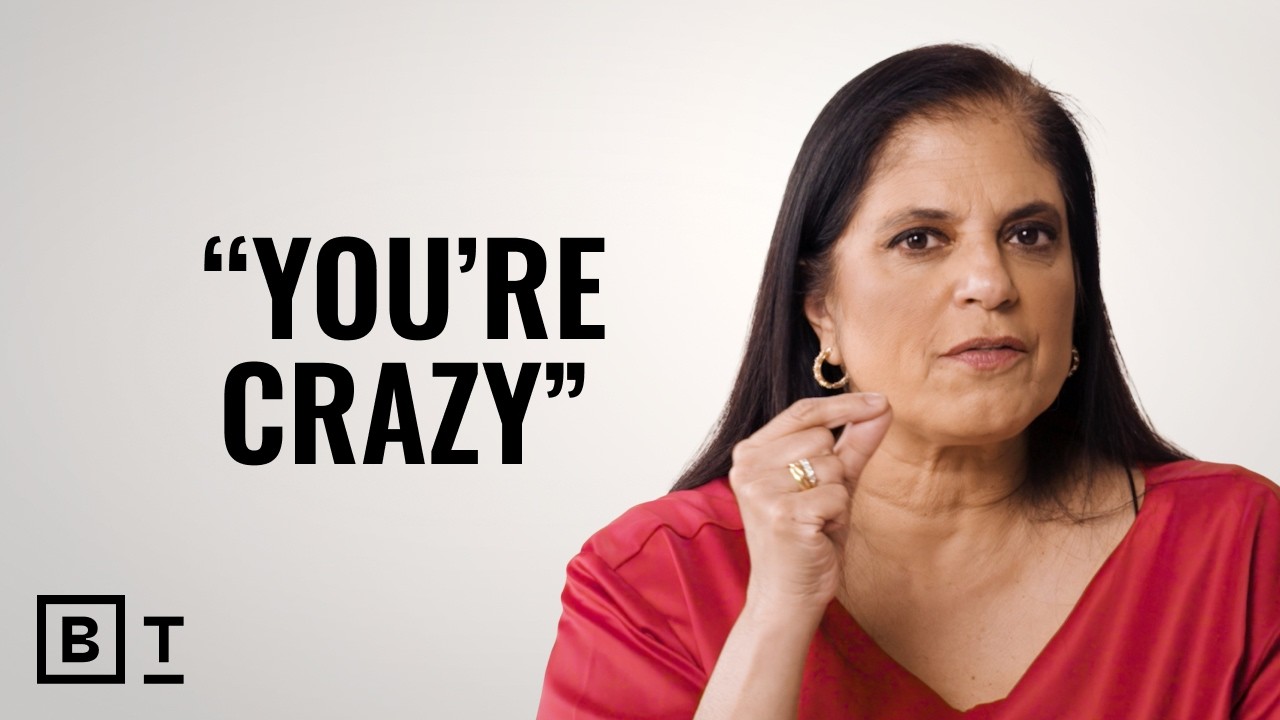
Gaslighting, lovebombing, and future faking work together as a system | Ramani Durvasula
Title history
- Gaslighting, lovebombing, and future faking work together as a system | Ramani Durvasula — observed on 20261105-1522 UTC (YouTube)
Keywords
Summary
181 words
Critical Evaluation
Value of the Information & Strength of the Argument
The video provides high value by clearly articulating the mechanics of three commonly conflated or misunderstood psychological tactics. Dr. Durvasula’s argumentation is logical and well-structured: she breaks down each tactic into identifiable components and offers concrete, relatable examples that illustrate their function. She also connects the tactics to broader societal narratives (e.g., the fairy-tale romantic trope) and to the clinical consequences of long-term exposure, such as self-blame and diminished self-trust. The emphasis on how these tactics operate as a coordinated system—rather than in isolation—adds depth and practical utility. While the reasoning is persuasive, it relies primarily on the speaker’s expertise and anecdotal evidence rather than on systematic research citations, which slightly weakens its scientific rigor but does not undermine its clinical relevance.
Scientific Rigor, Source Quality, Title Accuracy
The scientific rigor is grounded in the speaker’s professional credentials and clinical experience; she is a licensed psychologist and author of best-selling books on narcissistic relationships. However, the video does not cite specific studies or data, presenting instead a synthesis of clinical observations. The title is accurate and appropriately specific, promising and delivering a breakdown of how the three tactics form an integrated system. The description provides links to a Yale Online course and a full interview, indicating an attempt to offer supplementary learning resources. The inclusion of a sponsored segment (Yale Online) and a promotional segment for Big Think membership is clearly marked and does not compromise the informational content. Overall, the title and content align well, and the sources, while not research-based, are reputable and relevant.
265 words
Title / Content Match
The title accurately captures the video's central thesis that gaslighting, love bombing, and future faking operate as an interconnected system within narcissistic relationships.
Quality & Reliability
8/10
The content is presented by a licensed clinical psychologist with extensive expertise in narcissistic abuse, and the explanations are consistent with established psychological frameworks. However, the information is largely based on clinical anecdotes and the author's professional opinion rather than cited empirical studies, which limits its scholarly rigor.
Key Moments
Markers derived by PSI from the transcript: the creator did not define chapters.
- Introduction to common signs of narcissistic relationships, including invalidation, blameshifting, and vindictiveness.
- Detailed explanation of love bombing as a tactic: idealization, rapid commitment, and boundary violations, with examples.
- Definition of gaslighting as a two-step process: denial of reality plus dismantling the victim's self-trust, and the role of repetition.
- Explanation of future faking: making unfulfilled promises to keep the victim invested, often leading to blame and self-doubt.
Cited Sources
- Big Think Membership — Promotional link to support Big Think and access exclusive content.
- Yale Online: The Psychology of Psychopaths — Sponsored course referenced in the video's introduction and transition segment.
- Full Interview with Ramani Durvasula — Link to the complete interview from which this clip is taken.
Contribution & Novelties
This video contributes by explicitly framing love bombing, gaslighting, and future faking not as separate phenomena but as a cohesive system of psychological control. It offers a clinical perspective that demystifies these tactics and challenges common misconceptions (e.g., gaslighting is not simply lying or disagreement). The speaker also highlights the role of social enablers and the ‘fairy tale’ cultural narrative in sustaining the abuse. The practical examples and clear breakdowns provide actionable insight for recognizing these patterns in relationships.
Pour aller plus loin :
- Gaslighting — Overview of the term’s origin and psychological research.
- Love bombing — Definition and context in intimate relationships.
- Narcissistic abuse — Broader category of emotional abuse associated with narcissistic partners.
115 words
Radar Profile
The radar profile shows high scores in quantite_information, qualite_information, and fiabilite_globale, indicating a content-rich, well-argued, and trustworthy presentation. The niveau_technique is moderate, reflecting an accessible yet technically competent explanation suitable for a general audience interested in psychology.