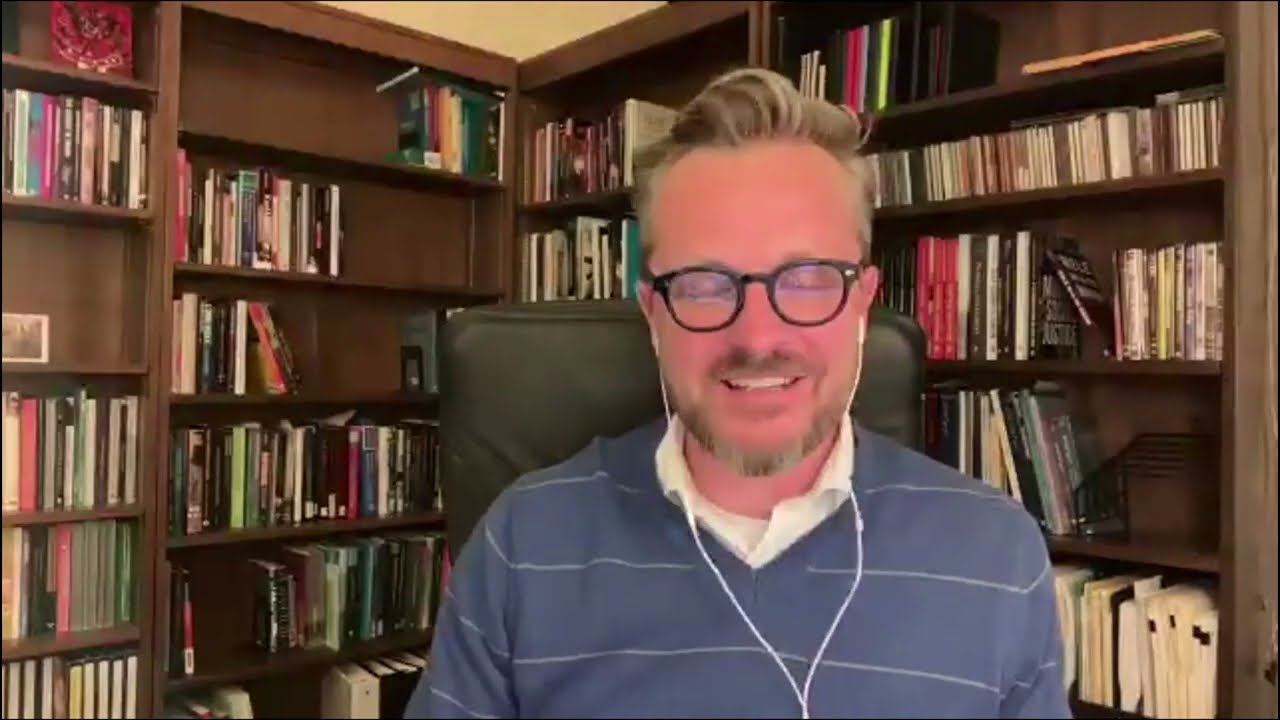
ACGIS Guest Lecture with Dr. David A McDonald
Title history
- ACGIS Guest Lecture with Dr. David A McDonald (PSI archive)
- ACGIS Guest Lecture with Dr. David A McDonald — observed on 20261113-2201 UTC (YouTube)
Keywords
Summary
98 words
Critical Evaluation
Value of the Information & Strength of the Argument
The lecture offers rich ethnographic detail and a compelling argument about the role of music in political mobilization. McDonald effectively demonstrates how diverse musical styles from different Palestinian artists all contribute to a performative politics of appearance and resistance. His argumentation is strong, supported by concrete examples and quotes from his fieldwork. He also engages with theoretical frameworks, showing an ability to connect empirical observations to broader scholarly debates. The talk is valuable for understanding Palestinian culture and the sociology of protest.
Scientific Rigor, Source Quality, Title Accuracy
The talk is scientifically rigorous, based on over two decades of fieldwork in Palestinian communities. McDonald cites his own published monographs and draws on established theorists like Judith Butler (performativity of assembly) and Henry Glassie (tradition as creative process). The sources are appropriate and credible. However, the video title is generic and does not reflect the specific content of the talk, which is more accurately described by its internal title ‘Tradition, Belonging, and the Performativity of Palestine’. Despite this mismatch, the content is well-structured and the argumentation is clear.
186 words
Title / Content Match
The video title is generic ('Guest Lecture') and does not convey the specific topic, though it accurately identifies the format. The actual talk is more specifically titled.
Quality & Reliability
8/10
Lecture by a renowned ethnomusicologist with extensive fieldwork, sound theoretical grounding, and clear argumentation; sources are his own published research and established scholars like Butler and Glassie.
Key Moments
Markers derived by PSI from the transcript: the creator did not define chapters.
- Start of McDonald's talk: background on fieldwork and Mace Shellish.
- Discussion of Mace's musical style and example of her performance.
- Discussion of Kamal Khalil and his songs, including audio examples.
- Discussion of Muhammad al-Farah and hip-hop, with song excerpt.
- Theoretical conclusions on performativity, tradition, and political solidarity.
Cited Sources
- My Voice is My Weapon: Music, Nationalism, and the Poetics of Palestinian Resistance — McDonald's monograph based on the same fieldwork
- Festival Activism — Another book by McDonald on cultural activism
- Notes Toward a Performative Theory of Assembly by Judith Butler — Referenced for the concept of plural performativity
Contribution & Novelties
The lecture contributes original ethnographic data on Palestinian protest songs, highlighting the performative and affective dimensions often overlooked in political analysis. It also proposes a unified analytical framework that moves beyond stylistic categorization to treat protest songs as processual and agential. This offers a fresh perspective on music and politics.
Pour aller plus loin :
- Ethnomusicology on Wikipedia — Provides background on the discipline.
- Performativity on Wikipedia — Relevant to Butler’s concept.
- Music of Palestine on Wikipedia — Contextualizes the music discussed.
82 words
Radar Profile
The scores indicate a strong performance across all dimensions, with particular strength in information quantity and quality, reflecting the depth of the ethnographic research. The technical level is moderately high, suggesting accessibility to a broad academic audience.