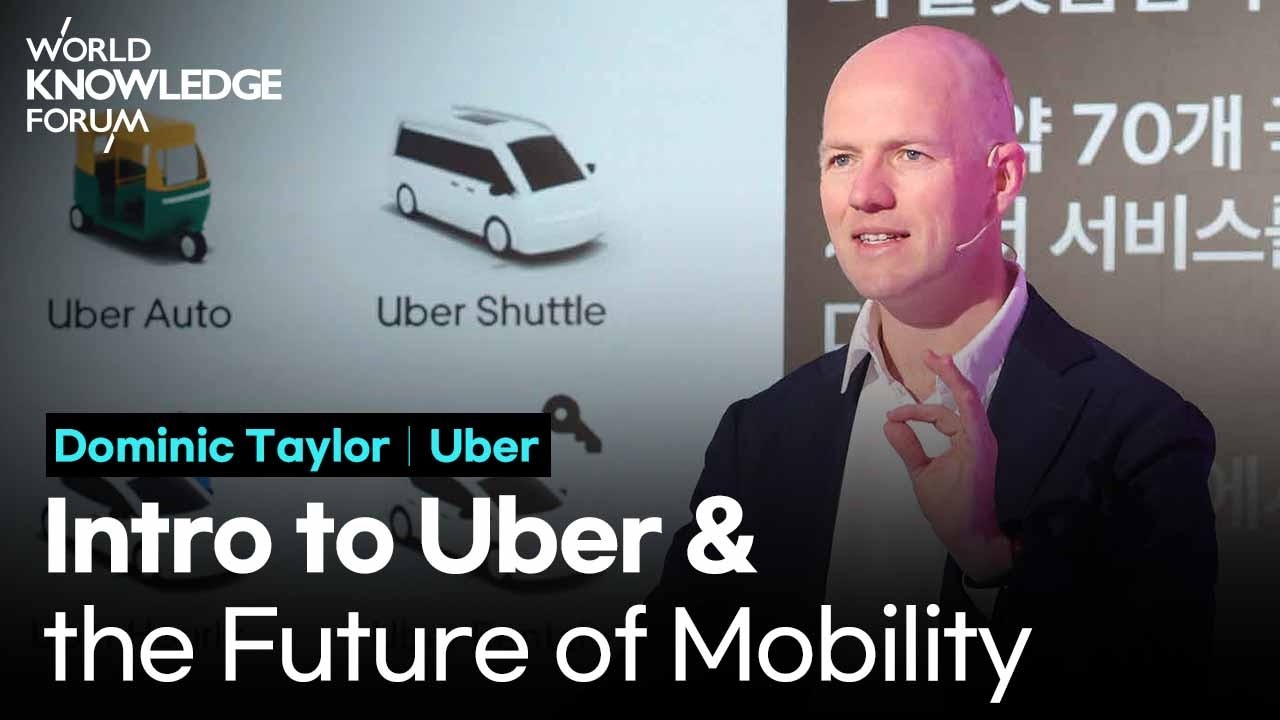
Reimagining the Way the World Moves for the Better: Intro to Uber & the Future of Mobility
Keywords
Summary
208 words
Critical Evaluation
Value of the Information & Strength of the Argument
The value of the information lies in its insider perspective on Uber’s strategy and specific metrics that illustrate scale and market dynamics. The argumentation is structured and persuasive, particularly the explanation of utilization economics and the hybrid network model, which provide a compelling rationale for Uber’s approach to autonomous vehicles. However, the content is inherently promotional, and the argumentation often serves corporate interests rather than offering balanced analysis. The speaker provides anecdotes and data points that support Uber’s narrative, but does not address counterarguments or external criticism. Overall, the value is high for understanding industry trends, but the argumentation is biased.
Scientific Rigor, Source Quality, Title Accuracy
The scientific rigor is moderate: the presentation is based on internal Uber data and insights, with no external references or verifiable sources. The speaker does not cite academic studies or independent reports, relying instead on proprietary metrics. The title is accurate and aligns with the content, focusing on Uber’s vision for the future of mobility. The presentation is consistent in its messaging, but lacks critical engagement with alternative viewpoints. For a non-scientific audience, the information is credible enough, but for rigorous evaluation, it would require external validation. Overall, the sources are weak, but the title is highly appropriate.
214 words
Title / Content Match
The title accurately reflects the content: the presentation covers Uber's role and vision for future mobility, including electric, shared, and autonomous vehicles, with a focus on APAC and Korea.
Quality & Reliability
6/10
The presentation is informative and includes specific operational data, but it represents Uber's corporate perspective without independent verification. Technical discussions on autonomous vehicle utilization are sound, yet credibility is constrained by a promotional tone and lack of external citations.
Key Moments
Markers derived by PSI from the transcript: the creator did not define chapters.
- Introduction of Dominic Taylor and opening remarks about Uber's mission.
- Overview of Uber's global scale and APAC growth statistics.
- Discussion on Korea market evolution, partnership with T-map, and foreign tourist adoption.
- Introduction of the three pillars: electric, shared, and autonomous vehicles.
- Deep dive into autonomous vehicle utilization economics and the hybrid network model.
- Emphasis on safety as a core value and integration into operations.
- Q&A segment: insights on BTS concert rides, the 'flywheel' in Korea, and foreigner-friendly app advantages.
- Discussion on autonomous strategy, labor transition, and long-term coexistence with human drivers.
Contribution & Novelties
The primary contribution of this video is the detailed explanation of Uber’s hybrid network strategy for autonomous vehicles and the utilization-based economic model that underpins it. This provides a clear understanding of how ride-hailing platforms can integrate AVs without replacing human drivers entirely. The speaker also shares unique data on international tourism and ride patterns in Korea, which is valuable for understanding mobility use cases in dense urban markets.
Pour aller plus loin :
- Autonomous vehicle — Provides an overview of self-driving technology, its history, and challenges, complementing the video’s discussion on AV deployment.
- Ride-sharing — Explores the broader concept of shared mobility and how platforms like Uber fit into the ecosystem.
- Electric vehicle — Details the technology and adoption trends that Uber leverages in its electric mobility push.
- Mobility as a service (MaaS) — Relates to the integrated platform approach Uber is building, which is central to the video’s future vision.
152 words
Radar Profile
The radar profile shows high information quantity and quality, with moderate technical depth and relatively lower reliability due to the corporate promotional nature. The video offers substantial data and strategic insights but is constrained by a lack of independent sourcing.