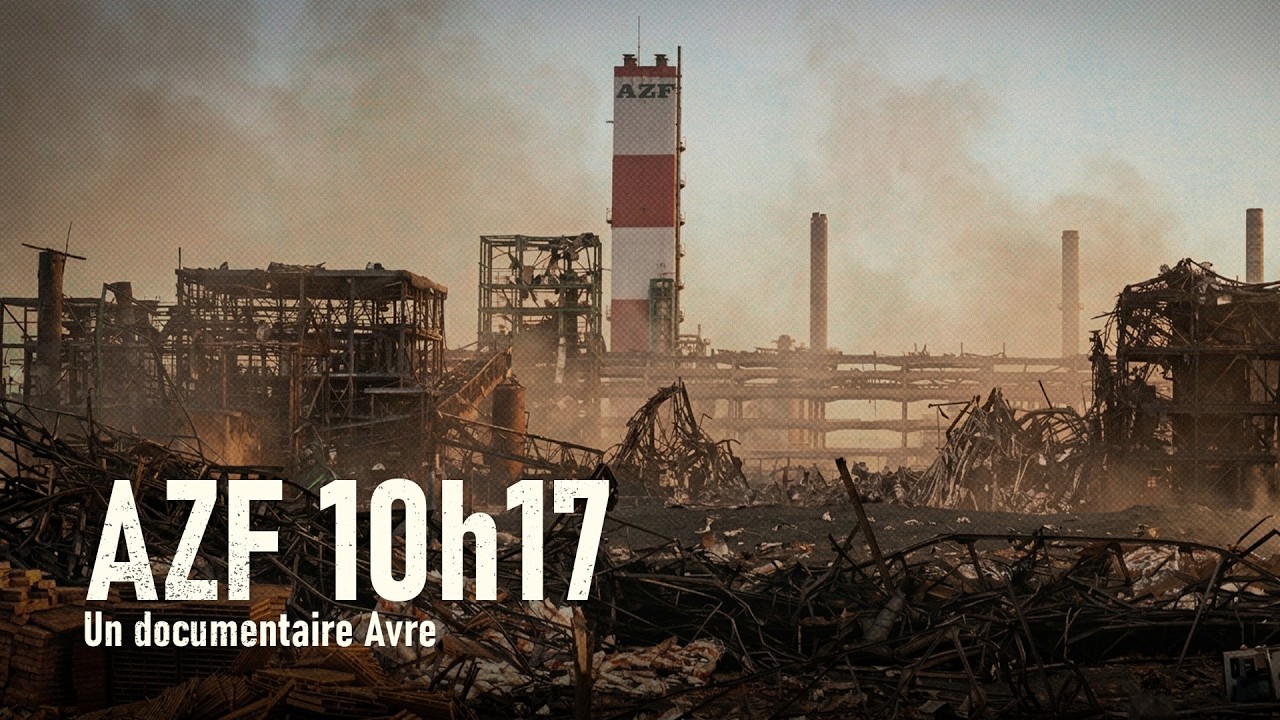
Le jour où Toulouse a explosé | Documentaire
The Day Toulouse Exploded | Documentary
Keywords
Summary
183 words
Critical Evaluation
Value of the Information & Strength of the Argument
The value of this documentary lies in its authentic, first-hand testimonies and the professional reconstruction of the event. The story is told from multiple perspectives, which gives a comprehensive picture of the catastrophe. The argumentation is solid: it does not speculate but relies on concrete observations, archival images, and the direct statements of participants. The documentary avoids sensationalism, focusing instead on the human experience and factual chronology. The use of 3D animations successfully helps visualize the layout of the plant and the sequence of events, strengthening the clarity of the narrative. The emotional weight of the testimonies is balanced with factual details, making the argumentation convincing and credible.
Scientific Rigor, Source Quality, Title Accuracy
The documentary demonstrates high scientific rigor through its reliance on primary sources: eyewitness accounts, archival video footage, and verified chronological details. The sources are clearly identified (the three main protagonists), and their credibility is reinforced by their professional roles. The title is appropriate, accurately indicating the subject and format. The content matches the expectation of a documentary about the explosion, without misleading or exaggerated claims. However, the documentary does not include external citations or scientific references, which would have enhanced its scholarly grounding. Nevertheless, its internal coherence and respect for factual evidence ensure that the title and content are well aligned.
224 words
Title / Content Match
The title accurately reflects the content: a detailed account of the Toulouse explosion, focusing on the catastrophic event and its aftermath.
Quality & Reliability
8/10
The documentary is built on direct testimonies from three key witnesses (journalist, firefighter, worker) and archival images, offering an accurate reconstruction of events. It is well-researched and presents the storyline with careful attention to chronological and factual detail.
Key Moments
Markers derived by PSI from the transcript: the creator did not define chapters.
- The journalist's story begins: Pierre Nicolas at France 3 notices the ground shaking and sees the orange cloud.
- The firefighter's story: Patrice Gerber heads toward the chemical zone, encountering a mass of injured people and debris.
- The worker's story: Jacques Mignard describes the moment of the blast and his journey through the destroyed plant.
- The crater: the film shows the immense crater left at the site, symbolizing the scale of the explosion.
- Epilogue: reflections on memory and the long-term consequences of the disaster.
Contribution & Novelties
This documentary brings a unique contribution by interweaving the personal accounts of three protagonists, providing a human-centric view of the AZF explosion. It presents new archival footage and 3D reconstructions that illustrate the event from a ground-level perspective, enhancing understanding of the chaos and the rescue efforts. The focus on the divided memories of the city and the lack of recognition for workers adds a critical dimension to the narrative, offering fresh insights into the social and historical impacts.
Pour aller plus loin :
- AZF factory (Wikipedia) - Background information on the plant and the explosion.
- 2001 Toulouse explosion (Wikipedia) - Detailed account of the disaster and its aftermath.
- Ammonium nitrate (Wikipedia) - Chemical substance involved, its uses and hazards.
120 words
Radar Profile
The radar profile shows balanced scores across criteria, with particularly high marks for information quality and reliability, while the level of technical detail is slightly lower due to the documentary's focus on human narratives. Overall, the profile reflects a well-crafted, audience-friendly historical documentary.