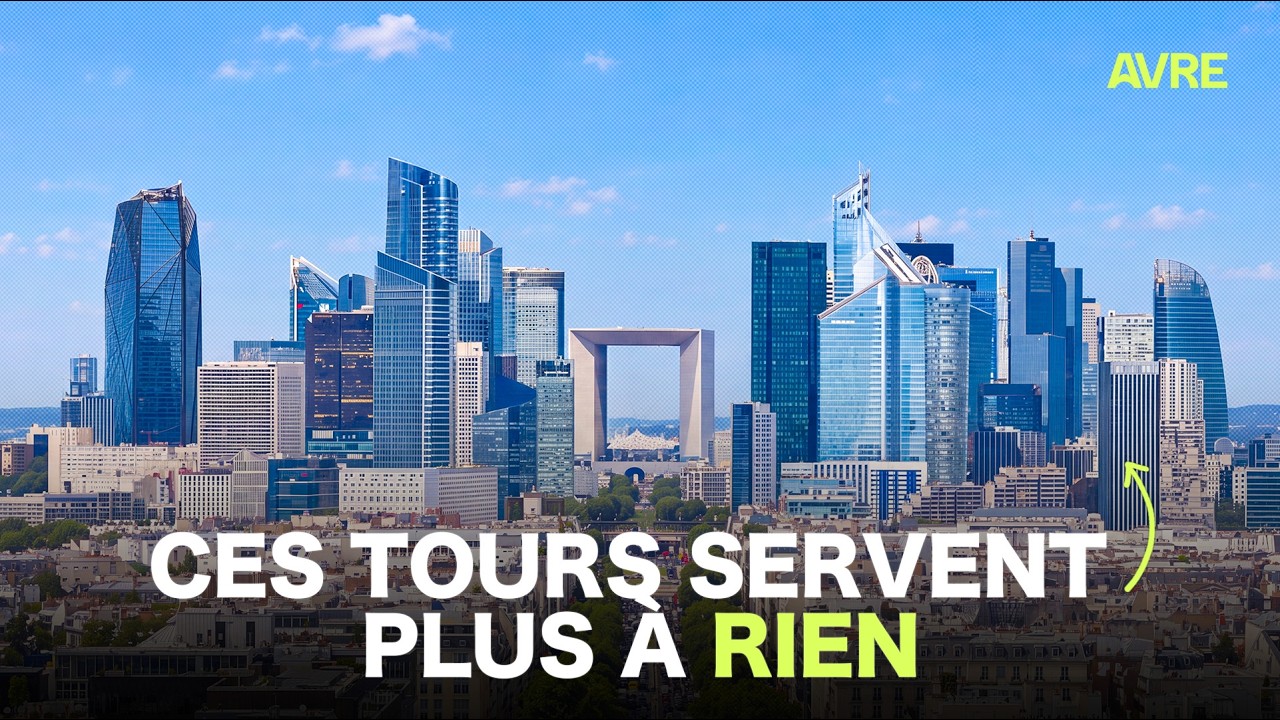
Les immeubles de bureaux sont vides (et c'est fait exprès)
Office buildings are empty (and it's intentional)
Keywords
Summary
150 words
Critical Evaluation
Value of the Information & Strength of the Argument
The value lies in its clear synthesis of architectural and financial mechanisms. It uses concrete examples (Arboretum, Rue Moussaie) and expert interviews to illustrate how technical and economic barriers combine. The argumentation is credible: it distinguishes between genuine technical hurdles and purely speculative behavior, and critically evaluates recent policy relaxations. The presenter’s field visit and visible emptiness of the Arboretum strengthen the message. However, the video mainly relies on qualitative evidence and does not provide quantitative data on conversion costs or profitability.
Scientific Rigor, Source Quality, Title Accuracy
The video cites relevant sources: a book on financial real estate, an architect’s practice, and a New York Times article on office conversions (mentioned but not linked). It also references specific laws and case studies. The title is perfectly aligned with the content, though it slightly overstates the ‘intentional’ aspect, which the video explains through speculative strategy. The sponsor section is clearly separated and does not affect the scientific content. Overall, the rigor is acceptable but would benefit from more direct citations and quantitative backing.
182 words
Title / Content Match
The title directly reflects the content, which explains why offices remain empty due to financial speculation and regulatory constraints.
Quality & Reliability
7/10
The video presents a coherent and well-structured argument, relying on expert testimony (architect Patrick Rubin), a referenced book, and notable case studies. However, some economic claims (e.g., speculative bubble cycles) lack direct sources, and the sponsor segment interrupts the narrative without providing evidence.
Chapters
Cited Sources
- Immobilier hors sol : Comment la finance s'accapare nos villes — Book referenced for insights into financial appropriation of urban space and speculative dynamics.
- Canal Architecture - Patrick Rubin — Architect's practice specializing in office-to-housing conversions, cited for technical expertise and project examples.
External References
Contribution & Novelties
The video provides a fresh, accessible explanation of a well-known but under-documented problem: the coexistence of empty offices and housing shortage. It links architectural technicalities with financial speculation, showing that conversions are not only a matter of design but also of economic incentives. It also raises a critical point about recent regulatory relaxations that may compromise housing quality.
Pour aller plus loin :
- Speculative bubble — Core concept explaining why asset prices inflate and collapse, directly relevant to the video’s thesis.
- Adaptive reuse — Architectural strategy of repurposing buildings, exemplified by the conversions shown.
- Housing in France — Context on the housing crisis and policy measures.
106 words
Radar Profile
The profile shows balanced scores across all dimensions, with a slight emphasis on information quantity. This reflects the video's broad coverage of technical, economic, and regulatory aspects, while maintaining a reasonable level of reliability.