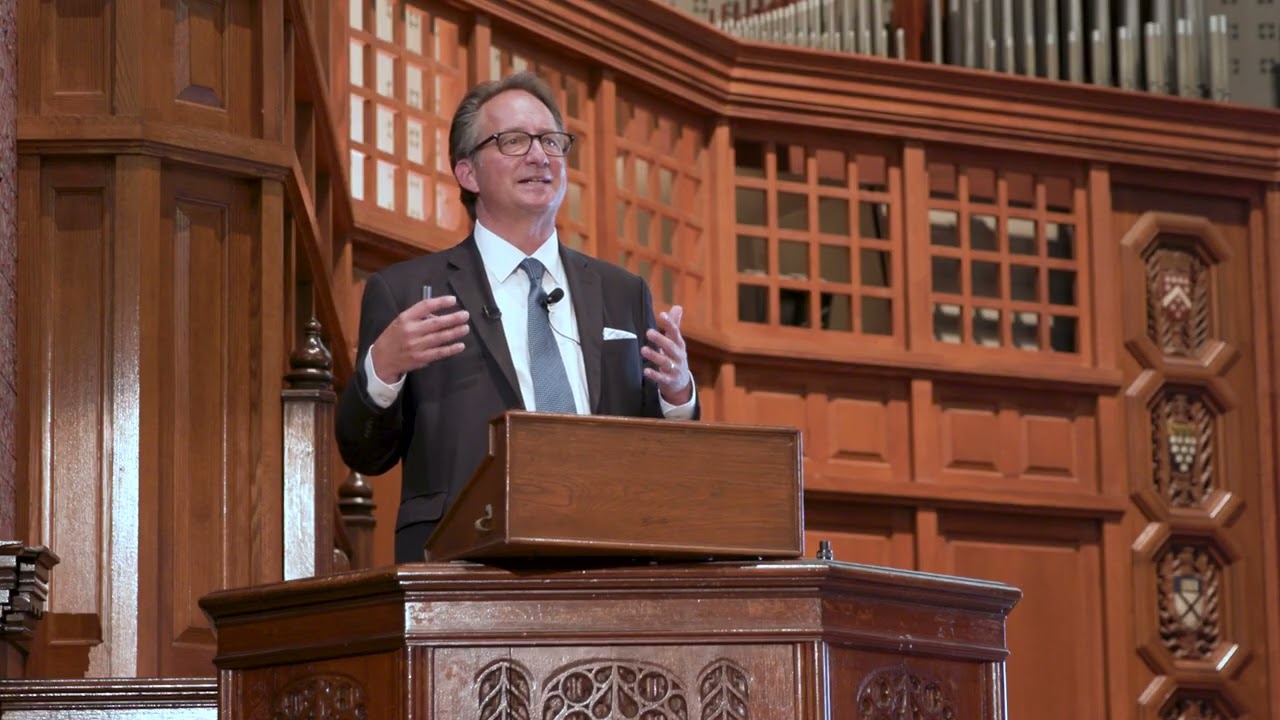
What is College For? - Purposes of College Education, Lecture 1
Keywords
Summary
129 words
Critical Evaluation
Value of the Information & Strength of the Argument
The lecture offers substantial value by synthesizing classic philosophical perspectives with contemporary concerns about higher education. Lewis argues for a balanced view of college as both a time for personal growth and a preparation for societal roles. His argumentation is coherent, moving from personal reflections to broad theoretical foundations, and he effectively uses quotes from Proust, Mill, and Confucius to illustrate each purpose. The discussion of character education, community dynamics, and civic readiness is thoughtful and grounded in both historical context and present-day reality.
Scientific Rigor, Source Quality, Title Accuracy
The lecture demonstrates strong scholarly rigor through its references to Plato’s Republic, Allan Bloom’s translation, and the philosophical canon. The speaker also mentions Yale’s history and institutional documents. The syllabus linked in the description provides additional structure and resources. The title is fully aligned with the content, and the lecture maintains a clear focus on the stated topic without digressions. Public reception is not analyzed due to lack of comment data.
170 words
Title / Content Match
The title accurately reflects the lecture's focus on exploring the purposes of college education.
Quality & Reliability
8/10
The lecture is delivered by Pericles Lewis, Dean of Yale College, an academic expert in literature and education. The content is well-structured, references classic philosophical works (Plato, Mill, Confucius) and includes personal pedagogical insight. While not research-based, it is a thoughtful, reasoned expert opinion with clear arguments.
Key Moments
Markers derived by PSI from the transcript: the creator did not define chapters.
- Lewis asks attendees to recall three reasons for choosing to attend college.
- Overview of the four internal purposes of education: character, community, citizenship, and conversation.
- Discussion on character formation with a quote from Proust about learning from youthful mistakes.
- Introduction of John Stuart Mill's 'experiments in living' and the importance of diversity in character.
- Talk on citizenship, referencing Hannah Arendt and the role of education in democratic participation.
- Discussion on conversation as the basis of education, quoting Confucius and mentioning Plato's dialogues.
- Explanation of the course structure, the significance of Plato's Republic, and the reasons for offering this course now.
Cited Sources
- Purposes of College Education - Public Syllabus — Official course syllabus referenced in the video description.
- The Republic by Plato (trans. Allan Bloom) — Primary text assigned for the course, mentioned by the lecturer.
Concurring Sources
- Purposes of College Education - Public Syllabus — The syllabus aligns with the lecture's themes and structure.
Contribution & Novelties
The lecture provides a contemporary academic perspective on the enduring question of what college is for, connecting ancient philosophy with modern institutional concerns. It offers a structured framework of education’s internal purposes (character, community, citizenship, conversation) and external contexts, making it a useful starting point for further reflection.
Pour aller plus loin :
- Plato’s Republic — Overview of the key philosophical text that forms the backbone of the course.
- Liberal arts education — Discussion of the educational model central to Yale’s approach.
- Philosophy of education — Broader philosophical context for understanding educational purposes.
93 words
Radar Profile
The scores indicate a lecture that is information-rich and of high quality, with a moderate technical level. The professor's expertise elevates reliability, while the accessible style suggests broad appeal.