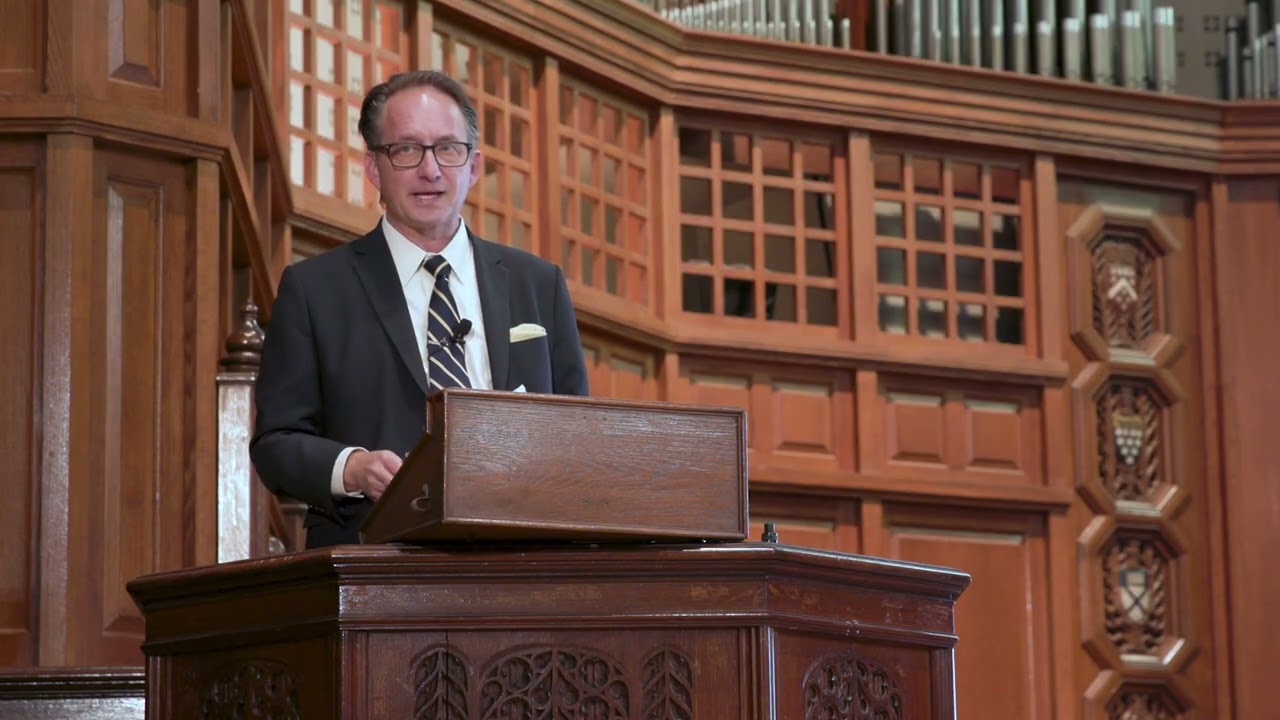
Education as Conversation - Purposes of College Education, Lecture 15
Title history
- Education as Conversation - Purposes of College Education, Lecture 15 — observed on 20261110-2030 UTC (YouTube)
Keywords
Summary
147 words
Critical Evaluation
Value of the Information & Strength of the Argument
The lecture provides a rich intellectual exploration of the philosophical underpinnings of college education. It weaves together classical and modern thinkers to argue that conversation is fundamental to liberal education. The argumentation is well-structured, moving from a review of previous themes to a focused discussion of Gadamer, Mill, and Weber. The professor offers nuanced interpretations and connects them to contemporary issues. However, the argumentative line is not novel, as it synthesizes existing philosophical ideas. The value lies in the pedagogical clarity and the intertextual connections made.
Scientific Rigor, Source Quality, Title Accuracy
The lecture references primary texts such as Plato’s Republic, Mill’s On Liberty, and Weber’s Science as a Vocation, which are appropriate for the topic. The only provided source link is the syllabus PDF, which is credible. The title accurately reflects the content, focusing on conversation as a purpose of college education. The lecture does not invent sources and relies on established philosophy. No external comments were provided for analysis.
170 words
Title / Content Match
Title accurately reflects the lecture focus on conversation as a purpose of college education.
Quality & Reliability
8/10
Lecture from Yale University, credible academic source, well-structured, references primary texts.
Key Moments
Markers derived by PSI from the transcript: the creator did not define chapters.
Cited Sources
- Purposes of College Education - Syllabus — Course syllabus referenced in the video description
Contribution & Novelties
The lecture offers a synthesis of philosophical texts relevant to the purposes of college education, emphasizing conversation as a unifying theme. Its originality lies in the selection and juxtaposition of thinkers from different eras to illustrate a continuous debate.
Pour aller plus loin :
- Hermeneutics — Overview of the interpretive philosophy central to Gadamer’s ideas.
- Harm principle — Mill’s principle limiting free speech, key to his argument in On Liberty.
- Science as a Vocation — Weber’s essay on the role of science in modern society.
- Allegory of the Cave — Plato’s metaphor related to enlightenment and education.
97 words
Radar Profile
The profile shows strong scores in information quantity and quality, with moderate technical level, indicating a substantive but accessible lecture. The fiabilité is high due to academic origin.