Inclusive Caregiving: Understanding the Many Faces of Care — 2026 Caregiving at Work Forum
Title history
- Inclusive Caregiving: Understanding the Many Faces of Care — 2026 Caregiving at Work Forum — observed on 20261112-1909 UTC (YouTube)
Keywords
Summary
206 words
Critical Evaluation
Value of the Information & Strength of the Argument
The panel provides substantial value by aggregating current national data and personal insights, making a strong case for broadening the definition of caregiving to include diverse relationships and life stages. The argumentation is solid, rooted in survey findings and real-world examples, though some claims are based on individual experiences rather than systematic evidence. The discussion effectively bridges data and practice, offering concrete steps for employers. The speakers build on each other’s points to reinforce the central message that caregiving is pervasive, largely invisible, and should be normalized in the workplace. The use of statistics (e.g., 63 million caregivers, 24 hours/week) lends credibility, while anecdotal stories illustrate human impact. The argument that caregiving skills (e.g., crisis management, project management) are underappreciated is compelling but not quantified. Overall, the value lies in raising awareness and providing a framework for action.
Scientific Rigor, Source Quality, Title Accuracy
The rigor is high due to the involvement of established organizations like NAC and AARP, which conduct authoritative national surveys. The panelists cite specific data points and research initiatives, enhancing credibility. However, the discussion is formatted as a panel and lacks detailed methodological explanations, so depth is limited. The title accurately reflects the content, which comprehensively covers the inclusive spectrum of caregiving. The description aligns with the actual discussion, which indeed explores why employees may not self-identify as caregivers and how employers can better support them. No comments were provided for analysis.
245 words
Title / Content Match
The title accurately reflects the content, which explores the diverse forms of caregiving and employer support.
Quality & Reliability
8/10
The panel features representatives from leading caregiving research and advocacy organizations, citing recent national survey data (e.g., Caregiving in the US by NAC/AARP). However, some claims are anecdotal and the discussion is not peer-reviewed.
Key Moments
Markers derived by PSI from the transcript: the creator did not define chapters.
- Introduction and panelist self-introductions; setting the stage for the discussion.
- Laura Forsyth presents national caregiver statistics: 63 million family caregivers, gender breakdown, relationship types, and age diversity.
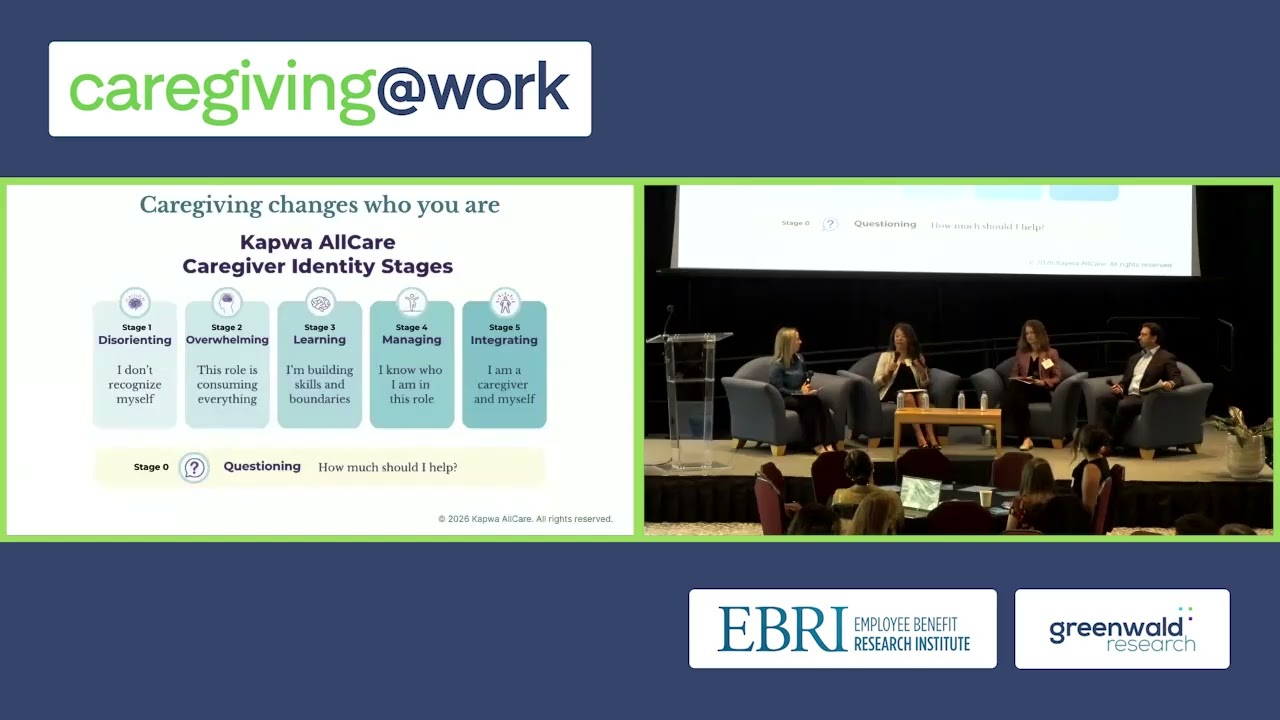
- Grace Macalino Shell explains the caregiver identity framework and the 'stage zero' of questioning, emphasizing the shock of realizing one's own caregiver status.
- John Simon discusses the hidden nature of caregiving, citing research that two-thirds of sandwich-generation caregivers hide it from employers.
- Panel addresses stigma: cultural, gender, and workplace expectations that discourage disclosure; Grace shares personal anecdotes.
- Laura provides more data: 49% of supervisors know about caregiving; impact on work (lateness, leaves, promotions declined).
- Intensity of caregiving: average 24 hours/week, complex medical tasks, and health impacts on caregivers.
- John Simon uses the 'duck' analogy to describe invisible effort; discusses career impact before resignation and the value of holistic benefit design.
- Grace elaborates on the emotional load and the sandwich generation's dual support for launching children and ensuring safe landings for aging parents.
- Panel moves to employer support: proactive measures, manager roles, and the importance of asking 'What do you need?' only 1 in 7 caregivers report being asked.
Cited Sources
- Caregiving in the US — National survey by National Alliance for Caregiving and AARP, conducted every five years; provides authoritative data on caregivers in the U.S.
- CareBenefits by care.com research on sandwich generation — Mentioned by John Simon: deep research on sandwich-generation caregivers, their hidden caregiving, and workplace impacts.
Contribution & Novelties
The panel contributes a comprehensive, data-informed overview of caregiving in the workplace, emphasizing the importance of self-identification and the need for multi-level employer support. The caregiver identity framework with a ‘stage zero’ is a novel concept that helps employers understand the journey of becoming a caregiver. The discussion integrates national statistics with lived experiences to advocate for systemic changes in workplace culture and benefit design.
Pour aller plus loin :
- Caregiving on Wikipedia — Overview of definitions, types, and demographics of caregivers.
- Sandwich Generation on Wikipedia — Explanation of the double-duty caregiving burden.
- AARP Family Caregiving — Official resource from AARP with practical information and research links.
107 words
Radar Profile
The radar profile shows high scores in quantity and quality of information, reflecting the data-rich and well-sourced content. Technical level is moderate, appropriate for a professional audience. Overall reliability is high, driven by credible institutions, though lack of formal peer review keeps it slightly below perfect.